
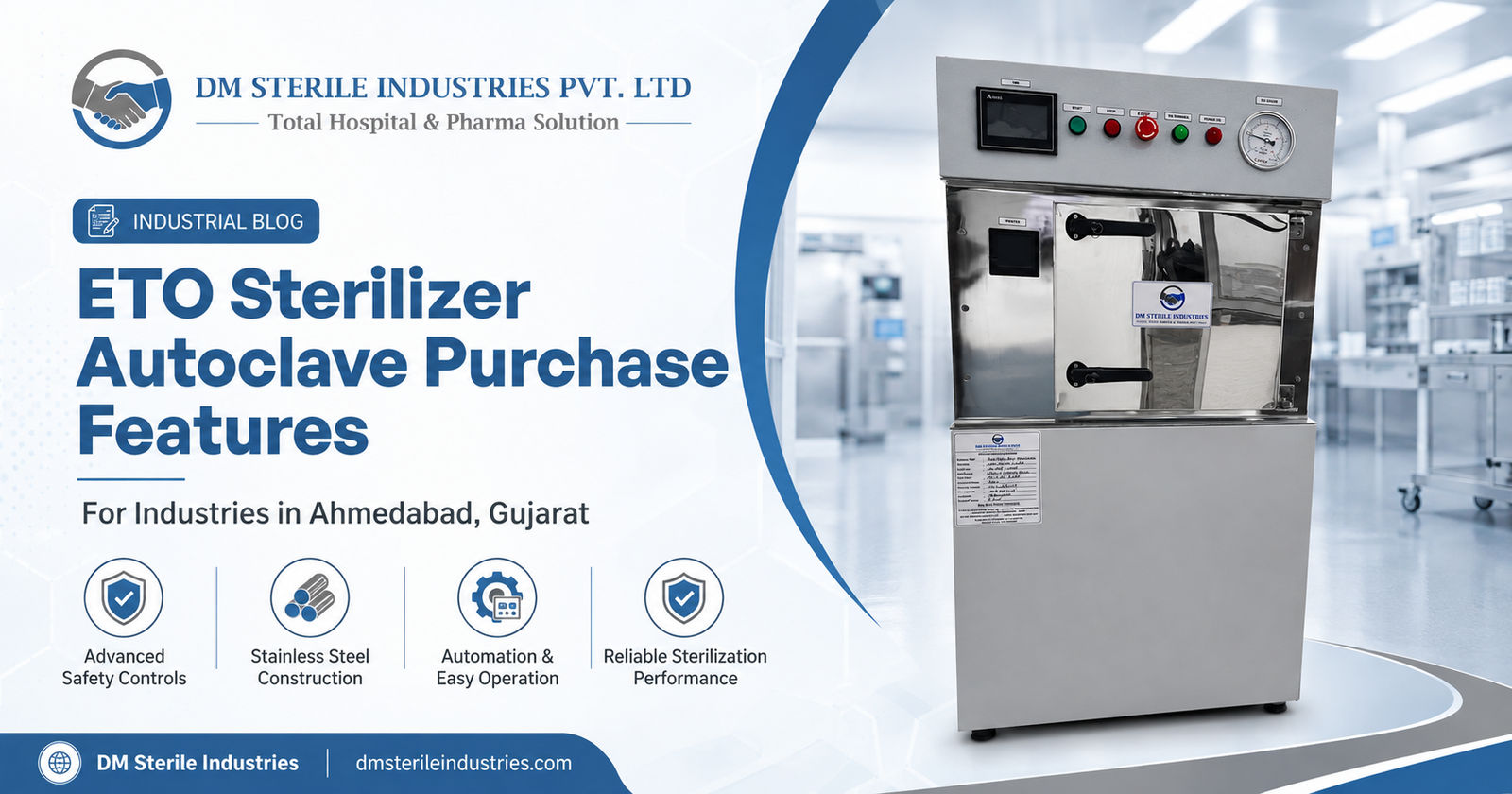
ETO Sterilizer Autoclave purchase features
Understand key ETO sterilizer and autoclave purchase features for industrial applications in Ahmedabad, Gujarat. Make informed decisions for robust sterilizatio
Why This Matters in Ahmedabad, Gujarat
Ahmedabad stands as a significant industrial hub, especially for the pharmaceutical, healthcare, and medical device manufacturing sectors. The city's robust growth in these areas creates a constant demand for advanced and reliable sterilization solutions. Facilities here must meet stringent national and international quality standards to maintain competitiveness and ensure public safety. Understanding the specific ETO sterilizer autoclave purchase features is crucial for local businesses to acquire equipment that supports their specialized processes and contributes to the region's high-quality output.
What is ETO Sterilizer Autoclave — Overview
An ETO (Ethylene Oxide) sterilizer is a low-temperature sterilization method primarily used for heat-sensitive and moisture-sensitive medical devices and materials. It operates by exposing items to ethylene oxide gas, which disrupts the metabolic processes of microorganisms, effectively sterilizing them without high heat. Autoclaves, conversely, utilize high-pressure saturated steam to achieve sterilization. This method is highly effective for heat-resistant materials and instruments, working by denaturing proteins and destroying microbial cells. Both technologies are indispensable, serving distinct yet complementary roles in maintaining sterile environments across various industrial applications.
Key Features and Technical Specifications
When evaluating ETO sterilizer autoclave purchase features, several technical aspects are paramount for performance and safety:
- Chamber Volume and Configuration: Available in various capacities and designs (vertical, horizontal, rectangular, cylindrical) to match specific load requirements and facility layouts.
- Material of Construction: High-grade stainless steel (e.g., SS 304, SS 316L) for the chamber and piping, ensuring durability, corrosion resistance, and ease of cleaning.
- Control System and Automation: Advanced PLC-based control with HMI touchscreens for precise cycle parameter management, data logging, and user-friendly operation.
- Safety Interlocks and Alarms: Comprehensive safety features including door interlocks, pressure relief valves, over-temperature protection, and gas leakage detection for ETO units.
- Vacuum System: Efficient vacuum pumps for thorough air removal (autoclaves) and effective gas penetration/removal (ETO sterilizers), crucial for cycle efficacy.
- Gas Monitoring and Abatement (ETO): Integrated systems for continuous monitoring of ETO concentration and efficient post-sterilization gas removal to protect personnel and the environment.
- Cycle Customization and Validation: Ability to program and save multiple sterilization cycles, along with features supporting validation protocols (IQ, OQ, PQ).
- Energy Efficiency: Design considerations that minimize utility consumption, such as optimized insulation, efficient heating elements, and smart vacuum control.
Industrial Applications and Use Cases
The versatility of ETO sterilizers and autoclaves makes them essential across a broad spectrum of industrial applications:
- Pharmaceutical Manufacturing: Sterilization of raw materials, packaging components, sterile API equipment, and finished drug products that cannot withstand high temperatures.
- Healthcare and Hospitals: Processing of surgical instruments, drapes, gowns, implantable devices, and laboratory glassware to prevent hospital-acquired infections.
- Medical Device Manufacturing: Sterilization of single-use devices, catheters, syringes, implants, and diagnostic tools, often sensitive to heat or moisture.
- Biotechnology and Research Laboratories: Sterilization of culture media, reagents, lab equipment, and waste materials to maintain aseptic conditions and biosafety.
- Food and Beverage Industry: Sterilization of packaging materials and certain processing equipment to extend shelf life and ensure product safety.
- Cosmetics Industry: Sterilization of raw materials and packaging components to meet hygiene standards and product stability requirements.
How to Choose the Right ETO Sterilizer Autoclave
Selecting appropriate sterilization equipment requires careful consideration of several factors to ensure it meets operational demands and regulatory guidelines.
- Capacity and Throughput: Assess the volume and type of materials requiring sterilization to determine the appropriate chamber size and number of cycles per day.
- Material Compatibility: Verify that the equipment's sterilization method (ETO gas or steam) is compatible with the materials of your products and instruments.
- Regulatory Compliance: Ensure the sterilizer meets relevant national and international standards, such as ISO 11135 for ETO and ISO 17665 for steam, along with local health and safety regulations.
- Automation Level: Decide on the degree of automation required, from semi-automatic to fully automatic systems, considering operational efficiency and human intervention.
- Utility Requirements: Evaluate the availability and cost of necessary utilities like steam, purified water, compressed air, and electrical power at your facility.
- Supplier Experience and Support: Choose a supplier with a proven track record in sterilization technology, offering comprehensive installation, training, and after-sales service.
- Safety Features: Prioritize equipment with robust safety mechanisms, especially for ETO sterilizers, to protect operators and the environment from gas exposure.
- Customization Potential: Consider if the manufacturer can offer modifications or bespoke solutions to integrate the sterilizer seamlessly into your existing workflow.
Quality Standards and Compliance
Adherence to stringent quality standards and regulatory compliance is non-negotiable for sterilization equipment. Buyers should verify that any ETO sterilizer or autoclave under consideration meets critical benchmarks. Key standards include ISO 13485 for medical device quality management systems, which often dictates the design and manufacturing processes for such equipment. For ETO sterilization, compliance with ISO 11135, which outlines the development, validation, and routine control of an ethylene oxide sterilization process for medical devices, is essential. For steam sterilization, ISO 17665 provides similar guidelines. Additionally, equipment should align with Good Manufacturing Practices (GMP) and any specific local regulatory requirements in Gujarat, ensuring the sterilizer consistently performs as intended and produces sterile output.
Why Company Experience and Capability Matters
The longevity and reliability of sterilization equipment are directly tied to the manufacturer's experience and technical capability. Dm Sterile Industries, established in 2024 by Mr. Divyang Koshti and Mr. Maulik Jani, brings a focused approach to modern sterilization technology. Their commitment to robust quality standards and custom solutions is evident in their product range, which includes various autoclaves and ETO sterilizers. The company's capability extends to designing and manufacturing equipment that incorporates advanced automation and controls, ensuring precise and repeatable sterilization cycles. Dm Sterile Industries emphasizes end-to-end customer support, from initial consultation to reliable after-sales service, which is crucial for maintaining operational uptime and equipment performance. Their team's expertise in sterilization technology allows them to provide solutions tailored to the specific needs of pharmaceutical, healthcare, and medical device industries.
Installation, Maintenance and Care Tips
Proper installation and ongoing maintenance are vital for the safe and effective operation of ETO sterilizers and autoclaves.
- Site Preparation: Ensure the installation site has adequate space, proper ventilation, and access to all necessary utilities (power, water, steam, compressed air, drainage).
- Utility Connections: Verify that all utility connections are correctly installed and meet the equipment's specifications, including appropriate pressure and flow rates.
- Calibration and Validation: Conduct initial calibration and comprehensive validation (Installation Qualification, Operational Qualification, Performance Qualification) to confirm the equipment operates within specified parameters.
- Routine Cleaning: Regularly clean the interior and exterior surfaces of the sterilizer, following manufacturer guidelines, to prevent contamination and maintain hygiene.
- Preventive Maintenance Schedule: Adhere to a strict preventive maintenance schedule, including checking seals, filters, valves, and sensors, to identify and address potential issues before they cause downtime.
- Safety Protocol Adherence: For ETO sterilizers, strictly follow all safety protocols regarding gas handling, ventilation, and personal protective equipment to prevent exposure.
- Software Updates: Keep control system software updated to benefit from performance enhancements and security improvements.
- Operator Training: Ensure all personnel operating the equipment receive thorough training on its functions, safety features, and troubleshooting procedures.
Frequently Asked Questions
ETO sterilization uses ethylene oxide gas at lower temperatures for heat and moisture-sensitive items, making it suitable for plastics, electronics, and certain medical devices. Autoclaving, conversely, employs high-pressure saturated steam at elevated temperatures, ideal for heat-resistant materials like surgical instruments, glassware, and textiles. Each method targets different material compatibilities and microbial inactivation mechanisms.
Determining the correct capacity involves assessing your current and projected sterilization load, including the volume, size, and type of items. Consider your peak operational demands, cycle times, and any future expansion plans. A thorough analysis of your daily or weekly throughput will help match the sterilizer's chamber volume and cycle frequency to your facility's specific requirements.
Safety for ETO sterilizers is paramount due to the hazardous nature of ethylene oxide gas. Key considerations include robust gas leakage detection systems, effective aeration cycles to remove residual gas, dedicated ventilation systems, and continuous environmental monitoring. Proper operator training, personal protective equipment, and adherence to strict safety protocols are also essential to prevent exposure.
Sterilization equipment requires a comprehensive validation process typically involving Installation Qualification (IQ), Operational Qualification (OQ), and Performance Qualification (PQ). IQ verifies correct installation, OQ confirms the equipment operates as intended within specified parameters, and PQ demonstrates that the sterilization process consistently produces sterile products under defined conditions.
The frequency of maintenance depends on usage intensity and manufacturer recommendations, but generally, preventive maintenance should be performed quarterly or semi-annually. This includes checking seals, filters, valves, and calibration of sensors. Regular daily or weekly checks by operators are also crucial for identifying minor issues before they escalate into significant problems.
Yes, many manufacturers offer customization options for both ETO sterilizers and autoclaves to meet unique industrial requirements. This can include variations in chamber size, material handling systems, specific control software features, integration with existing facility automation, and specialized gas abatement systems. Customization ensures the equipment perfectly fits the operational workflow and product specifications.
Conclusion
Choosing an ETO sterilizer or autoclave is a significant decision that impacts product quality, regulatory compliance, and operational efficiency for industries in Ahmedabad, Gujarat. By carefully evaluating key purchase features such as technical specifications, industrial applications, and adherence to quality standards, businesses can make informed choices. Partnering with a knowledgeable and capable supplier like Dm Sterile Industries, which offers expertise in sterilization technology and dedicated support, ensures that your investment provides reliable, long-term performance. A well-selected sterilization system is not just equipment; it is a critical component of your commitment to safety and excellence.
Get In Touch
Dm Sterile Industries