
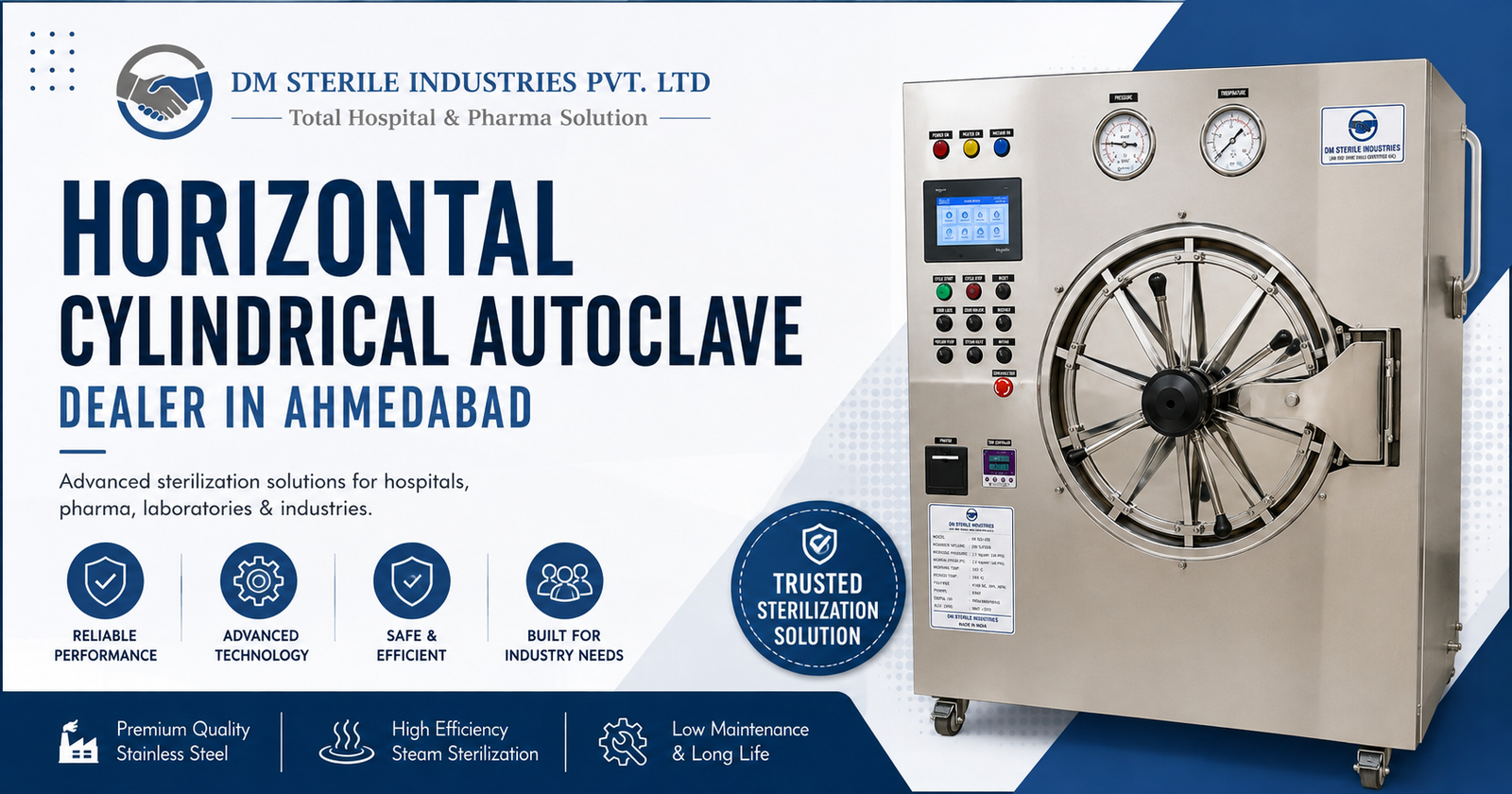
Horizontal Cylindrical Autoclave dealer digital
Find a reliable Horizontal Cylindrical Autoclave dealer in Ahmedabad. DM Sterile Industries offers quality sterilization solutions for healthcare and pharma.
Why This Matters in Ahmedabad
Ahmedabad, a major industrial and healthcare hub in Gujarat, hosts a significant number of hospitals, diagnostic centers, pharmaceutical manufacturers, and research institutions. These organizations rely heavily on effective sterilization processes to meet stringent quality and safety standards. The growing healthcare infrastructure and the expanding pharmaceutical sector in and around Ahmedabad create a consistent demand for advanced sterilization equipment. Ensuring a local, dependable supply chain for critical items like horizontal cylindrical autoclaves is vital for the uninterrupted operation of these essential services.
What is a Horizontal Cylindrical Autoclave — Overview
A horizontal cylindrical autoclave is a sophisticated piece of equipment designed for high-level sterilization using pressurized steam. Unlike vertical models, its horizontal orientation allows for larger chamber volumes and easier loading of bulkier items, such as surgical instruments, glassware, and porous materials. The process involves creating a sealed chamber where steam is introduced under pressure, reaching temperatures significantly above boiling point (typically 121°C or 134°C). This high temperature and pressure effectively penetrate materials, eliminating all forms of microbial life, including bacteria, viruses, fungi, and spores.
Key Features and Technical Specifications
When evaluating horizontal cylindrical autoclaves, several technical specifications and features are critical for performance and reliability:
- Chamber Material: Typically constructed from high-grade stainless steel (e.g., SS 304 or SS 316L) for corrosion resistance and durability.
- Chamber Volume: Available in a range of capacities, from smaller units suitable for clinics to large industrial models for bulk processing.
- Operating Pressure: Designed to operate at specific pressure levels to achieve required sterilization temperatures, often ranging from 1.5 to 2.2 kg/cm².
- Temperature Range: Standard sterilization cycles operate at 121°C and 134°C, with precise temperature control.
- Safety Features: Includes safety valves, door interlocks, and pressure release mechanisms to prevent accidental opening during operation.
- Control System: Options range from manual operation to advanced digital controllers with programmable cycles and data logging capabilities.
- Door Design: Features a robust, hinged door with a secure locking mechanism and a high-quality gasket for a tight seal.
- Steam Generation: Integrated or external steam generators ensure a consistent supply of sterile steam for effective sterilization cycles.
Industrial Applications and Use Cases
The versatility of horizontal cylindrical autoclaves makes them indispensable across various sectors:
- Hospitals and Healthcare Facilities: Sterilization of surgical instruments, medical devices, laboratory glassware, and patient care equipment.
- Pharmaceutical Manufacturing: Sterilization of raw materials, finished products, packaging components, and production equipment to maintain aseptic conditions.
- Research and Development Laboratories: Sterilization of media, reagents, glassware, and equipment used in biological, chemical, and medical research.
- Biotechnology Firms: Ensuring sterility for cell cultures, fermentation processes, and sensitive biological materials.
- Veterinary Clinics: Sterilizing instruments and supplies for animal care.
- Dental Practices: Autoclaving dental instruments, burs, and other reusable tools.
- Cosmetic Manufacturing: Sterilizing equipment and packaging for hygiene-sensitive cosmetic products.
- Food and Beverage Industry: Used in some applications for sterilization of packaging materials or specific ingredients where high-temperature steam is required.
How to Choose the Right Horizontal Cylindrical Autoclave
Selecting the appropriate horizontal cylindrical autoclave requires careful consideration of your specific operational needs. Here’s a checklist to guide your decision:
- Sterilization Volume Requirements: Assess the quantity and size of items you need to sterilize daily or per cycle. This will determine the necessary chamber capacity.
- Type of Materials: Consider the nature of the items being sterilized – are they heat-sensitive, porous, or solid? Different autoclaves are optimized for various material types.
- Required Sterilization Cycles: Determine if you need standard cycles (e.g., 121°C, 134°C) or specialized cycles for specific applications.
- Automation and Control Needs: Decide on the level of automation required, from simple manual controls to advanced digital systems with data logging for compliance.
- Safety Certifications and Standards: Verify that the autoclave meets relevant national and international safety and performance standards (e.g., IS, ISO, CE).
- Supplier Reputation and Support: Choose a dealer with a proven track record, good customer reviews, and reliable after-sales service.
- Installation and Training: Ensure the dealer provides professional installation and comprehensive training for your staff.
- Maintenance and Spare Parts Availability: Confirm that routine maintenance services and readily available spare parts are offered.
Quality Standards and Compliance
Adherence to stringent quality standards and regulatory compliance is non-negotiable for sterilization equipment. Reputable manufacturers and dealers ensure their horizontal cylindrical autoclaves comply with relevant Indian Standards (IS) and international benchmarks like ISO. For instance, autoclaves are often designed to meet standards related to pressure vessel safety, electrical safety (IEC), and performance validation. Buyers should always verify that the equipment comes with necessary certifications and documentation, demonstrating its safety, efficacy, and compliance with industry regulations. This ensures that the sterilization process is not only effective but also legally sound and safe for users.
Why DM Sterile Industries' Experience and Capability Matters
At DM Sterile Industries, our foundation in 2024 by Mr. Divyang Koshti and Mr. Maulik Jani brings a fresh yet determined approach to providing sterilization solutions. While a newer entity, our team is built on a deep understanding of sterilization technology and the critical needs of industries in Ahmedabad and beyond. We focus on manufacturing robust, reliable horizontal cylindrical autoclaves that meet rigorous quality control measures. Our manufacturing processes are designed for precision, ensuring each unit performs optimally.
We pride ourselves on our technical capability to offer both standard and customized solutions, adapting our autoclaves to specific client requirements. Our commitment extends beyond the sale, with dedicated after-sales support and a focus on delivering equipment that ensures consistent and effective sterilization. We understand that trust is built on consistent performance and dependable service, and we are committed to establishing DM Sterile Industries as a reliable partner for your sterilization needs.
Installation, Maintenance, and Care Tips
Proper installation, regular maintenance, and diligent care are essential for the longevity and optimal performance of your horizontal cylindrical autoclave.
- Installation: Ensure the autoclave is installed on a stable, level surface in a well-ventilated area, away from excessive heat or moisture. Proper electrical connections and, if applicable, water supply and drainage must be established by qualified technicians.
- Initial Cycle Validation: After installation, it is crucial to perform initial validation cycles to confirm the autoclave is operating correctly and achieving the required sterilization parameters.
- Daily Checks: Before each use, inspect the door gasket for any damage or debris, and ensure the chamber is clean. Check safety valves and interlocks.
- Routine Cleaning: Clean the chamber interior regularly to remove any residue. The exterior should also be wiped down to maintain hygiene.
- Preventive Maintenance: Schedule regular preventive maintenance with a qualified service provider. This typically includes checking and replacing wear-and-tear parts like gaskets, filters, and safety valves, as well as calibrating instruments.
- Water Quality: Use distilled or demineralized water in the steam generator to prevent mineral buildup, which can damage internal components and affect steam quality.
- Record Keeping: Maintain detailed logs of all cycles performed, maintenance activities, and any repairs. This is vital for compliance and troubleshooting.
Frequently Asked Questions
The primary function of a horizontal cylindrical autoclave is to sterilize medical instruments, laboratory equipment, and other heat-resistant materials using high-pressure steam. Its horizontal design allows for efficient sterilization of larger loads and items that are difficult to load vertically.
Typical sterilization cycles operate at 121°C (249.8°F) at approximately 1.5 kg/cm² (21.3 psi) or 134°C (273.2°F) at approximately 2.2 kg/cm² (31.3 psi). The exact parameters depend on the specific cycle chosen and the materials being sterilized.
The main difference lies in their orientation and capacity. Horizontal autoclaves are designed for larger chamber volumes and easier loading of bulky items, making them suitable for high-throughput environments. Vertical autoclaves are more compact and typically used for smaller loads or where space is limited.
Essential safety features include a door interlock system that prevents opening under pressure, a pressure relief valve to prevent over-pressurization, and an alarm system for operational anomalies. High-quality construction and adherence to safety standards are also critical.
Preventive maintenance should be performed regularly, typically every 6 to 12 months, depending on usage frequency and manufacturer recommendations. This includes checking seals, valves, and control systems to ensure continued safe and effective operation.
No, standard horizontal cylindrical autoclaves use high-temperature steam and are not suitable for heat-sensitive materials. For such items, alternative sterilization methods like ethylene oxide (EtO) or low-temperature plasma sterilization are required.
Conclusion
For organizations in Ahmedabad requiring reliable and efficient sterilization, a horizontal cylindrical autoclave is a critical investment. The choice of equipment and, crucially, the dealer, significantly impacts operational safety, compliance, and overall effectiveness. Prioritizing features, understanding application needs, and selecting a supplier with proven capability and commitment to quality are key. DM Sterile Industries aims to be that trusted partner, providing robust sterilization solutions backed by dedicated support to meet the demanding standards of healthcare, research, and manufacturing in the region.
Get In Touch
Dm Sterile Industries