
Horizontal Rectangular Steam Sterilizer Autoclave Manufacturer in India
Home Horizontal Rectangular Steam Sterilizer Autoclave Manufacturer in India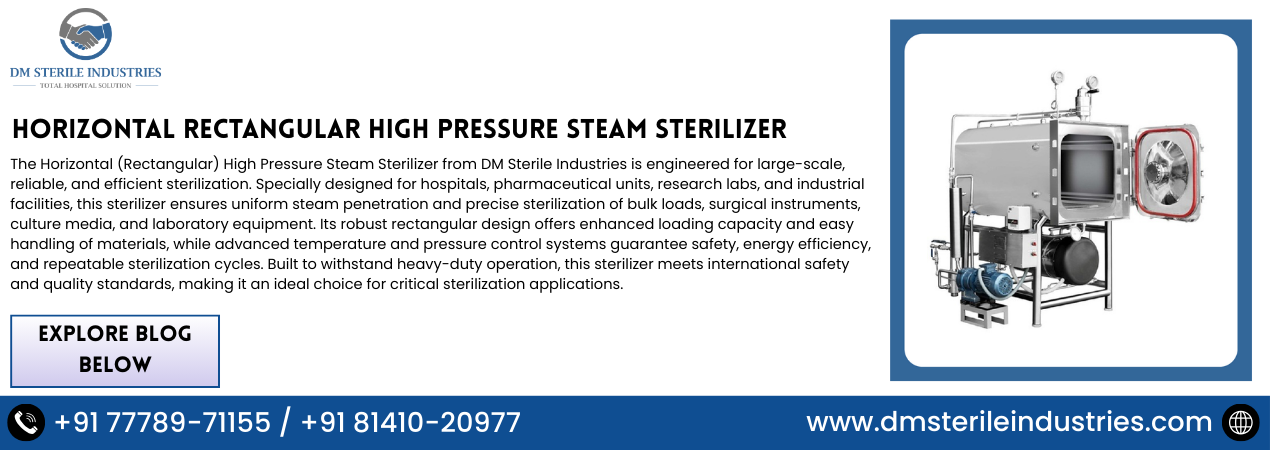
Horizontal Rectangular Steam Sterilizer Autoclave Manufacturer in India
Horizontal Rectangular Steam Sterilizer Autoclave Manufacturer in India
Sterilization is a critical process in healthcare, pharmaceutical manufacturing, biotechnology, and laboratory environments. In high-load and bulk sterilization scenarios, equipment reliability directly impacts patient safety, product integrity, and regulatory compliance. A Horizontal Rectangular Steam Sterilizer Autoclave Manufacturer in India supports these sectors by delivering high-pressure, large-capacity sterilization systems designed for consistent, validated, and repeatable performance.
Horizontal rectangular steam sterilizers are engineered for bulk sterilization where large volumes of instruments, textiles, glassware, and culture media must be processed efficiently. Their rectangular chamber design improves loading capacity and space utilization compared to smaller units. As India's hospitals, pharmaceutical plants, research institutes, and industrial facilities continue to expand, the demand for compliant and high-performance autoclaves has increased significantly.
Understanding Horizontal Rectangular Steam Sterilizers
A horizontal rectangular steam sterilizer is a high-pressure autoclave typically operating between 121°C and 134°C, with adjustable pressures ranging from 15 to 22 psi. The rectangular chamber enables optimized tray arrangement, ensuring uniform steam penetration across bulk loads.
Unlike smaller vertical autoclaves, these systems are built for continuous operation in centralized sterile service departments (CSSD), pharmaceutical production areas, and microbiology laboratories. Their design ensures effective air removal, controlled steam injection, and uniform heat distribution—key factors in achieving validated sterilization cycles.
Stainless steel construction, commonly SS 304 or SS 316, provides corrosion resistance, structural durability, and compliance with hygiene standards. These materials are widely accepted in regulated industries due to their non-reactive properties and ease of cleaning.
Why Large-Capacity Steam Sterilization Is Critical in India
India's healthcare and pharmaceutical infrastructure has expanded rapidly in recent years. With increasing hospital capacities, rising diagnostic centers, and growing pharmaceutical exports, sterilization standards have become more stringent. Facilities must comply with GMP, ISO, and other regulatory frameworks to maintain operational integrity.
Large-scale sterilization equipment supports:
- Centralized hospital sterilization systems
- Pharmaceutical batch sterilization processes
- Laboratory sterilization of culture media and instruments
- Industrial processes requiring controlled temperature cycles
The demand for horizontal rectangular autoclaves in India is driven not only by operational needs but also by regulatory obligations. Proper sterilization is essential for infection control, product safety, and audit readiness.
Key Functional Features of Horizontal Rectangular Steam Sterilizers
Modern high-pressure steam sterilizers incorporate precision control systems and multiple safety mechanisms. Key functional characteristics typically include:
- Heavy-duty rectangular chamber for maximum load efficiency
- Double or triple wall construction for thermal stability
- Microprocessor-based or analog temperature and pressure control
- Uniform steam distribution system
- Automatic pressure cut-off and safety valve mechanisms
- Steam release valve and water level indicators
- Glass wool or ceramic fiber insulation
- Manual or automatic door locking systems
These features support repeatable sterilization cycles, operator safety, and improved energy efficiency. In regulated environments such as pharmaceutical manufacturing, cycle validation and consistency are essential, making precision control systems particularly important.
Construction and Technical Considerations
A Horizontal Rectangular Steam Sterilizer Autoclave Manufacturer in India must address several technical factors during the manufacturing process. Construction quality directly influences performance longevity and compliance capability.
Chamber Design
The horizontal rectangular chamber allows uniform tray loading and efficient bulk processing. Standard sizes such as 300 x 600 x 900 mm or 450 x 600 x 1200 mm are available to suit different operational scales. Custom dimensions are often required in pharmaceutical and research environments.
Material Selection
SS 304 and SS 316 stainless steel are widely used. SS 316 is preferred in pharmaceutical applications where enhanced corrosion resistance and chemical compatibility are required.
Temperature and Pressure Control
Working temperatures between 121°C and 134°C enable effective microbial inactivation. Adjustable pressure settings between 15–22 psi allow cycle customization based on load characteristics.
Insulation System
High-grade insulation minimizes heat loss, improves energy efficiency, and helps maintain stable internal conditions, supporting consistent sterilization outcomes.
Power Supply and Operation
Typically operating on 440V AC, 3-phase power, these systems are designed for heavy-duty industrial usage. Stable electrical configuration ensures reliable performance during extended sterilization cycles.
Applications Across Industries in India
Horizontal rectangular steam sterilizers are widely used across multiple sectors.
In large hospitals, sterilization processes must be centralized and systematic. These autoclaves efficiently process surgical instruments, linens, and reusable medical equipment.
Sterilization of culture media, glassware, and production tools is essential for maintaining controlled sterile manufacturing environments.
Research institutes require validated sterilization of laboratory equipment, media, and experimental materials.
Certain industrial processes require controlled steam sterilization to support quality assurance and compliance protocols.
Step-by-Step Sterilization Process in a Horizontal Rectangular Autoclave
The sterilization cycle in a high-pressure steam sterilizer typically includes the following stages:
Each stage must be precisely controlled to ensure effective microbial destruction. Modern microprocessor systems improve monitoring accuracy and cycle repeatability.
Compliance with GMP and International Standards
Sterilization equipment used in pharmaceutical and healthcare settings must comply with recognized regulatory standards. Indian manufacturers commonly align with GMP, ISO, and related quality frameworks.
Compliance supports:
- Documented validation of sterilization cycles
- Integrated safety mechanisms
- Traceability of operational parameters
- Operational reliability during audits
For hospitals and pharmaceutical facilities, selecting a manufacturer familiar with regulatory requirements is essential for long-term operational stability.
How to Evaluate a Horizontal Rectangular Steam Sterilizer Manufacturer in India
Selecting a sterilizer manufacturer requires technical evaluation rather than promotional considerations. Key assessment factors include:
- Chamber material quality and construction standards
- Accuracy and reliability of control systems
- Integration of essential safety features
- Availability of customized chamber sizes
- Provision of compliance documentation and certifications
- Post-installation technical support
Energy Efficiency and Operational Safety
Modern sterilization systems are engineered for both energy efficiency and operational safety. Double or triple wall insulation reduces heat loss, while automatic pressure cut-off systems protect operators from excessive pressure build-up.
Door safety locks, steam release valves, and water level indicators further enhance operational security. In large hospital or pharmaceutical environments, such safeguards are critical to maintaining uninterrupted workflow and protecting personnel.
Future Trends in Steam Sterilization Technology in India
Steam sterilization technology in India continues to evolve with increasing automation and digital monitoring capabilities. Fully automatic horizontal rectangular steam sterilizers are becoming standard in high-throughput facilities.
Emerging developments include:
- Digital data logging for cycle validation
- Advanced microprocessor-based control systems
- Automated door mechanisms
- Optimized steam distribution engineering
- Enhanced insulation for improved energy efficiency
As healthcare and pharmaceutical sectors expand, demand for technologically advanced and compliance-ready sterilization systems will continue to grow.
Conclusion
A Horizontal Rectangular Steam Sterilizer Autoclave Manufacturer in India plays a vital role in supporting healthcare, pharmaceutical, research, and industrial sectors. These high-pressure steam sterilizers are engineered for large-capacity loads, consistent temperature control, and compliance with stringent regulatory standards. With stainless steel construction, precision control systems, and integrated safety mechanisms, rectangular autoclaves deliver reliable performance for bulk sterilization applications.
As India continues to strengthen its healthcare infrastructure and pharmaceutical manufacturing capabilities, the demand for compliant, high-capacity sterilization systems remains essential. Selecting technically sound, standards-aligned equipment ensures operational reliability, regulatory readiness, and long-term efficiency in sterile processing environments.
Frequently Asked Questions
Rectangular sterilizers provide improved space utilization and are better suited for bulk loading in large facilities. Cylindrical units are typically used in smaller setups with lower load volumes.
Effective sterilization generally occurs between 121°C and 134°C, depending on load type and required exposure time.
Stainless steel, especially SS 304 and SS 316, offers corrosion resistance, durability, and hygienic surfaces suitable for regulated environments such as hospitals and pharmaceutical plants.
Yes, they are widely used in pharmaceutical facilities for sterilizing culture media, glassware, and production equipment under validated conditions.
Key safety features include automatic pressure cut-off systems, safety valves, steam release valves, door safety locks, and water level indicators.
High-grade insulation reduces heat loss, maintains stable temperature conditions, and improves energy efficiency during repeated sterilization cycles.
Quick Links
Our Products
Get In Touch
Plot No. 16, Saffron Industrial Park 1. Opp V.K Bhattha, Nr Morriat Industrial Park, Indore Road. Shingarva, Ahmedubod Gujarat -302430.
info.dmsterileind@gmail.com
+91 7778971155
+91 81410 20977
DM STERILE INDUSTRIES | All Rights Reserved.