
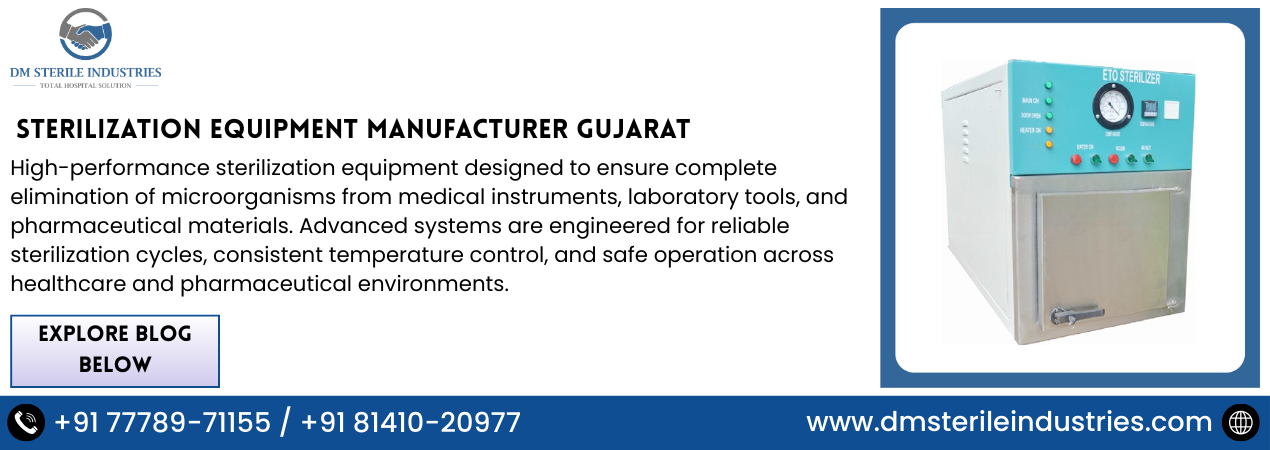
Sterilization Equipment Manufacturer Gujarat
Sterilization is a fundamental requirement in healthcare, pharmaceutical, and laboratory environments where contamination control is essential for safety and product integrity. Hospitals, medical research laboratories, pharmaceutical production facilities, and biotechnology centers depend on sterilization equipment to eliminate microorganisms from instruments and materials before use. A sterilization equipment manufacturer Gujarat plays an important role in supporting healthcare infrastructure by providing systems designed to maintain sterile conditions across medical and scientific environments.
Sterilization equipment is used to destroy bacteria, viruses, spores, and other microorganisms that can compromise patient safety or contaminate sensitive processes. Medical instruments used in surgeries, laboratory testing equipment, pharmaceutical containers, and sterile packaging materials must undergo sterilization to ensure hygienic conditions. Modern sterilization technology enables controlled processes that help healthcare facilities maintain strict infection control standards.
Healthcare facilities require reliable sterilization systems that can operate consistently under demanding workloads. Sterilization equipment is engineered to perform repeated sterilization cycles while maintaining precise control of temperature, pressure, and time to ensure effective and reliable sterilization results.
Understanding Sterilization Equipment and Its Role in Healthcare
Sterilization equipment is designed to eliminate microorganisms from medical instruments, laboratory tools, pharmaceutical materials, and healthcare devices. The process uses controlled heat, steam, chemicals, or other sterilizing methods to ensure that materials remain free from microbial contamination.
In healthcare environments, sterilization systems are commonly used within Central Sterile Services Departments (CSSD), where medical instruments are cleaned, disinfected, sterilized, and prepared for reuse. This process ensures that surgical instruments and medical tools remain safe and ready for patient care.
Sterilization technology plays a vital role in preventing hospital-acquired infections. Medical procedures require sterile instruments, and sterilization equipment ensures that all reusable devices are properly processed before being returned to operating rooms or treatment areas.
Importance of Sterilization Equipment in Medical and Pharmaceutical Facilities
Medical institutions and pharmaceutical industries follow strict hygiene protocols to ensure patient safety and product quality. Sterilization equipment supports these standards by ensuring that instruments, containers, and laboratory materials are free from microorganisms before use.
Healthcare facilities rely on sterilization systems for several critical purposes. Surgical instruments used in operating theatres must be completely sterile to prevent infection during procedures. Laboratory equipment used in diagnostics must also remain contamination-free to ensure accurate testing and reliable results.
Pharmaceutical manufacturing facilities also depend on sterilization equipment to maintain sterile environments during drug production and packaging processes. Even minor contamination risks can affect product safety and quality, making sterilization technology essential in pharmaceutical operations.
Types of Sterilization Equipment Used in Healthcare Systems
Hospitals, laboratories, and pharmaceutical facilities use different types of sterilization equipment depending on the materials being sterilized and the required sterilization method. Each type of sterilization system is designed to handle specific applications.
Common sterilization equipment includes:
- Steam sterilizers used for surgical instruments and medical equipment
- Ethylene oxide sterilizers designed for heat-sensitive medical devices
- Washer-disinfectors used for cleaning and disinfecting instruments before sterilization
- Ultrasonic cleaners used to remove contaminants from complex instruments
- CSSD furniture designed to support sterile workflow management
These systems work together within healthcare facilities to create a complete sterilization workflow that supports safe instrument processing and effective infection control.
How Steam Sterilization Equipment Works
Steam sterilization is one of the most widely used sterilization methods in hospitals and laboratories. This process uses saturated steam under pressure to achieve temperatures high enough to destroy microorganisms and spores.
The sterilization cycle begins by placing instruments or materials inside a sterilization chamber. Air is removed from the chamber so that steam can penetrate all surfaces of the instruments and materials being processed. Once the chamber reaches the required temperature and pressure, the sterilization phase begins.
During this stage, microorganisms are destroyed through exposure to high-temperature steam. After the sterilization cycle is complete, the system releases pressure and enters a drying stage to remove moisture before the instruments are removed from the chamber. Steam sterilization equipment is widely used because it provides reliable sterilization performance without leaving chemical residues on medical instruments.
Applications of Sterilization Equipment in Different Industries
Sterilization technology is used across multiple industries where contamination control is essential. Healthcare facilities remain the largest users of sterilization equipment, but several other sectors also depend on these systems to maintain hygiene standards.
Major applications include:
- Hospitals and surgical centers
- Central sterile services departments
- Pharmaceutical manufacturing facilities
- Biotechnology laboratories
- Diagnostic and pathology laboratories
- Medical device manufacturing units
- Research and academic institutions
Each of these sectors requires sterilization systems capable of handling different types of instruments and materials while maintaining consistent sterilization performance.
Key Features of Modern Sterilization Equipment
Modern sterilization equipment incorporates advanced engineering and safety features that help healthcare facilities maintain strict sterilization standards while improving operational efficiency.
Important features found in sterilization systems include:
- High-pressure sterilization chambers designed for durability
- Temperature and pressure monitoring systems
- Automated sterilization cycles for consistent operation
- Safety interlocks that prevent chamber opening during operation
- Stainless steel construction for hygiene and corrosion resistance
- Uniform steam distribution systems for effective sterilization
These features help ensure that sterilization systems operate safely while delivering reliable sterilization results in healthcare and pharmaceutical environments.
Role of CSSD Equipment in Sterilization Workflows
Central Sterile Services Departments are responsible for managing sterilization operations within hospitals. These departments handle the cleaning, disinfection, sterilization, and storage of medical instruments used throughout healthcare facilities.
Sterilization equipment is a critical component of CSSD operations. Hospitals that perform multiple surgical procedures daily require sterilization systems capable of processing large volumes of instruments efficiently and reliably.
CSSD workflows typically include instrument cleaning, ultrasonic washing, thermal disinfection, and final sterilization. Each stage ensures that instruments are properly prepared before being reused in medical procedures.
Effective sterilization management within CSSD departments helps healthcare facilities maintain infection control standards while ensuring smooth instrument circulation between different hospital departments.
Factors Healthcare Facilities Consider When Selecting Sterilization Equipment
Hospitals and laboratories evaluate several technical factors before installing sterilization equipment. These considerations help ensure that the sterilization systems meet operational requirements and comply with healthcare safety standards.
Important evaluation factors include:
- ?Sterilization chamber capacity and loading configuration
- ?Compatibility with existing hospital sterilization workflows
- ?Reliability of temperature and pressure control systems
- ?Safety features for equipment operators
- ?Ease of maintenance and operational monitoring
- ?Durability of materials used in sterilization chambers
Selecting appropriate sterilization equipment helps hospitals maintain consistent sterilization processes while supporting efficient workflow management.
Maintaining Sterilization Equipment for Reliable Operation
Regular maintenance is essential to ensure that sterilization systems operate efficiently and safely. Hospitals and laboratories implement routine maintenance programs to monitor equipment performance and ensure compliance with sterilization standards.
Maintenance procedures often include inspection of chamber seals, calibration of pressure and temperature sensors, cleaning of steam pipelines, and verification of sterilization cycle parameters. These procedures help maintain the reliability and effectiveness of sterilization equipment over time.
Healthcare facilities also conduct periodic validation tests to confirm that sterilization cycles consistently eliminate microorganisms. This validation process ensures that sterilization systems continue to meet infection control standards and regulatory requirements.
Future Trends in Sterilization Technology
Healthcare technology continues to evolve, and sterilization systems are advancing to meet growing medical demands. Modern sterilization equipment now incorporates digital monitoring systems that allow operators to track sterilization cycles, maintain processing records, and monitor equipment performance.
Automation is becoming increasingly important in sterilization systems. Automated sterilization equipment can manage multiple sterilization cycles while maintaining precise control over temperature, pressure, and exposure times.
As healthcare facilities expand and medical research continues to grow, sterilization technology will remain a vital component of healthcare infrastructure. Reliable sterilization equipment supports patient safety, pharmaceutical quality control, and laboratory research integrity.
Conclusion
Sterilization remains one of the most critical processes in healthcare, pharmaceutical production, and laboratory research. Effective sterilization ensures that medical instruments, laboratory tools, and pharmaceutical materials remain free from harmful microorganisms. A sterilization equipment manufacturer Gujarat contributes to healthcare infrastructure by providing sterilization systems designed to support infection control and hygiene management.
As healthcare facilities and pharmaceutical industries continue to expand, the demand for reliable sterilization equipment is expected to grow. Advanced sterilization systems play an important role in maintaining safety, improving operational efficiency, and supporting the delivery of high-quality healthcare services.
Frequently Asked Questions About Sterilization Equipment
Sterilization equipment is used to eliminate microorganisms from medical instruments, laboratory tools, and pharmaceutical materials. The process ensures that equipment is safe for reuse and prevents contamination in healthcare and research environments.
Sterilization prevents the spread of infections by ensuring that surgical instruments and medical tools are free from harmful microorganisms before they are used in patient care procedures.
Sterilization equipment is used in hospitals, pharmaceutical manufacturing, biotechnology laboratories, diagnostic laboratories, research institutions, and medical device manufacturing facilities.
Steam sterilization works by exposing instruments and materials to high-temperature steam under pressure. This process destroys microorganisms and ensures that materials remain sterile.
CSSD stands for Central Sterile Services Department. It is responsible for cleaning, disinfecting, sterilizing, and distributing medical instruments within hospitals.
CSSD departments commonly use steam sterilizers, ultrasonic cleaners, washer-disinfectors, sterilization trolleys, and other equipment designed to support sterile instrument processing.
Hospitals maintain sterilization standards through routine equipment maintenance, sterilization cycle monitoring, and validation tests to ensure that sterilization equipment operates correctly.