
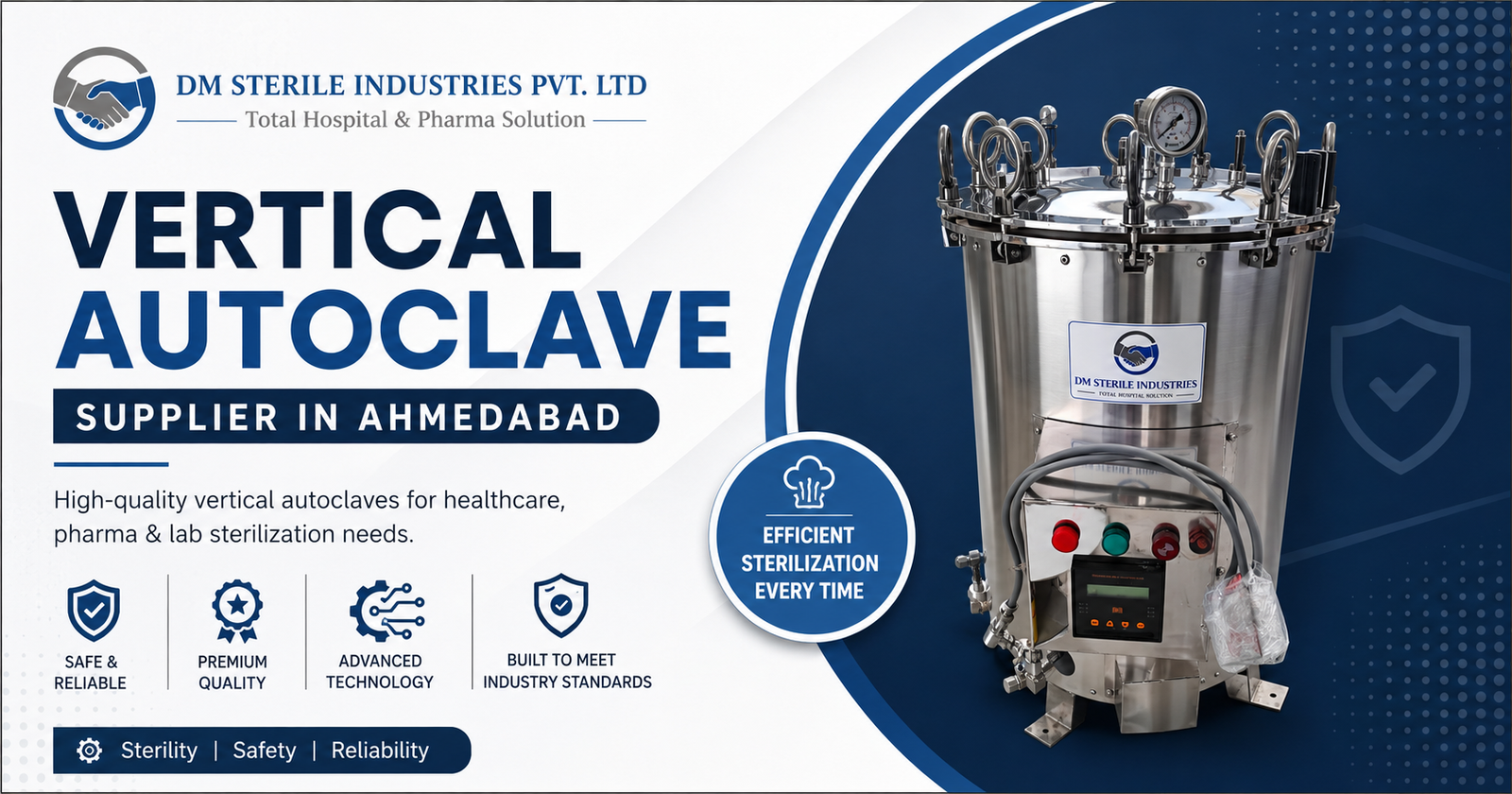
Vertical Autoclave supplier in Ahmedabad
Find reliable vertical autoclave solutions in Ahmedabad. DM Sterile Industries offers quality autoclaves for healthcare and pharma, ensuring sterile environment
What is a Vertical Autoclave? — Overview
A vertical autoclave is a pressure vessel designed to sterilize equipment and supplies by using high-pressure saturated steam. Its upright, cylindrical design allows for efficient use of space, making it ideal for facilities with limited floor area. The sterilization process involves loading items into the chamber, sealing the door, and then heating the chamber with steam under pressure. This elevated temperature and pressure effectively kill microorganisms, including bacteria, viruses, fungi, and spores.
Key Features and Technical Specifications
- Chamber Capacity: Available in various volumes to suit different operational needs, from small laboratory units to larger hospital-grade models.
- Double/Triple Wall Construction: Offers enhanced insulation for better temperature stability and reduced energy consumption. Triple-wall designs provide superior performance.
- Material of Construction: Typically constructed from high-grade stainless steel (e.g., SS 304 or SS 316) for durability, corrosion resistance, and ease of cleaning.
- Safety Features: Equipped with multiple safety interlocks, pressure relief valves, and emergency stop buttons to prevent accidents.
- Control System: Features advanced digital or PLC-based control panels for precise temperature, pressure, and time settings, with programmable cycles.
- Steam Generation: Integrated or external steam generators ensure rapid and efficient steam production for faster cycle times.
- Door Mechanism: Robust locking mechanisms and safety interlocks ensure the door cannot be opened under pressure.
- Validation Ports: Inclusion of ports for easy integration with validation and monitoring equipment to confirm sterilization efficacy.
Industrial Applications and Use Cases
- Hospitals & Healthcare Facilities: Sterilization of surgical instruments, medical devices, glassware, and laboratory equipment.
- Pharmaceutical Manufacturing: Sterilization of stoppers, vials, media, and other components used in drug production.
- Research & Development Laboratories: Sterilization of culture media, glassware, and biohazardous waste.
- Dental Clinics: Sterilization of dental instruments to prevent cross-contamination.
- Veterinary Clinics: Sterilization of surgical tools and equipment.
- Biotechnology Companies: Sterilization of laboratory equipment and consumables for sensitive experiments.
- CSSD (Central Sterile Supply Department): As a core component for high-volume sterilization of reusable medical supplies.
How to Choose the Right Vertical Autoclave
Selecting the appropriate vertical autoclave is crucial for effective sterilization and operational efficiency. Consider these factors:
- Capacity Requirements: Assess the volume and frequency of items needing sterilization to determine the chamber size and cycle duration needed.
- Application Specifics: Different industries have unique sterilization needs. Ensure the autoclave meets the specific standards for your sector (e.g., healthcare vs. pharmaceutical).
- Certifications and Compliance: Verify that the autoclave meets relevant national and international standards (e.g., IS, ISO, CE).
- Supplier Reputation and Experience: Choose a supplier with a proven track record in manufacturing and servicing sterilization equipment.
- After-Sales Support: Inquire about installation, training, maintenance services, and availability of spare parts.
- Customization Options: If your facility has unique space or operational constraints, explore suppliers offering customized solutions.
- Energy Efficiency: Consider models designed for lower energy consumption to reduce operational costs.
Quality Standards and Compliance
For any sterilization equipment, adherence to stringent quality standards is paramount. In India, this often means compliance with Bureau of Indian Standards (BIS) specifications, such as IS 3017 for autoclaves. International standards like ISO 13485 (for medical devices) and ISO 17665 (for sterilization of health care products – moist heat) are also critical benchmarks. Reputable manufacturers will provide documentation and certifications to prove their equipment meets these rigorous requirements. Buyers should always verify these credentials and ensure the equipment is designed for validated sterilization cycles.
Why DM Sterile Industries' Experience and Capability Matters
DM Sterile Industries, established in 2024, brings a focused approach to sterilization solutions. While a newer entity, its foundation is built on the expertise of its founders, Mr. Divyang Koshti and Mr. Maulik Jani, who lead the company with a vision for quality and customer satisfaction in CSSD machines and furniture. Their commitment lies in understanding the precise sterilization needs of industries like healthcare and pharmaceuticals.
The company's capability is demonstrated through its range of autoclaves, designed to meet national and global client requirements. They emphasize robust quality standards and offer custom solutions, indicating an ability to adapt to specific operational demands. Their focus on advanced automation and end-to-end customer support suggests a dedication to providing reliable equipment and maintaining client trust through dependable service and technical assistance.
Installation, Maintenance, and Care Tips
Proper installation and regular maintenance are key to the longevity and effective performance of your vertical autoclave.
- Installation: Ensure the autoclave is installed on a level, stable surface by qualified technicians. Proper electrical connections and ventilation are essential.
- Routine Checks: Daily, check the door gasket for wear and tear, and ensure the drain is clear.
- Weekly Maintenance: Clean the chamber interior with a mild detergent and water. Inspect safety valves and interlocks.
- Monthly/Quarterly Servicing: Schedule professional servicing to check pressure gauges, steam traps, and control systems. Calibrate instruments as per manufacturer recommendations.
- Water Quality: Use distilled or demineralized water to prevent scale buildup and prolong the life of heating elements and the chamber.
- Cycle Monitoring: Always monitor cycle parameters and record them for validation and troubleshooting purposes.
- Operator Training: Ensure all personnel operating the autoclave are thoroughly trained on its functions, safety procedures, and basic maintenance.
Frequently Asked Questions
A vertical autoclave's primary function is to sterilize medical instruments, laboratory equipment, and other materials using high-pressure steam. This process effectively eliminates all forms of microbial life, including bacteria, viruses, and spores, ensuring a sterile environment for critical applications in healthcare and research.
The main difference lies in their orientation and space utilization. Vertical autoclaves have a smaller footprint and are ideal for facilities with limited floor space, as loading and unloading are done from the top. Horizontal autoclaves typically have a larger capacity and are better suited for high-volume sterilization needs where space is not a constraint.
Key safety features include multiple pressure relief valves to prevent over-pressurization, door safety interlocks that prevent opening under pressure, and emergency stop buttons. A reliable control system that monitors and manages temperature and pressure is also crucial for safe operation.
Routine servicing, including functional checks and cleaning, should be performed regularly by trained personnel. Professional maintenance and calibration are typically recommended every six to twelve months, depending on usage. Validation of the sterilization cycles should be conducted periodically and after any significant maintenance or repair.
Vertical autoclaves are highly effective for sterilizing heat-stable and moisture-stable items like metal instruments, glassware, and some plastics. However, they are not suitable for heat-sensitive materials, sharp instruments that could be dulled by steam, or items that cannot withstand moisture and pressure.
It is highly recommended to use distilled or demineralized water. Using tap water can lead to mineral deposits and scale buildup within the autoclave chamber and on heating elements, which can reduce efficiency, cause corrosion, and potentially damage the equipment over time.
Conclusion
For healthcare providers, pharmaceutical manufacturers, and research facilities in Ahmedabad, a reliable vertical autoclave is an indispensable piece of equipment. It ensures the safety of patients, the integrity of research, and compliance with stringent regulatory standards. When selecting a supplier, prioritize experience, quality assurance, adherence to standards, and robust after-sales support. DM Sterile Industries aims to provide these essential qualities, offering solutions tailored to the specific needs of Ahmedabad's growing industrial and healthcare landscape. Investing in a quality vertical autoclave from a trusted provider is an investment in safety, efficiency, and operational excellence.
Get In Touch
Dm Sterile Industries