
Reliable Sterilization Solutions in Gujarat
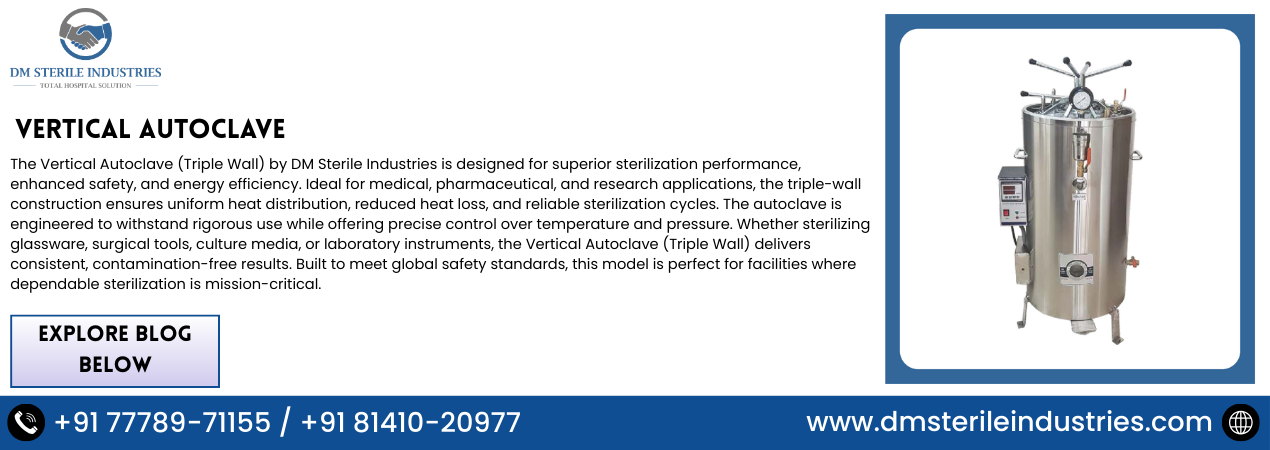
Sterilization is a critical process in healthcare, pharmaceutical manufacturing, laboratory research, and industrial operations. A reliable sterilization system ensures safety, regulatory compliance, and consistent operational performance. As a Vertical Autoclave Supplier in Gujarat, DM Sterile Industries provides double wall vertical autoclaves engineered for dependable steam sterilization across diverse professional environments.
Based in Gujarat, the company serves hospitals, research institutions, laboratories, and industrial facilities that require controlled, uniform, and safe sterilization cycles. The vertical autoclave models are constructed using stainless steel and advanced steam circulation systems to maintain precise temperature and pressure conditions throughout the process.
Understanding Vertical Autoclave Technology
A vertical autoclave is a steam-based sterilization unit that uses high-pressure saturated steam to eliminate bacteria, viruses, fungi, and spores from instruments and materials. Its vertical configuration enables efficient space utilization, making it well-suited for laboratories and medical facilities where floor space is limited.
Double Wall Construction
The double wall design enhances thermal efficiency and operational safety. The inner chamber holds the sterilization load while the outer chamber supports steam generation and insulation, promoting uniform heat distribution and minimizing energy loss.
Regulatory Requirement
In Gujarat's growing healthcare and pharmaceutical ecosystem, reliable sterilization equipment is not just an operational need but a regulatory requirement. Vertical autoclaves are widely preferred for their durability, ease of operation, and consistent performance.
Double Wall Vertical Autoclave – Design and Construction
The double wall vertical autoclave supplied in Gujarat by DM Sterile Industries is manufactured using high-grade stainless steel such as SS 304 or SS 316. This ensures strong corrosion resistance and long service life, particularly in facilities performing continuous sterilization cycles.
The system operates within a working temperature range of 121°C to 134°C, with adjustable working pressure typically between 15–20 psi. These parameters are essential for effective sterilization in medical, laboratory, and pharmaceutical applications.
High-quality insulation materials, including glass wool or ceramic fiber, help retain heat, reduce energy consumption, and maintain stable operating conditions. The outer body remains comparatively safe to handle, while the internal chamber achieves the required sterilization temperatures.
Core Functional Components and Safety Systems
Sterilization equipment must comply with strict safety standards. The vertical autoclave units include integrated components that enhance operational reliability and user protection.
Safety Mechanisms
Pressure gauges, steam release valves, safety valves, and automatic pressure cut-off systems prevent over-pressurization and accidental exposure during operation.
Digital Microprocessor Control
Digital microprocessor controllers provide precise temperature and pressure regulation. Analog thermostat-based models are also available to meet different operational preferences.
Validated Cycle Management
Microprocessor-controlled systems ensure accurate cycle management, especially important in pharmaceutical and research environments where validation and documentation are required.
Automatic Cut-Off
Automatic cut-off systems halt operation if pressure exceeds defined limits, supporting strict adherence to safety norms across all operating environments.
Technical Specifications Overview
The vertical autoclaves are available in multiple chamber sizes. This range allows hospitals, diagnostic laboratories, pharmaceutical units, and research institutions in Gujarat to select equipment aligned with their operational scale and infrastructure.
Applications of Vertical Autoclave in Gujarat
Gujarat has a strong presence in pharmaceuticals, biotechnology, hospitals, and research laboratories. The vertical autoclave supports a wide range of sterilization requirements across these sectors. Common applications include:
- Sterilization of surgical instruments
- Culture media preparation in laboratories
- Sterilization of glassware and laboratory tools
- Decontamination of biohazard waste
- Pharmaceutical batch sterilization
- Research and microbiology testing
These applications require reliable steam penetration and uniform temperature distribution. The double wall configuration supports consistent sterilization performance, even during repeated operational cycles.
Why Double Wall Design Matters in Industrial and Medical Settings
The double wall structure enhances both performance and safety. Improved heat retention reduces energy loss during operation, contributing to stable temperature control essential for validated sterilization cycles.
Insulation also minimizes external surface heat exposure, improving workplace safety. In high-frequency sterilization environments such as hospitals and pharmaceutical production facilities in Gujarat, this design helps reduce operational risks and extend equipment life.
Consistent steam penetration ensures that all items within the chamber receive uniform exposure. This is particularly important when sterilizing complex surgical instruments or laboratory materials that require thorough sterilization.
Compliance and Operational Reliability
Healthcare and pharmaceutical facilities must adhere to established sterilization standards and regulatory guidelines. Equipment used in these environments must deliver repeatable, documented sterilization cycles.
Microprocessor-controlled models enable accurate monitoring of time, temperature, and pressure parameters. This supports validation processes and audit readiness, which is especially significant in Gujarat's pharmaceutical manufacturing sector.
Reliable sterilization safeguards patient safety and helps prevent contamination in research and production settings.
Choosing a Vertical Autoclave Supplier in Gujarat
When selecting a Vertical Autoclave Supplier in Gujarat, several technical and operational factors should be evaluated:
- Quality of chamber material and corrosion resistance
- Accuracy of temperature and pressure control
- Safety mechanisms and automatic cut-off systems
- Availability of multiple chamber sizes
- Digital and analog control options
- After-installation technical support
Local suppliers in Gujarat can provide faster service response and a better understanding of regional regulatory expectations. Proximity also simplifies maintenance coordination and technical consultation.
Role of Vertical Autoclaves in Pharmaceutical Growth of Gujarat
GMP-Compliant Production
Gujarat is one of India's leading pharmaceutical manufacturing hubs. Sterilization systems are essential for maintaining GMP-compliant production environments. Vertical autoclaves are widely used for laboratory testing, culture media sterilization, and small-batch sterilization processes.
Expanding Market Demand
As research facilities and biotechnology startups continue to expand, demand for compact and efficient sterilization equipment remains steady. The vertical autoclave's space-efficient design makes it suitable for both small laboratories and larger institutional settings.
Energy Efficiency and Long-Term Performance
Energy-efficient insulation reduces operational costs while maintaining required performance standards. Faster heating cycles help reduce overall cycle time, improving workflow efficiency in busy hospital and laboratory environments.
Stainless steel construction offers strong resistance to corrosion under high humidity and repeated steam exposure. Over time, durability becomes a critical factor in maintaining consistent sterilization performance without frequent component replacement.
Frequently Asked Questions
Dependable Sterilization for Gujarat's Growing Sectors
As sterilization standards continue to evolve across healthcare, research, and pharmaceutical sectors, selecting a dependable Vertical Autoclave Supplier in Gujarat remains essential. Double wall vertical autoclaves provide durable construction, controlled steam sterilization, enhanced safety, and long-term operational stability.
Within Gujarat's expanding industrial and medical landscape, consistent sterilization supports patient safety, product integrity, and regulatory compliance. A well-designed vertical autoclave system ensures uniform heat distribution, energy efficiency, and reliable performance across diverse applications.