
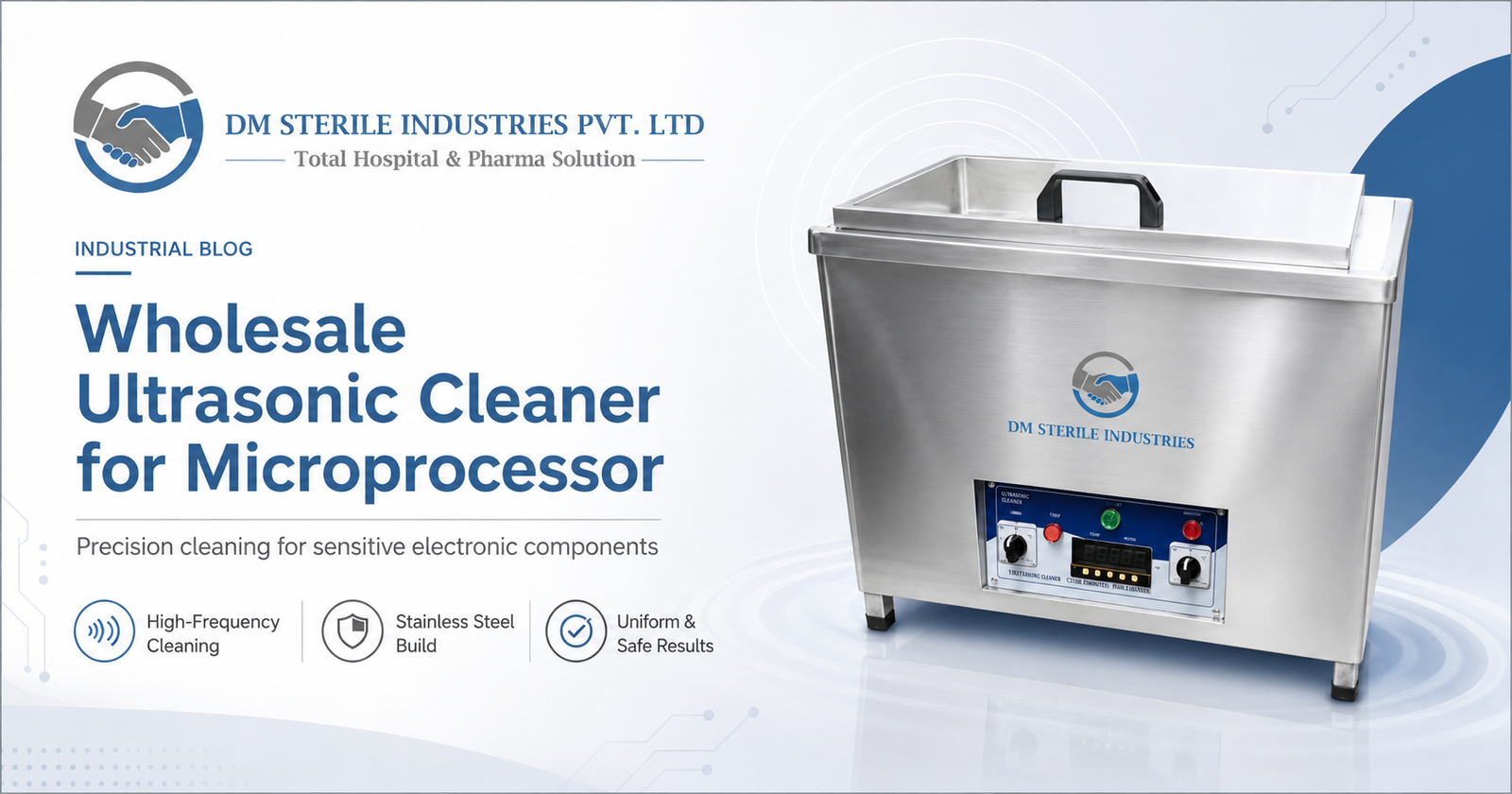
wholesale Ultrasonic Cleaner for microprocessor
Source high-quality wholesale ultrasonic cleaners for microprocessors in Ahmedabad. Ensure precision cleaning for sensitive electronic components with DM Steril
What is an Ultrasonic Cleaner? — Overview
An ultrasonic cleaner is a sophisticated device that uses high-frequency sound waves to agitate a cleaning solution. This agitation creates microscopic cavitation bubbles within the liquid. When these bubbles collapse, they generate intense localized energy that effectively dislodges and removes contaminants from submerged objects. This process is highly effective for cleaning intricate geometries and delicate materials, making it ideal for sensitive electronic components like microprocessors.
Key Features and Technical Specifications
When selecting an ultrasonic cleaner for microprocessor applications, specific features ensure optimal performance and component protection:
- Variable Frequency Control: Allows adjustment of sound wave frequency to match the specific cleaning needs of different microprocessor types and contaminant levels.
- Adjustable Power Output: Enables precise control over the cleaning intensity, preventing damage to delicate circuitry.
- Digital Timer and Temperature Control: Ensures consistent and repeatable cleaning cycles with accurate temperature management of the cleaning solution.
- Stainless Steel Tank: Provides durability and resistance to corrosion from various cleaning agents.
- Degas Function: Removes dissolved gases from the cleaning solution, enhancing cavitation efficiency and cleaning power.
- Integrated Filtration System: Maintains the purity of the cleaning solution, extending its lifespan and ensuring consistent cleaning results.
- Multiple Transducer Configuration: Distributes ultrasonic energy evenly throughout the tank for uniform cleaning.
- Robust Construction: Designed for industrial environments, ensuring longevity and reliable operation.
Industrial Applications and Use Cases
Ultrasonic cleaners are versatile tools with numerous applications, especially in industries handling microprocessors:
- Semiconductor Manufacturing: Cleaning silicon wafers, integrated circuits, and other semiconductor components during various production stages.
- Electronics Assembly: Removing flux residues, solder paste, and particulate matter from printed circuit boards (PCBs) and assembled electronic modules.
- Medical Device Manufacturing: Cleaning intricate components of pacemakers, diagnostic equipment, and other sensitive medical electronics.
- Aerospace and Defense: Ensuring the reliability of microprocessors used in critical avionics, guidance systems, and communication equipment.
- Automotive Electronics: Cleaning microcontrollers and sensors used in engine control units, infotainment systems, and advanced driver-assistance systems (ADAS).
- Research and Development: Maintaining the cleanliness of prototypes and experimental electronic components in laboratory settings.
- Repair and Refurbishment: Thoroughly cleaning microprocessors and related components during the repair of electronic devices.
How to Choose the Right Ultrasonic Cleaner
Selecting the appropriate ultrasonic cleaner is crucial for effective and safe microprocessor cleaning. Consider these factors:
- Tank Capacity and Size: Determine the volume of cleaning solution required and the physical dimensions of the microprocessors or components to be cleaned.
- Frequency and Power Requirements: Match the ultrasonic frequency and power to the size, material, and type of contaminants on the microprocessors.
- Material Compatibility: Ensure the cleaning solution and tank material are compatible with the microprocessors to avoid corrosion or damage.
- Automation and Control Features: Assess the need for programmable cycles, temperature control, and digital displays for precise and repeatable results.
- Filtration and Degassing: Consider if the cleaner includes features to maintain solution purity and optimize cavitation.
- Supplier Reputation and Support: Look for a manufacturer with a proven track record, good customer service, and available technical support.
- Compliance and Certifications: Verify that the equipment meets relevant industry standards for safety and performance.
Quality Standards and Compliance
For critical applications involving microprocessors, adherence to quality standards is non-negotiable. Manufacturers should demonstrate commitment to robust quality management systems, often certified under ISO 9001. Equipment designed for sensitive electronics may also need to comply with standards related to electrostatic discharge (ESD) protection to prevent damage to components. Verifying that the ultrasonic cleaner is built to withstand industrial demands and performs consistently is essential for ensuring the reliability of the cleaned microprocessors.
Why DM Sterile Industries' Experience and Capability Matter
Established in 2024, DM Sterile Industries Private Limited brings a focused approach to providing advanced sterilization and cleaning solutions. While new in its formal establishment, the expertise of its founders, Mr. Divyang Koshti and Mr. Maulik Jani, in CSSD machines and furniture signifies a deep understanding of critical cleaning processes. This experience translates into an ability to source and supply ultrasonic cleaners that meet the stringent demands of microprocessor cleaning.
DM Sterile Industries prioritizes robust quality standards and offers custom solutions, recognizing that off-the-shelf equipment may not always suffice for unique industrial needs. Their commitment to advanced automation and controls, coupled with end-to-end customer support, ensures that clients in Ahmedabad and beyond receive not just a product, but a comprehensive solution. This dedication to proven client satisfaction and technical capability makes them a reliable partner for businesses seeking precision cleaning equipment.
Installation, Maintenance, and Care Tips
Proper installation and regular maintenance are key to the longevity and optimal performance of your ultrasonic cleaner.
- Installation: Place the cleaner on a stable, level surface away from excessive heat or moisture. Ensure adequate ventilation and proper electrical connections as per the manufacturer's guidelines.
- Solution Preparation: Always use the recommended cleaning solutions for microprocessor cleaning. Follow dilution instructions precisely. Never operate the cleaner without sufficient liquid in the tank.
- Daily Operation: Run a degas cycle before the first cleaning session of the day to maximize cavitation. Clean the tank after each use to prevent residue buildup.
- Regular Maintenance: Periodically inspect the transducers for damage. Clean the exterior of the unit with a damp cloth. Follow the manufacturer's recommended schedule for more in-depth maintenance, such as checking seals or replacing filters.
- Troubleshooting: If you notice reduced cleaning efficiency, check the solution level, temperature, and ensure the degas function is utilized. Consult the user manual or contact your supplier for persistent issues.
Frequently Asked Questions
Ultrasonic cleaners are highly effective at removing a wide range of contaminants including flux residues, solder paste, oils, greases, particulate matter, fingerprints, and other microscopic debris that can affect microprocessor performance.
Yes, when the correct frequency, power settings, and cleaning solutions are used, ultrasonic cleaning is very safe for delicate microprocessors. The cavitation process is precise and can clean intricate areas without physical contact that could cause damage.
The frequency of solution changes depends on the application and the level of contamination. Generally, it's recommended to change the solution when it appears visibly dirty or when cleaning efficiency decreases. For critical microprocessor cleaning, more frequent changes may be necessary.
No, it is crucial to use only cleaning solutions specifically formulated for ultrasonic cleaners and compatible with the materials being cleaned. Harsh chemicals or incorrect solutions can damage the cleaner's tank, transducers, or the microprocessors themselves.
The degas function removes dissolved gases from the cleaning solution. This is important because dissolved gases inhibit the formation of effective cavitation bubbles, reducing the cleaning power of the ultrasonic waves. Degassing ensures optimal cleaning performance.
DM Sterile Industries provides comprehensive support, including technical consultation to help select the right ultrasonic cleaner, guidance on installation and operation, and after-sales service. They aim to ensure clients in Ahmedabad and elsewhere have a reliable and effective cleaning solution.
Conclusion
For businesses in Ahmedabad and the surrounding regions that depend on the flawless operation of microprocessors, investing in a high-quality wholesale ultrasonic cleaner is a strategic decision. It ensures the integrity, longevity, and optimal performance of these critical components, directly impacting product quality and operational efficiency. By understanding the technology, considering key features, and partnering with experienced suppliers like DM Sterile Industries, you can secure a cleaning solution that meets your precise industrial needs and supports your manufacturing excellence.
Get In Touch
Dm Sterile Industries