
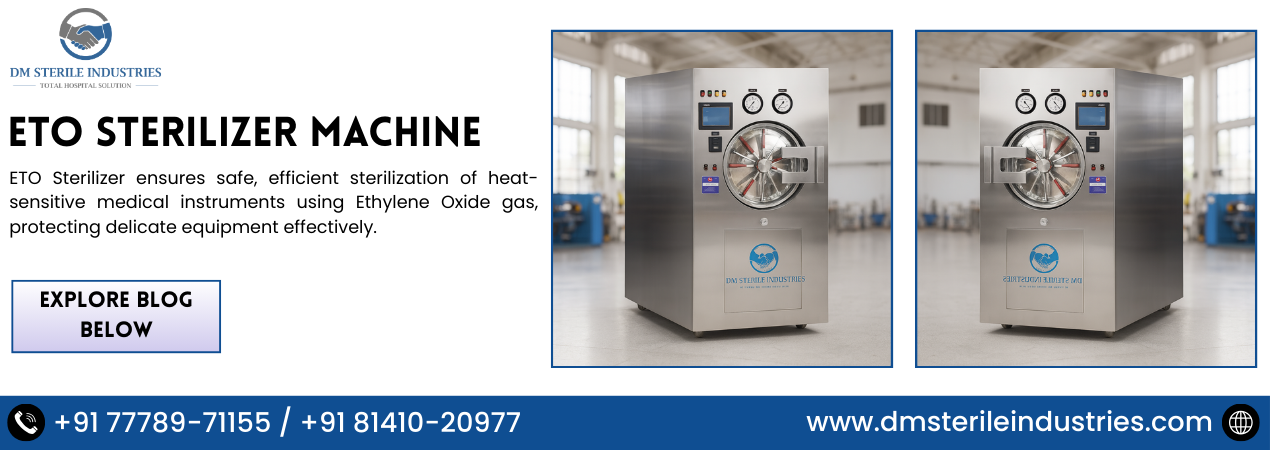
ETO Sterilizer For Ophthalmic Use: Essential for Delicate Eye Instruments
Introduction to ETO Sterilizer For Ophthalmic Use
An ETO Sterilizer For Ophthalmic Use is a specialized, low-temperature sterilization system critical for maintaining the integrity and functionality of delicate eye surgical instruments. Devices used in ophthalmology, such as intraocular lenses, phacoemulsification handpieces, and micro-scissors, are often heat-sensitive, contain intricate plastic or fiber-optic components, and require a sterilization method that guarantees a high sterility assurance level (SAL) without causing damage. Ethylene Oxide (ETO) sterilization is the preferred method, using gas to penetrate surfaces at low temperatures, ensuring all microorganisms are destroyed, and preserving the instrument's complex design.
Working Principle and Cycle for Ophthalmic ETO Sterilization
The process for sterilizing ophthalmic instruments with ETO is carefully controlled. Instruments are first cleaned, dried, and packaged in ETO-permeable materials. In the sterilization chamber, a deep vacuum is created, followed by the introduction of humidity and controlled heat (typically 37°C to 55°C). The **Ethylene Oxide gas** is then introduced, where it alkylates microbial DNA, effectively sterilizing the load. The cycle concludes with a vital aeration phase, which removes all residual ETO gas, making the **eye surgical instruments** safe for immediate use on patients.
Types of ETO Sterilizers for Eye Hospitals and Clinics
- Tabletop Ophthalmic ETO Sterilizers :- Compact, small-volume units ideal for eye clinics and hospital CSSDs with moderate loads.
- Small-Volume Chamber Sterilizers :- Specifically sized units (e.g., 35-50 Liters) designed to handle small, high-value batches of eye instruments.
- 100% ETO Cartridge Systems :- Offer maximum safety and ease of use, eliminating the need for external gas mixing and cylinders.
- Fully Automatic Ophthalmic Systems :- Feature PLC control with touch-screen interfaces for precise, verifiable cycle management and data logging.
Key Features of Ophthalmic Use ETO Sterilizers
- Low-Temperature Operation :- Protects heat-sensitive components common in modern eye surgery, such as micro-lenses and polymer tips.
- Precision Humidity Control :- Essential for effective ETO penetration and microbial destruction at the required low temperature.
- Stainless Steel 316 Grade Chamber :- Ensures resistance to corrosion and maintains chamber integrity over years of use in a medical environment.
- Validated Aeration Cycle :- Guarantees rapid and safe removal of residual ETO, crucial for instruments placed directly inside the eye.
Applications of ETO Sterilizer for Eye Surgical Instruments
- Sterilization of **Phacoemulsification Handpieces** and tips used in cataract surgery, which contain sensitive electronics and plastics.
- Processing of **Intraocular Lenses (IOLs)** and other implantable ophthalmic devices that are highly heat-sensitive.
- Treatment of micro-surgical instruments, **micro-forceps, and vitreoretinal instruments** that cannot withstand steam heat.
- Sterilizing diagnostic and **fiber-optic endoscopes** or imaging probes used in various eye examinations and procedures.
Core Benefits of Using ETO Sterilizers in Ophthalmology
- The low temperature prevents material degradation, ensuring the **optical clarity and precision** of lenses and viewing systems remain intact.
- It is the only method proven effective for **sterilizing intricate, long-lumened** instruments, ensuring the safety of deep surgical sites.
- Provides documented sterility assurance, meeting strict **NABH, ISO, and FDA** guidelines for patient safety in eye care.
- Allows for the sterilization of pre-packaged, single-use items, facilitating efficient inventory management and workflow in the hospital.
Manufacturers & Suppliers of Ophthalmic ETO Sterilizers in India
In India, dedicated manufacturers are focused on delivering high-precision ETO sterilizers specifically tailored for ophthalmic applications. These companies recognize the unique demands of eye surgery, offering reliable, small-to-medium-capacity machines that adhere to international quality standards (ISO 11135). Suppliers provide comprehensive packages, including the necessary ETO cartridges, indicators, and complete validation support, ensuring eye hospitals and surgical centers can achieve impeccable sterility for their most critical and delicate instruments.
Maintenance and Safety Tips
- Prioritize regular (daily) leak testing and calibration of pressure and humidity sensors to ensure cycle parameters are always met.
- Verify that all packaging materials used for ophthalmic devices are certified as compatible and breathable for ETO gas penetration.
- Install a dedicated exhaust and neutralizer system to manage residual gas safely, protecting hospital staff from exposure.
- Use **Biological Indicators** (BIs) routinely to confirm the lethality and effectiveness of the sterilization cycle for sensitive loads.
- Adhere strictly to the manufacturer's guidelines for chamber loading, avoiding overcrowding to ensure uniform gas distribution.
FAQs – ETO Sterilizer For Ophthalmic Use
Contact Details
Talk to our specialists today for tailored solutions and fast assistance.