
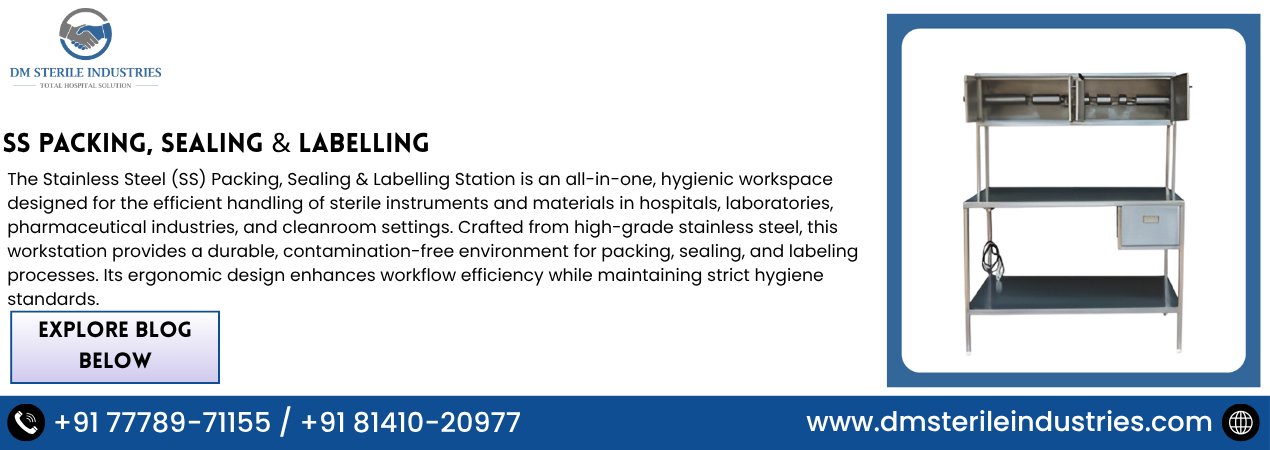
SS Packing, Sealing & Labelling in Ahmedabad
SS Packing, Sealing & Labelling in Ahmedabad
Sterile packaging and labeling play a critical role in healthcare, laboratory, and pharmaceutical operations. A well-designed SS Packing, Sealing & Labelling in Ahmedabad supports controlled packaging procedures while maintaining hygiene, organization, and process consistency. In environments such as CSSD departments, operation theatres, cleanrooms, and diagnostic facilities, the packing and sealing stage is directly linked to sterility assurance and traceability.
Integrated Stainless Steel Packing, Sealing & Labelling Station
A stainless steel packing, sealing, and labeling station is designed to support controlled processes within one integrated workstation. It provides a dedicated area where cleaned and sterilized instruments can be packed, sealed, labeled, and prepared for storage or dispatch under hygienic conditions. In Ahmedabad, increasing investments in hospitals, pharmaceutical manufacturing, and infection-control infrastructure have strengthened demand for reliable sterile processing furniture systems.
Built using SS 304 stainless steel, these systems are widely preferred for corrosion resistance, easy sanitation, and long-term structural durability. Their design focuses not only on cleanliness but also on workflow efficiency, helping staff manage repetitive packing tasks in a practical and ergonomic manner.
Importance of Packing, Sealing and Labelling in Sterile Processing
After sterilization, instruments and medical packs must be handled in a controlled zone before distribution. This stage is often underestimated, yet it remains one of the most critical links in preserving sterility.
Packing and sealing workstations support:
- Preparation of sterile packs before storage
- Proper heat sealing or pouch sealing processes
- Product identification and labeling
- Batch traceability and compliance documentation
- Organized handling of wrapped instruments and consumables
In CSSD workflows, improper packaging or labeling can create contamination risks, identification errors, or reprocessing challenges. A dedicated stainless steel station helps reduce such risks while improving process consistency.
Why Stainless Steel Workstations Are Preferred
Stainless steel remains a preferred material for sterile workstations because it meets the functional requirements of controlled environments.
SS 304 construction is commonly selected because it offers smooth, non-porous surfaces that resist microbial accumulation and support easy sanitation. The material performs well in healthcare and pharmaceutical environments where repeated cleaning and disinfectant exposure are routine.
Matt-finished stainless steel surfaces can also reduce glare while maintaining a professional hygienic appearance. In sterile packaging areas, material selection directly influences cleanliness standards and long-term operational durability.
Functional Features of SS Packing, Sealing & Labelling Stations
Modern SS Packing, Sealing & Labelling in Ahmedabad is designed around both hygiene and usability. Standard configurations often include integrated surfaces for packaging, sealing equipment support, and labeling activities.
Typical functional features may include:
- SS 304 hygienic body construction
- Smooth matt finish for easy cleaning
- Spacious packing and sealing surface
- Labeling provision and document placement zones
- Ergonomic working height for operator comfort
- Storage arrangements for wraps and sterile consumables
- Stable and durable framework for continuous use
With dimensions such as 1500mm x 900mm x 1500mm, these stations provide practical workspace suited for daily sterile handling operations.
Applications in Hospitals and CSSD Departments
Hospitals rely heavily on sterile packaging systems to support surgical and procedural departments. In CSSD units, packing and labeling stations are commonly used for preparing:
- Instrument trays
- Surgical sets
- Sterilization pouches
- Wrapped procedure packs
- Linen packs
- Medical consumable kits
These workstations help streamline post-sterilization workflows while maintaining processed-item traceability.
In larger hospitals where high instrument volumes are handled daily, a dedicated packing station contributes significantly to process organization and infection control.
Use in Pharmaceutical and Cleanroom Environments
Demand for SS Packing, Sealing & Labelling in Ahmedabad extends beyond hospitals into pharmaceutical and controlled manufacturing environments.
Pharmaceutical packaging support zones often require stainless steel furniture that aligns with contamination-control standards. Cleanroom-compatible packing stations are commonly used for sterile component packing, labeling procedures, documentation activities, material segregation, and clean transfer processes.
Because stainless steel supports easy decontamination and particle-friendly surfaces, it aligns well with clean manufacturing protocols.
Workflow Efficiency Benefits
A properly designed packing and sealing station improves workflow efficiency, not merely work surface availability.
Operational advantages often include:
- Reduced handling movement during packing tasks
- Better organization of sterile supplies
- Improved labeling accuracy
- Faster processing turnaround
- Clear segregation between processed and unprocessed materials
- Lower risk of packaging damage or identification errors
These workflow improvements become increasingly valuable in facilities managing large daily sterilization loads.
Why Ahmedabad Has Growing Demand for Sterile Packing Stations
Healthcare and pharmaceutical growth in Ahmedabad has increased demand for specialized CSSD furniture and sterile processing systems.
Several factors contribute to this demand. Growing hospital infrastructure requires advanced infection-control equipment. Pharmaceutical and cleanroom sectors require hygienic stainless steel support furniture. Diagnostic and surgical centers continue upgrading sterile handling areas. Compliance-driven procurement has also increased preference for process-oriented workstations over generic tables.
As a result, SS Packing, Sealing & Labelling in Ahmedabad is increasingly viewed as a specialized operational requirement rather than standard furniture procurement.
Factors to Consider Before Choosing a Packing and Labelling Station
Selecting the right system involves evaluating process requirements, not only dimensions.
- Material grade should preferably be SS 304 for hygiene-critical applications
- Surface finish should support easy cleaning
- Workstation size should match packaging volume and available layout
- Ergonomic height is important for repetitive operator use
- Design should support proper workflow movement within CSSD or cleanroom operations
Buyers also often evaluate compatibility with sealing machines, labeling devices, and sterile wrap handling procedures.
Role in Infection Control and Traceability
Packing and labeling directly support infection-control practices.
A controlled workstation helps ensure sterile packs remain protected during post-sterilization handling. Labeling systems improve identification of contents, sterilization cycles, dates, and traceability records.
In many facilities, traceability has become essential not only for internal quality systems but also for accreditation and regulatory compliance. A dedicated stainless steel station supports this requirement in a structured manner.
Maintenance and Hygiene Practices
Maintenance of stainless steel packing stations is generally straightforward, though routine hygiene practices remain important.
Recommended practices include:
- Daily cleaning with approved disinfectants
- Routine inspection of surfaces and edges
- Avoidance of corrosive cleaning agents
- Regular inspection of sealing support areas
- Verification of storage cleanliness for packaging materials
Consistent maintenance helps preserve both hygiene standards and equipment service life.
Future Relevance of Sterile Packing Workstations
As sterile processing departments continue modernizing, integrated workstations are becoming increasingly important.
Facilities are shifting from simple tables toward purpose-built CSSD furniture that supports packaging, sealing, labeling, traceability, and workflow integration in one system.
This trend indicates growing relevance for SS Packing, Sealing & Labelling in Ahmedabad across hospitals, pharmaceutical plants, and cleanroom applications.
Conclusion
SS Packing, Sealing & Labelling in Ahmedabad serves an important role in sterile processing environments where hygiene, workflow efficiency, and traceability are essential. Whether used in hospitals, CSSD departments, pharmaceutical units, or cleanrooms, these stainless steel workstations support organized packing, sealing, and labeling operations under controlled conditions.
With SS 304 construction, ergonomic design, and hygienic performance, these systems remain a practical infrastructure component for facilities focused on sterile handling quality.
Frequently Asked Questions
Get In Touch
Quick Links
Our Products
Get In Touch
Plot No. 16, Saffron Industrial Park 1. Opp V.K Bhattha, Nr Morriat Industrial Park, Indore Road. Shingarva, Ahmedubod Gujarat -302430.
info.dmsterileind@gmail.com
+91 7778971155
+91 81410 20977
DM STERILE INDUSTRIES | All Rights Reserved.