
Heat Sealing Machine for Medical Packaging Systems
Home Heat Sealing Machine for Medical Packaging Systems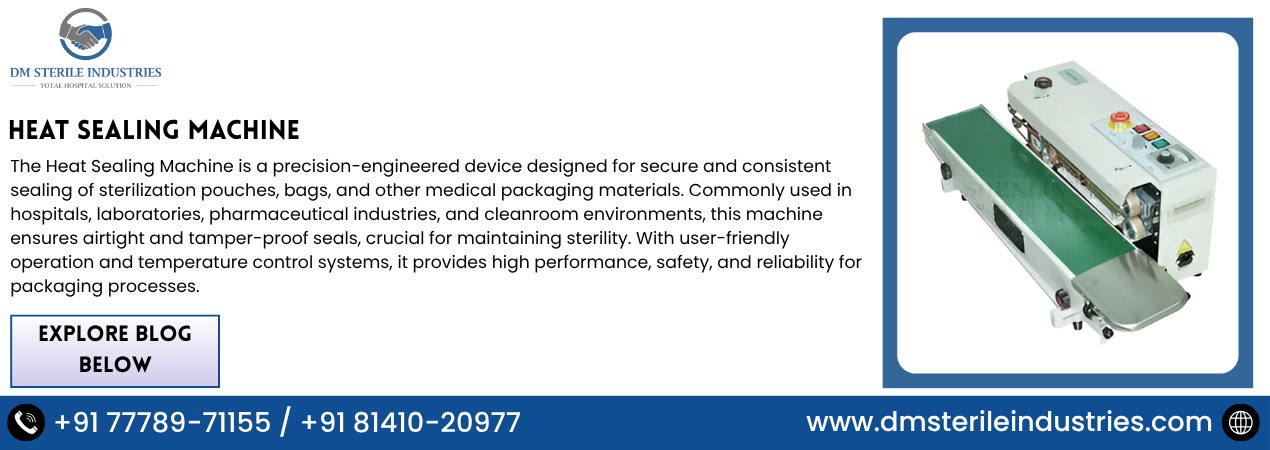
Heat Sealing Machine for Medical Packaging Systems
Heat Sealing Machine for Medical Packaging Systems
In medical and laboratory environments, maintaining sterility is a critical requirement that directly impacts patient safety, product integrity, and regulatory compliance. A heat sealing machine plays a key role in this process by ensuring that sterilization pouches, bags, and packaging materials are sealed securely and consistently. These machines are designed to create airtight, tamper-resistant seals that protect medical instruments and supplies from contamination during storage and handling.
The demand for reliable sealing solutions has grown significantly across healthcare facilities, pharmaceutical production units, and cleanroom environments. Heat sealing machines are engineered for high-precision applications, offering stable temperature control, adjustable sealing speed, and compatibility with a wide range of packaging materials. Their function extends beyond sealing, supporting the overall sterility chain within medical workflows.
Understanding the Role of Heat Sealing Machines in Sterile Packaging
Heat sealing machines apply controlled heat and pressure to thermoplastic materials, allowing them to bond effectively. In medical applications, this ensures that sterilization pouches and packaging films remain intact under varying environmental conditions. Seal integrity is essential for preventing microbial contamination and ensuring that medical devices remain sterile until use.
Unlike conventional equipment, medical-grade heat sealing machines are built to deliver consistent results over repeated cycles. This reliability is critical in environments where packaging accuracy directly affects compliance with healthcare standards. Advanced temperature control systems and conveyor-based mechanisms support continuous operation, making them suitable for high-volume packaging tasks.
Key Functional Features of Heat Sealing Machines
Heat sealing machines used in medical settings include functional features that enhance performance and ease of use. These capabilities are designed to meet the operational demands of hospitals, laboratories, and pharmaceutical units.
- Electronic constant temperature control ensures stable and uniform sealing
- Adjustable speed transmission allows precise control over sealing rate
- Embossing capability enables marking of batch numbers, dates, and identification details
- Compatibility with materials such as PE, PP, and aluminium foil
- Adjustable sealing width and height for different packaging sizes
- Conveyor system supports continuous and efficient sealing operations
- Wide temperature range for handling diverse packaging requirements
These features support efficient sealing processes, reduce the risk of packaging failure, and help maintain compliance with sterilization protocols.
Applications of Heat Sealing Machines in Healthcare and Industry
Heat sealing machines are widely used across sectors where sterile packaging is essential. Their versatility allows them to handle different materials and packaging formats, making them suitable for multiple applications.
- Hospitals and clinics for sealing sterilization pouches
- Laboratories for packaging diagnostic and research materials
- Pharmaceutical industries for secure product packaging
- Cleanroom environments requiring strict contamination control
- Medical device manufacturing units for sterile storage
These applications highlight the importance of heat sealing machines in maintaining hygiene standards and ensuring safe handling of sensitive materials.
Working Principle and Operational Process
A heat sealing machine operates by applying controlled heat and pressure to the sealing area of the packaging material. The heating element melts the inner layers, which are then pressed together to form a strong and durable seal. As the material cools, it solidifies to create a secure bond.
In continuous band sealing machines, the process is automated through a conveyor system that moves packaging material through the sealing unit. Conveyor speed can be adjusted to match the required sealing time, ensuring optimal results for different materials. Temperature control systems maintain consistent heat levels, preventing overheating or under-sealing.
The embossing mechanism allows operators to add essential information such as batch numbers and manufacturing dates directly onto the sealed surface. This feature is particularly important in medical and pharmaceutical environments where traceability is required.
Technical Specifications and Performance Parameters
Heat sealing machines are designed with specific technical parameters to meet industrial and medical requirements. These specifications ensure reliable performance and adaptability across different applications.
The temperature range typically extends from 0 to 300 degrees Celsius, allowing the machine to handle various thermoplastic materials. The power supply operates on standard single-phase electrical systems, ensuring compatibility with common infrastructure. Energy consumption is optimized to maintain efficiency without compromising performance. Sealing speed can be adjusted within a defined range, allowing operators to balance productivity and sealing quality. Conveyor systems are designed to handle a specified load capacity, supporting continuous operation without interruptions. These parameters ensure consistent performance under varying working conditions.
Factors to Consider When Selecting a Heat Sealing Machine
Selecting the right heat sealing machine requires careful evaluation of operational needs, material compatibility, and performance requirements. Understanding these factors helps in choosing equipment suited to specific applications.
- Type of packaging material to be sealed
- Required sealing speed and production volume
- Accuracy and stability of temperature control
- Compatibility with medical or industrial standards
- Ease of operation and maintenance
- Availability of adjustable features for flexibility
Considering these factors helps ensure that the selected machine delivers reliable performance over time.
Importance of Consistent Sealing in Sterilization Processes
In sterilization workflows, sealing quality directly affects the effectiveness of the entire process. A properly sealed pouch ensures that sterilized instruments remain protected from external contaminants until use. Any compromise in sealing can lead to contamination and render the sterilization process ineffective.
Heat sealing machines minimize such risks by providing uniform sealing across all packaging units. Their ability to maintain consistent temperature and pressure ensures that each seal meets required standards. This consistency is essential in healthcare environments where patient safety is critical.
Maintenance and Operational Best Practices
Regular maintenance and proper operation are essential for ensuring the long-term performance of heat sealing machines. Following recommended practices helps maintain efficiency and prevent operational issues.
- Regular cleaning of sealing components to prevent residue buildup
- Periodic inspection of heating elements and conveyor systems
- Calibration of temperature control systems for accuracy
- Proper handling of packaging materials to avoid damage
- Routine checks for mechanical wear and tear
Adhering to these practices helps maintain consistent performance and extend equipment lifespan.
Conclusion
Heat sealing machines are an essential component of medical and industrial packaging systems, providing reliable and consistent sealing performance. Their ability to create airtight seals helps maintain the integrity of sterilized products, supporting safe storage and handling. With features such as precise temperature control, adjustable speed, and embossing capabilities, these machines are well suited for high-precision applications.
By understanding their functionality, applications, and operational requirements, users can effectively integrate heat sealing machines into their workflows, ensuring efficiency, compliance, and long-term reliability.
Frequently Asked Questions
Quick Links
Our Products
Get In Touch
Plot No. 16, Saffron Industrial Park 1. Opp V.K Bhattha, Nr Morriat Industrial Park, Indore Road. Shingarva, Ahmedubod Gujarat -302430.
info.dmsterileind@gmail.com
+91 7778971155
+91 81410 20977
DM STERILE INDUSTRIES | All Rights Reserved.