
Horizontal Cylindrical Steam Sterilizer in Ahmedabad
Home Horizontal Cylindrical Steam Sterilizer in Ahmedabad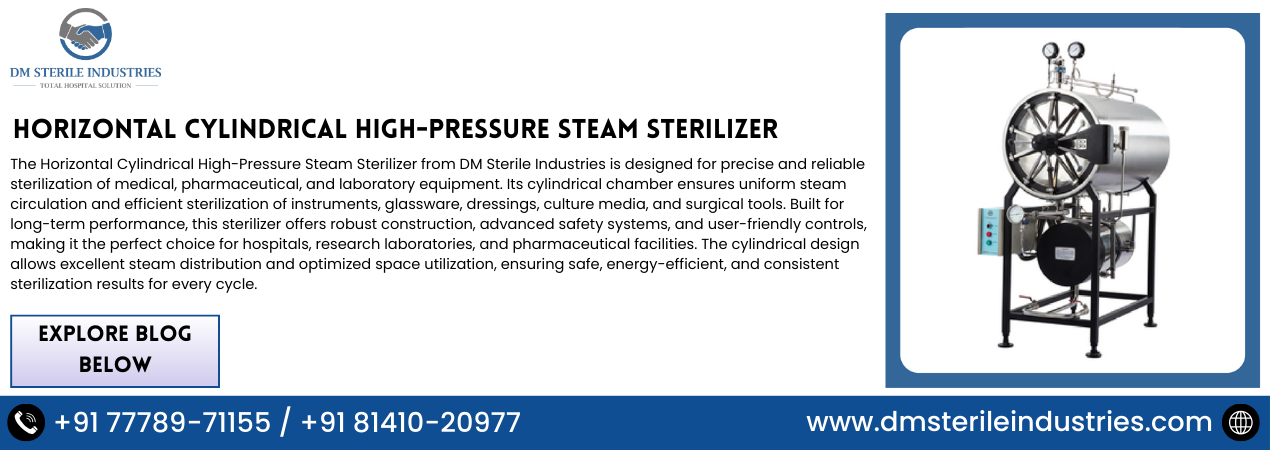
Horizontal Cylindrical Steam Sterilizer in Ahmedabad
Horizontal Cylindrical Steam Sterilizer in Ahmedabad
Sterilization plays a critical role in healthcare, pharmaceutical production, laboratory research, and industrial processing. A Horizontal Cylindrical Steam Sterilizer in Ahmedabad is widely used for dependable, high-pressure steam sterilization of instruments, materials, and equipment. Designed for consistent temperature and pressure control, this type of autoclave ensures complete microbial elimination while maintaining operational efficiency and safety compliance.
DM Sterile Industries manufactures horizontal cylindrical high-pressure steam sterilizers engineered for hospitals, pharmaceutical companies, microbiology laboratories, and research facilities. With a cylindrical chamber structure, stainless steel construction, and integrated safety mechanisms, these sterilizers support regulated, repeatable sterilization cycles suited for demanding institutional environments across Ahmedabad and Gujarat.
Understanding Horizontal Cylindrical High-Pressure Steam Sterilizers
A horizontal cylindrical steam sterilizer operates using saturated steam under controlled pressure. The cylindrical chamber design promotes uniform steam distribution, which is essential for effective sterilization. Steam penetration must reach all instrument surfaces and materials to eliminate bacteria, viruses, fungi, and resistant spores.
Unlike smaller vertical autoclaves used in limited clinical settings, horizontal cylindrical models are built for higher load capacity and continuous, heavy-duty operations. They are commonly installed in hospitals, Central Sterile Supply Departments (CSSD), pharmaceutical production units, and research laboratories where uninterrupted sterilization cycles are required.
The horizontal configuration allows front-loading access, improved space utilization, and easier handling of trays, baskets, and bulk materials. This design supports efficient workflow in medical and laboratory environments.
Core Construction and Engineering Standards
The structural design of a Horizontal Cylindrical Steam Sterilizer in Ahmedabad emphasizes durability, hygiene, and regulatory compliance. The chamber is typically constructed from high-grade stainless steel such as SS 304 or SS 316, offering corrosion resistance, high-temperature tolerance, and extended service life.
Double-wall or triple-wall construction enhances insulation and heat retention. Insulation materials such as high-density glass wool or ceramic fiber reduce heat loss, improving energy efficiency and maintaining stable sterilization parameters throughout each cycle.
Working pressure generally ranges from 15 to 22 psi, while operating temperatures range between 121°C and 134°C. These parameters are adjustable according to sterilization requirements and material compatibility.
Temperature control is managed through digital microprocessor controllers or precision thermostats, enabling accurate monitoring and cycle regulation. Safety systems—including automatic pressure cut-off, safety valves, steam release valves, water level indicators, and door safety locks—ensure secure and controlled operation.
How Steam Sterilization Works
Steam sterilization uses moist heat under pressure to destroy microorganisms. The process follows controlled stages to ensure thorough sterilization:
- Chamber loading with instruments or materials
- Air removal from the chamber
- Steam injection and pressure build-up
- Exposure at required temperature and time
- Controlled exhaust and pressure release
- Cooling and unloading
The cylindrical chamber promotes even steam circulation, minimizing cold spots and ensuring consistent sterilization across the entire load.
Applications of Horizontal Cylindrical Steam Sterilizers
Horizontal cylindrical sterilizers are widely used across healthcare and industrial sectors in Ahmedabad and surrounding regions. Common applications include:
- Surgical instrument sterilization in hospitals
- Sterilization of dressing materials and linens
- Laboratory glassware and culture media sterilization
- Pharmaceutical production sterilization processes
- Industrial sterilization of equipment and tools
Their ability to manage large loads while maintaining consistent cycle performance makes them suitable for institutions with high daily sterilization demands.
Importance in Healthcare Facilities
Hospitals in Ahmedabad rely on reliable sterilization systems to maintain strict infection control standards. Surgical instruments, operating theater equipment, and patient-care tools must be sterilized thoroughly to prevent cross-contamination and healthcare-associated infections.
A Horizontal Cylindrical Steam Sterilizer in Ahmedabad supports hospital infection control protocols through validated cycle parameters and consistent steam penetration. The cylindrical chamber ensures uniform heat distribution, which is particularly important for complex surgical instruments and bulk sterilization loads.
Compliance with GMP, ISO, and healthcare standards further ensures that sterilization processes meet regulatory and quality requirements.
Role in Pharmaceutical and Research Industries
Pharmaceutical manufacturing facilities require controlled sterilization environments to protect product integrity and prevent contamination. Steam sterilizers are used to sterilize glassware, media, equipment components, and certain production materials under validated conditions.
Research and microbiology laboratories also depend on reliable sterilization systems for culture preparation and experimental procedures. Accurate temperature and pressure control support reproducibility, safety, and regulatory compliance in laboratory operations.
In Ahmedabad's expanding pharmaceutical and research sectors, horizontal cylindrical steam sterilizers provide scalable and compliant sterilization solutions for regulated environments.
Key Technical Considerations Before Installation
Selecting the appropriate sterilizer requires careful evaluation of operational requirements. Key considerations include:
- Required chamber size and load capacity
- Types of materials to be sterilized
- Frequency of sterilization cycles
- Available power supply and installation space
- Desired automation level (manual or automatic door system)
Available chamber sizes such as 300 x 600 mm, 400 x 900 mm, 500 x 1000 mm, and custom dimensions allow institutions to choose configurations aligned with their workflow. Automation options, including microprocessor-based control panels, enhance monitoring accuracy, data logging, and operational consistency.
Safety and Compliance Standards
Safety is fundamental in high-pressure steam sterilization. Modern sterilizers incorporate multiple protection systems to ensure safe operation and prevent accidents.
Automatic pressure cut-off mechanisms prevent over-pressurization. Safety valves and steam release valves regulate internal pressure. Water level indicators prevent dry heating conditions, and door safety locks prevent accidental opening under pressure.
Compliance with GMP and ISO standards ensures sterilization processes meet established quality and regulatory expectations in healthcare and pharmaceutical sectors.
Energy Efficiency and Operational Reliability
Energy efficiency is increasingly important for hospitals and industrial facilities in Ahmedabad. Double- or triple-wall construction minimizes heat loss, maintaining internal temperature stability while reducing energy consumption.
Rapid heating cycles improve throughput without compromising sterilization effectiveness. Stable temperature retention reduces variability and supports predictable sterilization outcomes.
Heavy-duty construction and corrosion-resistant materials contribute to long operational life and reduced maintenance requirements.
Installation and Maintenance Considerations
Proper installation is essential for optimal performance and safety. Horizontal cylindrical sterilizers require stable flooring, adequate ventilation, proper drainage, and appropriate power supply configuration—typically 440V AC, 3-phase, 50Hz.
Routine maintenance includes inspection of gaskets, pressure valves, temperature sensors, and insulation integrity. Periodic validation testing ensures sterilization parameters remain accurate and compliant.
Preventive maintenance schedules help reduce downtime and extend equipment lifespan, particularly in high-usage environments such as CSSD departments and pharmaceutical facilities.
Why Ahmedabad Has Growing Demand for Steam Sterilizers
Ahmedabad is a significant hub for healthcare infrastructure, pharmaceutical manufacturing, and research institutions. The increasing number of hospitals, diagnostic centers, and industrial facilities has created sustained demand for dependable sterilization systems.
Greater regulatory emphasis on hygiene, infection control, and quality manufacturing standards further drives the adoption of high-pressure steam sterilizers. Institutions require durable, compliant, and technically reliable sterilization equipment to maintain operational integrity.
A Horizontal Cylindrical Steam Sterilizer in Ahmedabad addresses these needs by offering scalable sterilization capacity for diverse institutional requirements.
Frequently Asked Questions
Quick Links
Our Products
Get In Touch
Plot No. 16, Saffron Industrial Park 1. Opp V.K Bhattha, Nr Morriat Industrial Park, Indore Road. Shingarva, Ahmedubod Gujarat -302430.
info.dmsterileind@gmail.com
+91 7778971155
+91 81410 20977
DM STERILE INDUSTRIES | All Rights Reserved.