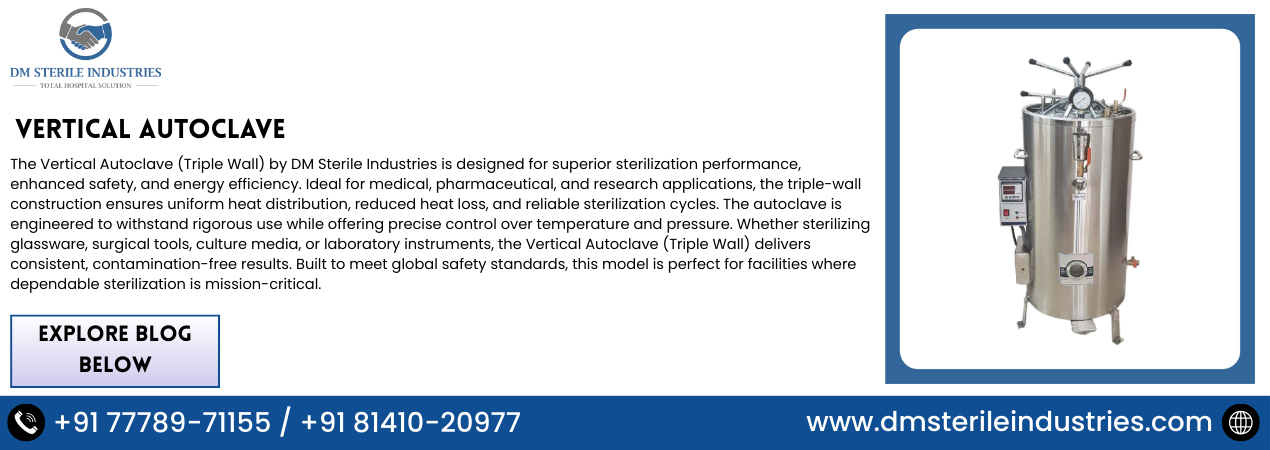
Understanding the Role of Vertical Autoclaves in Modern Sterilization
A vertical autoclave is a steam-based sterilization system developed to
eliminate microorganisms from medical instruments, laboratory materials, culture media, and pharmaceutical
tools. The process relies on saturated steam applied at controlled temperatures and pressures to achieve
effective sterilization. Vertical configurations are commonly preferred in facilities where space efficiency,
batch processing capability, and operational simplicity are important considerations.
In hospitals, laboratories, and pharmaceutical units, sterilization is a
critical requirement rather than an optional process. It directly influences patient safety, research
reliability, and adherence to regulatory guidelines. A well-engineered vertical autoclave ensures repeatable
sterilization cycles, uniform heat penetration, and safe handling throughout operation. These systems are
widely used in microbiology laboratories, pathology units, research institutes, and CSSD departments.
Vertical Autoclave (Double Wall) Overview
The double wall vertical autoclave is engineered to deliver reliable and
safe sterilization performance. Both the inner and outer chambers are manufactured using stainless steel,
offering corrosion resistance, structural strength, and extended service life. The double wall construction
enhances thermal insulation, reduces heat loss, and improves operator safety during high-temperature
sterilization cycles.
Efficient steam circulation within the chamber promotes uniform temperature
distribution, enabling effective sterilization of surgical instruments, glassware, dressing materials, and
laboratory media. The system is designed to operate within controlled pressure and temperature ranges that
align with standard medical and pharmaceutical sterilization protocols.
Key Design and Functional Characteristics
The double wall vertical autoclave is developed to meet the operational
demands of both continuous and batch sterilization. Its design emphasizes safety, efficiency, and ease of
operation without compromising sterilization quality.
Notable functional characteristics include:
- Uniform steam circulation to support consistent sterilization outcomes
- Controlled temperature range generally between 121°C and 134°C
- Adjustable working pressure to suit varied applications
- Integrated safety mechanisms such as pressure cut-off systems and steam
release valves
- Insulated chamber design that helps minimize energy loss
- Compatibility with digital microprocessor or analog control systems,
depending on configuration
These characteristics allow the autoclave to perform reliably across
different usage environments while maintaining consistent sterilization standards.
Manufacturing Standards Followed in Gujarat
As a vertical autoclave manufacturing company in Gujarat, DM Sterile
Industries operates within an industrial ecosystem known for precision fabrication, stainless steel
processing, and compliance-driven manufacturing. Gujarat's strong pharmaceutical and healthcare manufacturing
base demands strict adherence to quality and safety requirements.
Typical manufacturing processes include the selection of certified stainless
steel grades such as SS 304 or SS 316, controlled welding and chamber fabrication, integration of pressure and
temperature control components, insulation using high-grade materials, and functional testing under defined
operating conditions. Each production stage is aligned with application-specific requirements to ensure
reliable performance in real-world sterilization environments.
Applications Across Healthcare and Pharmaceutical Sectors
Vertical autoclaves are widely used across sectors where effective
sterilization is essential. Their adaptable design makes them suitable for routine as well as specialized
applications.
Common application areas include:
- Hospital CSSD departments for sterilization of surgical instruments
- Medical laboratories for glassware and culture media preparation
- Pharmaceutical units for sterilizing tools and components
- Research institutes and educational laboratories
- Biotechnology and microbiology testing facilities
- Industrial units requiring controlled sterilization processes
The vertical orientation supports efficient loading and unloading, making
the system practical for facilities with limited floor space.
Why Double Wall Construction Matters
Double wall construction contributes significantly to both performance and
operational safety. The outer chamber acts as an insulating barrier, lowering external surface temperatures
and reducing heat radiation into surrounding areas. This improves energy efficiency while enhancing operator
safety during prolonged or repeated sterilization cycles.
From a durability perspective, double wall designs help maintain pressure
stability and structural integrity over extended periods of use. This becomes particularly important in
facilities where autoclaves are operated across multiple cycles each day.
Quality Control and Safety Considerations
Sterilization equipment must function under precise operating conditions to
deliver effective results. Quality control measures during manufacturing help ensure that temperature
accuracy, pressure stability, and cycle consistency meet application requirements.
Safety considerations incorporated into vertical autoclaves include
automatic pressure cut-off systems, calibrated pressure gauges, and steam release valves. These features help
prevent over-pressurization and support safe steam discharge after cycle completion. Proper insulation and
chamber design further reduce operational risk.
Meeting Regulatory and Compliance Expectations
Healthcare and pharmaceutical facilities are governed by stringent
regulatory guidelines related to sterilization and infection control. Equipment used in such environments must
support compliance during routine operations as well as external audits.
Vertical autoclaves manufactured in Gujarat are designed to support these
expectations through controlled sterilization parameters, consistent operational performance, and materials
suitable for clean environments. Clear documentation, installation guidance, and operational clarity further
assist end users in managing compliance requirements effectively.
Location Advantage of Gujarat-Based Manufacturing
Gujarat offers logistical, industrial, and technical advantages for
manufacturing medical and pharmaceutical equipment. Its proximity to pharmaceutical hubs, availability of
skilled labor, and established supply chains make it a favorable location for sterilization equipment
manufacturing.
For buyers within Gujarat and nearby regions, local manufacturing simplifies
installation coordination, service support, and customization requirements. It also enables closer
collaboration between manufacturers and end users to address specific operational needs.
How to Evaluate a Vertical Autoclave for Your Facility
Selecting the right vertical autoclave requires careful evaluation of
operational needs rather than focusing only on capacity or dimensions. Facilities should consider usage
frequency, material types, and compliance obligations before finalizing a system.
Key evaluation points include:
- Chamber size appropriate for intended load volumes
- Accuracy and consistency of temperature and pressure control
- Safety features and insulation quality
- Material compatibility with sterilized items
- Ease of operation and routine maintenance
- Availability of technical support and documentation
A well-matched autoclave supports reliable sterilization without adding
unnecessary operational complexity.
Long-Term Reliability and Maintenance Considerations
Vertical autoclaves represent long-term investments for healthcare and
laboratory facilities. Regular maintenance, calibration, and correct operating practices help extend equipment
life and maintain sterilization effectiveness.
Design features such as corrosion-resistant materials, accessible control
systems, and standardized components simplify routine servicing. Clear operating procedures and trained
personnel further reduce downtime and operational risks over time.
Conclusion
A vertical autoclave plays an essential role in maintaining hygiene,
safety, and regulatory compliance across healthcare, laboratory, and pharmaceutical environments. As a
vertical autoclave manufacturing company in Gujarat, DM Sterile Industries operates within a region recognized
for medical and pharmaceutical manufacturing expertise. With double wall construction, controlled
sterilization parameters, and safety-focused design, such equipment supports consistent and reliable
sterilization processes. Selecting a well-manufactured vertical autoclave helps ensure operational confidence,
long-term reliability, and alignment with industry expectations.