
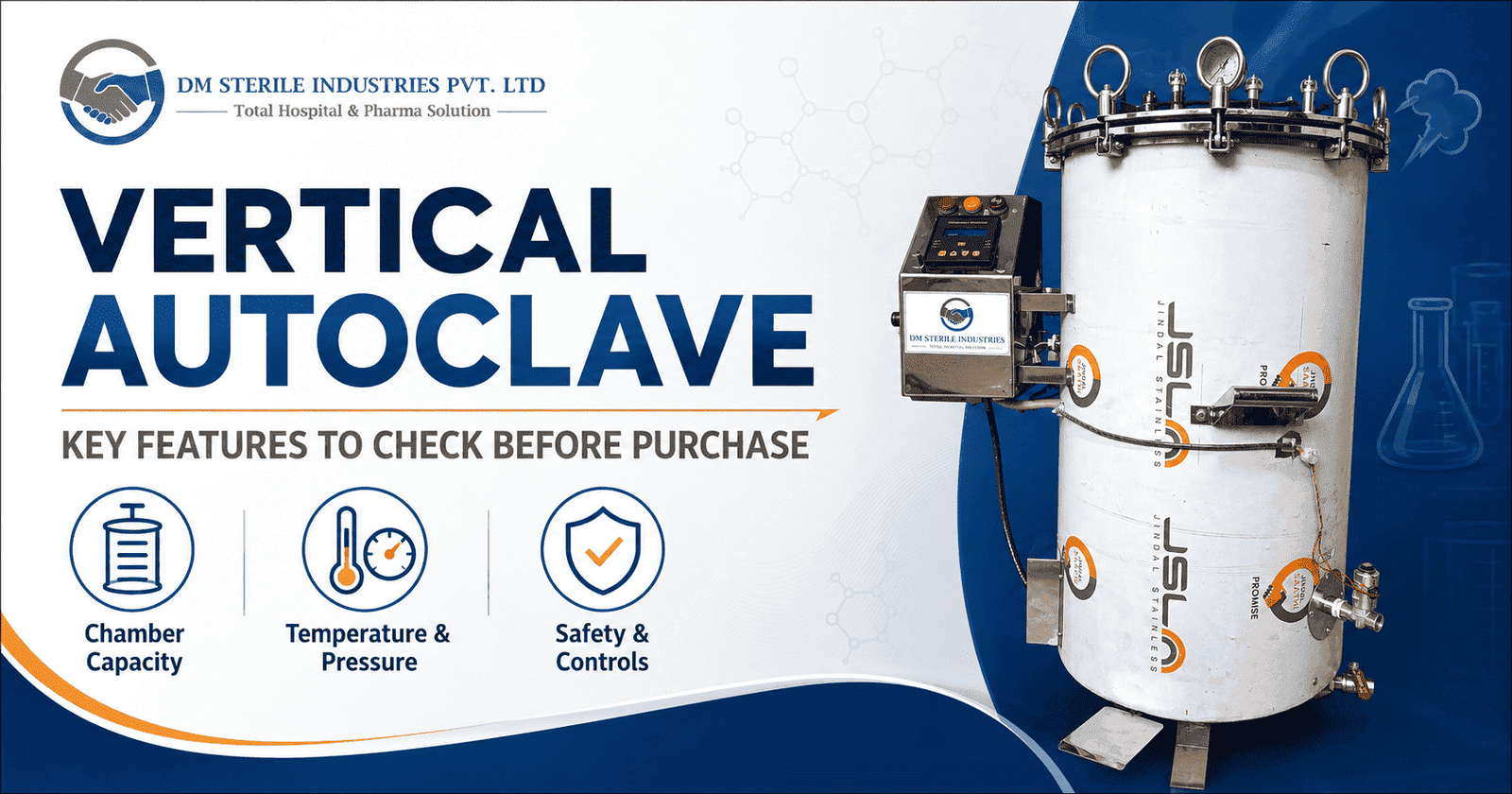
Vertical Autoclave purchase features
Acquiring a vertical autoclave is a significant investment for any facility prioritizing sterility. These essential steam sterilizers play a crucial role in ensuring the safety and efficacy of medical devices, laboratory instruments, and pharmaceutical materials. Understanding the key features to look for when making a vertical autoclave purchase is paramount to selecting a unit that meets your operational demands and regulatory requirements. This guide will walk you through the critical considerations to help you make an informed decision.
Understanding Vertical Autoclaves
A vertical autoclave, also known as a steam sterilizer, utilizes pressurized steam to effectively eliminate microorganisms from heat-resistant materials. Its upright design makes it space-efficient, particularly for facilities with limited floor space. These machines are indispensable in Central Sterile Supply Departments (CSSD), hospitals, clinics, pharmaceutical manufacturing, biotechnology laboratories, and research institutions where stringent sterilization protocols are non-negotiable.
The fundamental principle involves exposing items to saturated steam at a specific temperature and pressure for a defined duration. This process denatures essential proteins in microorganisms, rendering them inactive and ensuring the sterility of the processed load. The reliability and effectiveness of this process hinge directly on the design, construction, and operational features of the vertical autoclave itself.
Key Applications of Vertical Autoclaves
The versatility of vertical autoclaves makes them suitable for a wide array of sterilization needs across different sectors:
Healthcare and Hospitals
Sterilizing surgical instruments, dressings, glassware, and other reusable medical devices to prevent healthcare-associated infections (HAIs).
Pharmaceutical Industry
Sterilizing equipment, vials, stoppers, and raw materials used in drug manufacturing to maintain product integrity and safety.
Biotechnology and Research Laboratories
Ensuring the sterility of laboratory glassware, media, and instruments essential for accurate and contamination-free research outcomes.
Dental Clinics
Sterilizing dental instruments, handpieces, and other equipment to maintain the highest standards of patient safety.
Crucial Vertical Autoclave Purchase Features
When considering a vertical autoclave purchase, several features directly impact its performance, safety, and longevity. Evaluating these aspects will help you secure a unit that aligns with your specific requirements.
1. Wall Construction (Double vs. Triple Wall)
The construction of the autoclave chamber walls is a critical feature affecting thermal efficiency and safety.
- Double Wall: Features an inner chamber and an outer jacket. Steam circulates between these walls, improving insulation and reducing heat loss. This is a standard and effective configuration for many applications.
- Triple Wall: Incorporates an additional wall or insulation layer. This provides superior thermal insulation, leading to more consistent temperatures, faster cycle times, and reduced energy consumption. For critical applications requiring precise temperature control, a triple-wall design is often preferred.
2. Chamber Capacity and Size
The internal volume of the autoclave chamber dictates the quantity of items that can be sterilized in a single cycle. Assess your typical workload to determine the appropriate chamber size. Vertical autoclaves come in various capacities, from small benchtop units to larger industrial models. Ensuring the chamber can accommodate your largest instruments or loads is essential.
3. Pressure and Temperature Capabilities
Standard sterilization cycles typically operate at temperatures around 121°C (249.8°F) or 134°C (273.2°F) under positive pressure. Verify that the autoclave can reliably achieve and maintain these parameters. Higher temperature capabilities might be necessary for specific applications, but standard healthcare and lab requirements are usually met within this range.
4. Cycle Times and Efficiency
The total time required for a sterilization cycle, including heating, sterilization, and drying, directly impacts your operational throughput. Look for autoclaves designed for efficient heating and rapid cooling/drying phases. Features like vacuum-assisted drying can significantly reduce cycle times and ensure instruments are completely dry and ready for use or storage.
5. Safety Features
Safety is paramount. Essential safety features include:
- Door Locking Mechanism: Prevents the door from being opened while the chamber is under pressure.
- Pressure Relief Valves: Automatically vent excess pressure to prevent over-pressurization.
- Over-Temperature Protection: Shuts down the heating element if the temperature exceeds safe limits.
- Emergency Stop Button: Allows for immediate cessation of the cycle in case of an emergency.
6. Control System and User Interface
Modern vertical autoclaves often feature intuitive control panels, which may include digital displays, pre-programmed cycles, and customizable settings. A user-friendly interface simplifies operation and reduces the likelihood of errors. Advanced systems may offer data logging capabilities for traceability and validation purposes.
7. Material and Construction Quality
The autoclave should be constructed from high-quality, durable materials, typically stainless steel, to withstand repeated cycles of high temperature and pressure. The overall build quality should reflect robust engineering designed for longevity and reliable performance in demanding environments.
Selecting the Right Vertical Autoclave: A Buyer's Checklist
Choosing the correct vertical autoclave involves a systematic evaluation of your facility's needs against the available features. Consider the following buyer guidance:
Assess Your Sterilization Needs
Application: What types of items will you be sterilizing? (e.g., instruments, glassware, media, porous loads).
Volume: How many items do you need to sterilize per day or per cycle?
Frequency: How often will the autoclave be used?
Space: What are the available dimensions for installation?
Evaluate Key Features Against Needs
Capacity: Does the chamber size match your typical load requirements?
Construction: Is double-wall sufficient, or is the superior insulation of a triple-wall design necessary?
Temperature/Pressure: Does it meet standard or specialized sterilization parameters?
Cycle Efficiency: Will the cycle times support your workflow and throughput demands?
Safety: Does it include all essential safety interlocks and protective measures?
Controls: Is the interface intuitive and are the required programmable options available?
Consider Long-Term Value
Durability: Is the unit constructed from high-quality materials for a long service life?
Support: What level of after-sales support, maintenance, and spare parts availability can you expect?
Compliance: While specific certifications may vary, ensure the autoclave is designed to meet general industry standards for safe operation.
Partnering with DM Sterile Industries for Your Sterilization Solutions
DM Sterile Industries specializes in providing robust CSSD machines and furniture, including a range of high-quality autoclaves designed to meet the stringent demands of modern healthcare, pharmaceutical, and research facilities. Their expertise in sterilization technology ensures that clients receive equipment built to exacting standards.
When you engage with DM Sterile Industries, you benefit from their focus on delivering solutions tailored to your specific operational needs. Whether you require a vertical double-wall or triple-wall autoclave, their team is committed to offering reliable equipment that ensures effective sterilization. They understand the critical importance of dependable performance in preventing infections and maintaining the integrity of sensitive materials. The company is dedicated to providing end-to-end customer support, ensuring that your investment in sterilization technology provides proven value and client satisfaction.
Frequently Asked Questions About Vertical Autoclaves
What is the primary difference between a double-wall and a triple-wall vertical autoclave?
A double-wall autoclave has an inner chamber and an outer jacket for basic insulation. A triple-wall autoclave includes an additional insulating layer, offering superior thermal efficiency, more stable temperatures, and potentially faster cycle times, making it ideal for critical applications.
How do I determine the correct chamber capacity for my needs?
Assess your typical workload. Consider the types and sizes of instruments or materials you sterilize most frequently and the quantity required per cycle. It's advisable to choose a capacity that comfortably accommodates your largest or most common loads without overcrowding.
Are vertical autoclaves suitable for sterilizing heat-sensitive materials?
Typically, vertical autoclaves use steam, which requires high temperatures. For heat-sensitive materials, an Ethylene Oxide (ETO) sterilizer or other low-temperature sterilization methods are usually more appropriate. It's crucial to match the sterilization method to the material's tolerance.
What are the essential safety features I should look for in a vertical autoclave?
Key safety features include a reliable door locking mechanism that prevents opening under pressure, pressure relief valves for over-pressure protection, over-temperature cut-offs, and an easily accessible emergency stop button. Robust construction and quality components also contribute to safe operation.
Ready to Secure Your Sterilization Efficacy?
Making the right vertical autoclave purchase is fundamental to ensuring the safety and compliance of your operations. Understanding the critical features, applications, and selection criteria empowers you to choose equipment that delivers reliable performance. DM Sterile Industries offers specialized CSSD solutions and is dedicated to helping you find the optimal vertical autoclave for your facility's unique requirements.
Request a Consultation Today