
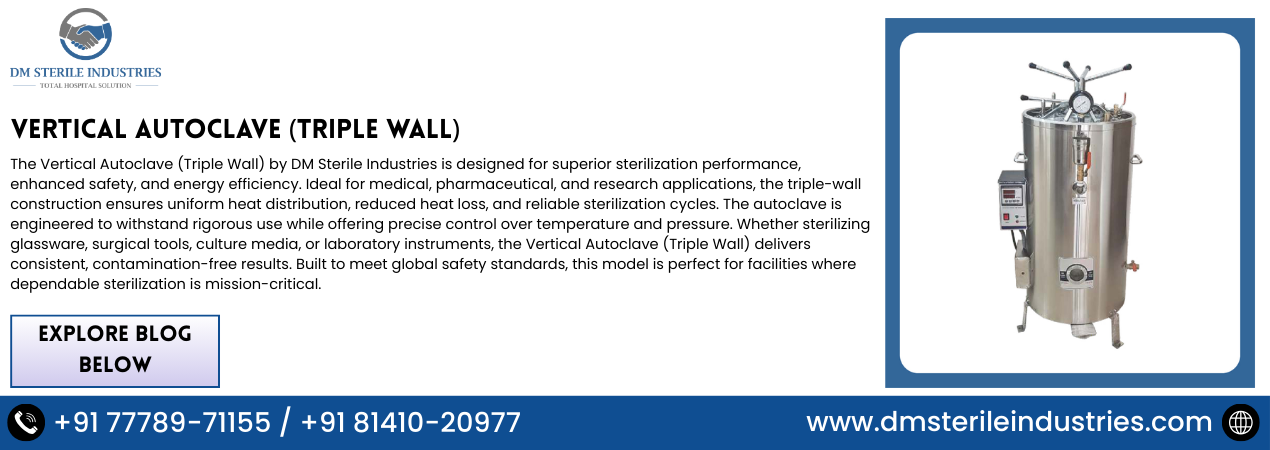
Vertical Autoclave (Triple Wall) in Ahmedabad
Vertical Autoclave (Triple Wall) in Ahmedabad
Sterilization is a critical requirement in hospitals, pharmaceutical facilities, laboratories, and research environments. In Ahmedabad, a rapidly expanding center for healthcare and pharmaceutical manufacturing, the need for reliable, compliant sterilization equipment has grown steadily. Among the available solutions, the Vertical Autoclave (Triple Wall) is widely preferred for its thermal efficiency, operational consistency, and suitability for demanding sterilization applications.
Overview
This content explains how a Vertical Autoclave (Triple Wall) functions, why it is particularly relevant for facilities in Ahmedabad, and what factors should be evaluated before selecting one for hospital, laboratory, or pharmaceutical use.
Understanding Vertical Autoclave (Triple Wall) Systems
A vertical autoclave is a steam-based sterilization system designed with a top-loading vertical chamber. The triple wall construction includes an inner sterilization chamber, a surrounding steam jacket, and an external protective wall. This structure enhances heat retention, promotes uniform temperature distribution, and minimizes heat loss during sterilization cycles.
In daily operation, the triple wall configuration helps maintain stable pressure and temperature throughout the chamber. This consistency is essential when sterilizing surgical instruments, laboratory glassware, culture media, dressings, and pharmaceutical tools that require precise and repeatable sterilization conditions.
For facilities in Ahmedabad, where uninterrupted operations and regulatory compliance are essential, triple wall autoclaves offer a dependable and efficient sterilization solution.
Why Triple Wall Construction Matters in Sterilization
Sterilization failures often result from uneven heat distribution or fluctuations in pressure. The triple wall design addresses these issues directly. The steam jacket surrounding the inner chamber allows steam to circulate evenly before entering the load area, ensuring that all materials reach the required sterilization temperature.
The outer insulated wall reduces heat loss and improves overall energy efficiency. It also enhances operator safety by lowering external surface temperatures, helping prevent accidental contact injuries during operation.
In hospitals and pharmaceutical facilities across Ahmedabad, where sterilization loads can vary daily, consistent thermal performance is a key reason triple wall autoclaves are widely used.
Applications of Vertical Autoclave (Triple Wall) in Ahmedabad
Ahmedabad has a high concentration of hospitals, diagnostic centers, pharmaceutical manufacturing units, and research laboratories. Vertical Autoclave (Triple Wall) systems are commonly used across these sectors due to their adaptability and compact footprint.
Typical application areas include:
- Hospital CSSD departments for sterilizing surgical instruments and linen
- Pharmaceutical manufacturing units for tools, containers, and accessories
- Microbiology and pathology laboratories for culture media and glassware
- Research institutions and educational laboratories
- Quality control and testing facilities within pharma and biotech units
The vertical design makes these autoclaves especially suitable for facilities with limited floor space, which is a practical advantage in urban and industrial zones of Ahmedabad.
How Vertical Autoclave (Triple Wall) Sterilization Works
The sterilization cycle in a triple wall vertical autoclave follows a controlled and repeatable process. Water is heated to generate saturated steam, which first fills the steam jacket. This preheats the inner chamber uniformly before steam is introduced into the load area.
Once the required temperature and pressure are achieved, the system maintains these conditions for a specified holding period. This exposure ensures effective destruction of bacteria, viruses, fungi, and spores. After the cycle is complete, controlled pressure release and cooling allow for safe unloading of sterilized items.
This method is widely accepted in healthcare and pharmaceutical environments because it delivers consistent, verifiable sterilization results.
Key Functional Features to Expect
Modern Vertical Autoclave (Triple Wall) units used in Ahmedabad are designed to meet both operational and regulatory requirements. While specifications vary by model, most systems include features that support safety, control, and durability.
Common functional features include:
- Stainless steel chambers for hygiene and corrosion resistance
- Digital or analog controls for accurate temperature and pressure regulation
- Safety valves and automatic cut-off systems
- Water level indicators and pressure gauges
- Insulated outer walls to minimize heat loss
- Compatibility with standard hospital and laboratory sterilization cycles
These features support continuous operation in demanding environments without compromising performance or safety.
Compliance and Regulatory Importance
Healthcare and pharmaceutical facilities in Ahmedabad operate under strict regulatory and quality frameworks. Sterilization equipment must support compliance with applicable GMP, ISO, and hospital safety standards. Vertical Autoclave (Triple Wall) systems are often selected because their design aligns well with these requirements.
Stainless steel construction, validated operating parameters, and integrated safety mechanisms support audit readiness. Facilities can document sterilization cycles more reliably, which is essential during inspections, certifications, and internal quality reviews.
For organizations focused on maintaining consistent compliance, a properly designed triple wall autoclave helps reduce operational and regulatory risk.
Why Ahmedabad Facilities Prefer Vertical Autoclaves
Ahmedabad's healthcare and industrial sectors require equipment that is reliable, efficient, and easy to maintain. Vertical autoclaves meet these expectations through simple installation, manageable space requirements, and dependable performance.
The availability of local technical support, service expertise, and spare parts further contributes to their preference. Facilities can address routine maintenance needs without extended downtime, helping maintain operational continuity.
Vertical autoclaves are also well suited for institutions upgrading from manual or outdated sterilization methods to standardized, validated systems.
Selecting the Right Vertical Autoclave (Triple Wall) in Ahmedabad
Selecting an appropriate autoclave involves more than reviewing technical specifications. Buyers should carefully assess their sterilization volume, material types, and frequency of use before choosing a system.
Key factors to evaluate include:
- Chamber capacity based on daily sterilization requirements
- Types of materials to be sterilized, such as instruments or culture media
- Preference for digital or analog control systems
- Safety features aligned with internal protocols
- Compatibility with existing electrical infrastructure
- Availability of local installation, training, and service support
These considerations help ensure the selected autoclave integrates effectively into existing workflows.
Operational Best Practices for Long-Term Performance
Even a well-engineered autoclave requires proper operation and maintenance to deliver consistent results over time. Facilities in Ahmedabad typically follow established operating procedures to ensure long-term reliability.
Best practices include routine chamber cleaning, regular inspection of gaskets, verification of safety valve operation, and periodic calibration of temperature and pressure controls. Ongoing validation of sterilization cycles supports compliance with healthcare and pharmaceutical standards.
Proper operator training, especially in correct loading techniques, further reduces the risk of uneven sterilization and equipment strain.
Role of Manufacturer Expertise in Sterilization Equipment
The performance of a Vertical Autoclave (Triple Wall) depends not only on its design but also on manufacturing quality and engineering support. Manufacturers with experience in CSSD equipment and hospital infrastructure understand real-world operational demands.
DM Sterile Industries is engaged in developing sterilization machines and related solutions for hospital and pharmaceutical environments. Established in 2024 and operating from Gujarat, the company focuses on CSSD machines and hospital furniture aligned with industry requirements.
Working with manufacturers that understand regulatory expectations and application-specific needs helps facilities minimize installation challenges and operational inefficiencies.
Future Demand for Vertical Autoclaves in Ahmedabad
Ahmedabad continues to grow as a center for healthcare delivery, pharmaceutical production, and clinical research. As infection control requirements become more stringent, the demand for dependable steam sterilization equipment is expected to increase.
Vertical Autoclave (Triple Wall) systems are likely to remain relevant due to their proven effectiveness, adaptability, and compliance-oriented design. Facilities expanding or upgrading their sterilization infrastructure increasingly view these systems as long-term investments.
The emphasis is gradually shifting toward consistency, traceability, and safety, rather than basic sterilization alone.
Frequently Asked Questions
Quick Links
Our Products
Get In Touch
Plot No. 16, Saffron Industrial Park 1. Opp V.K Bhattha, Nr Morriat Industrial Park, Indore Road. Shingarva, Ahmedubod Gujarat -302430.
info.dmsterileind@gmail.com
+91 7778971155
+91 81410 20977
DM STERILE INDUSTRIES | All Rights Reserved.