
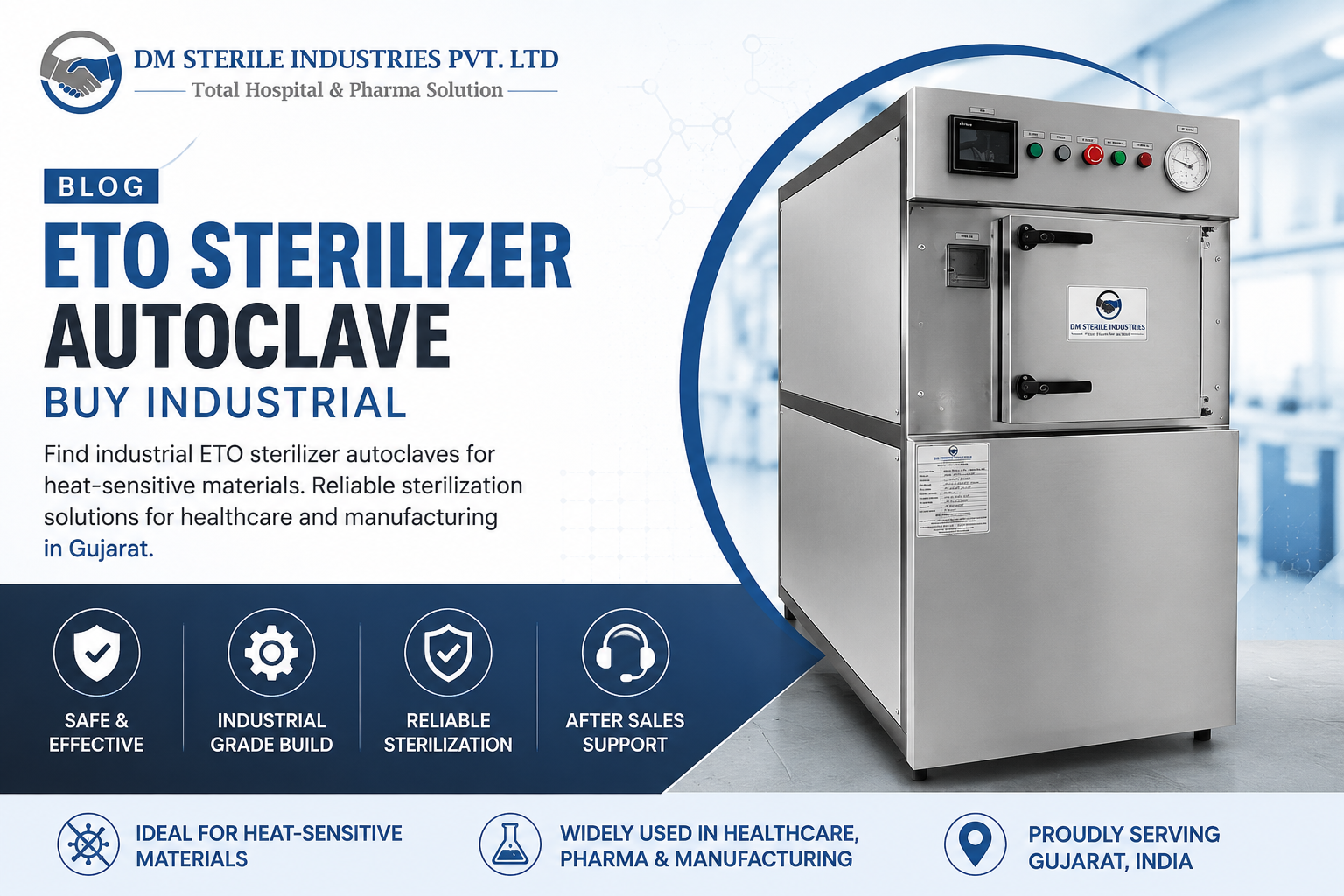
ETO Sterilizer Autoclave buy industrial
Find industrial ETO sterilizer autoclaves for heat-sensitive materials. Reliable sterilization solutions for healthcare and manufacturing in Gujarat.
What is an ETO Sterilizer Autoclave? — Overview
An ETO sterilizer autoclave is a specialized chamber designed to sterilize equipment using Ethylene Oxide (ETO) gas. Unlike traditional autoclaves that rely on high temperatures and steam, ETO sterilization operates at lower temperatures, making it ideal for materials that can be damaged by heat or moisture. The process involves introducing ETO gas into a sealed chamber, where it penetrates packaging and equipment to kill microorganisms like bacteria, viruses, and spores. Following the sterilization cycle, aeration is performed to remove residual ETO gas, ensuring the safety of sterilized items.
Key Features and Technical Specifications
- Chamber Material: Typically constructed from high-grade stainless steel (e.g., SS304 or SS316L) for durability and corrosion resistance.
- Temperature Range: Operates effectively within a low-temperature range, usually between 37°C to 63°C, preserving heat-sensitive materials.
- Gas Injection System: Precise control over ETO gas injection for consistent and effective sterilization.
- Vacuum System: Integrated vacuum pumps to remove air and facilitate gas penetration, followed by aeration.
- Safety Interlocks: Multiple safety features to prevent accidental gas release and ensure operator safety.
- Control System: Advanced PLC-based control systems with touch screen interfaces for programmable cycles and data logging.
- Aeration Cycle: Dedicated aeration phase to safely remove residual ETO gas from sterilized items.
- Capacity Options: Available in various chamber sizes to accommodate different volumes of instruments and materials.
Industrial Applications and Use Cases
- Medical Device Manufacturing: Sterilizing single-use medical devices, implants, catheters, and surgical kits that cannot withstand high temperatures.
- Pharmaceutical Industry: Sterilizing packaging materials, vials, stoppers, and certain drug delivery systems.
- Hospitals and Central Sterile Supply Departments (CSSD): Sterilizing complex surgical instruments, endoscopes, and delicate equipment.
- Dental Clinics: Sterilizing heat-sensitive dental instruments and prosthetics.
- Veterinary Practices: Ensuring the sterility of instruments used in animal care.
- Research Laboratories: Sterilizing sensitive laboratory equipment and consumables.
- Cosmetics Industry: Sterilizing packaging and applicators for certain cosmetic products.
How to Choose the Right ETO Sterilizer Autoclave
Selecting the appropriate ETO sterilizer autoclave is crucial for operational efficiency and compliance. Consider these factors:
Capacity Requirements: Determine the volume and size of items you need to sterilize regularly.
Material Compatibility: Ensure the sterilizer is suitable for the specific types of heat-sensitive materials you handle.
Cycle Times: Evaluate the required sterilization and aeration cycle durations to match your throughput needs.
Regulatory Compliance: Verify that the machine meets relevant national and international standards (e.g., ISO 11135, FDA guidelines).
Safety Features: Prioritize models with robust safety interlocks, gas leak detection, and emergency shutdown systems.
Control System Sophistication: Look for programmable cycles, data logging capabilities, and user-friendly interfaces.
Supplier Reputation and Support: Choose a manufacturer with a proven track record and reliable after-sales service.
Customization Options: Assess if the manufacturer can tailor the machine to your specific operational needs.
Quality Standards and Compliance
Adherence to stringent quality standards is non-negotiable for ETO sterilizer autoclaves. Manufacturers must comply with international guidelines such as ISO 11135, which specifies the requirements for the validation and routine control of a sterilization process for medical devices using ethylene oxide. Additionally, compliance with local regulations and standards, such as those set by the Bureau of Indian Standards (BIS) where applicable, is essential. Buyers should always verify that the equipment is manufactured according to these standards and that proper validation documentation is provided, ensuring both safety and efficacy.
Why DM Sterile Industries' Experience and Capability Matters
At DM Sterile Industries, our extensive experience in designing and manufacturing sterilization equipment sets us apart. We understand the critical nature of ETO sterilization and have honed our manufacturing processes to deliver reliable, high-performance machines. Our technical team possesses deep expertise in ethylene oxide technology, enabling us to engineer solutions that meet precise sterilization requirements. We focus on robust quality control throughout our production, ensuring each ETO sterilizer autoclave is built to last and perform consistently.
Our commitment extends to providing customized solutions tailored to specific client needs, backed by comprehensive after-sales support. We pride ourselves on our ability to deliver dependable sterilization equipment that our clients can trust for their most critical applications, ensuring operational continuity and product integrity.
Installation, Maintenance, and Care Tips
Proper installation and regular maintenance are key to the longevity and effective performance of your ETO sterilizer autoclave.
- Installation: Ensure the sterilizer is installed in a well-ventilated area, away from direct heat sources, and connected to appropriate power and gas supply lines by qualified technicians. Follow the manufacturer's detailed installation manual precisely.
- Pre-Cycle Checks: Before each cycle, inspect door seals, gas lines, and safety interlocks. Ensure the chamber is clean and free from debris.
- Routine Maintenance: Schedule regular preventive maintenance with certified technicians. This typically includes checking vacuum pumps, filters, gas sensors, and control system calibration.
- Gas Handling: Always handle Ethylene Oxide gas cylinders with extreme care in designated, well-ventilated areas. Follow all safety protocols for storage and connection.
- Aeration Monitoring: Ensure the aeration phase is adequately long and effective to reduce ETO residuals to acceptable levels, as per regulatory guidelines.
- Record Keeping: Maintain detailed logs of all cycles, maintenance activities, and any calibration or repairs performed. This is crucial for validation and troubleshooting.
Frequently Asked Questions
ETO sterilizers are ideal for heat-sensitive and moisture-sensitive materials. This includes plastics, electronics, delicate surgical instruments, endoscopes, catheters, implants, and certain textiles that would be damaged by high temperatures or steam used in traditional autoclaves.
Steam sterilization uses high temperatures (typically 121°C or 134°C) and moisture to kill microorganisms. ETO sterilization uses Ethylene Oxide gas at much lower temperatures (37°C to 63°C) and is effective for materials that cannot withstand heat or moisture, offering a gentler sterilization method.
Ethylene Oxide is a flammable, toxic, and carcinogenic gas. Strict safety protocols are essential during handling, operation, and aeration. Industrial ETO sterilizers are equipped with multiple safety features, including gas leak detection, ventilation systems, and emergency shutdown procedures, to mitigate risks.
An ETO sterilization cycle includes preconditioning, exposure to ETO gas, and aeration. The total cycle time can vary significantly depending on the sterilizer model, chamber size, load configuration, and specific cycle parameters, but it often ranges from several hours to over a day, including the crucial aeration phase.
Aeration is a critical post-sterilization step where the sterilized items are exposed to fresh air or a controlled airflow to remove residual ETO gas and its byproducts. This process is essential to reduce toxic residuals to safe levels, making the sterilized items safe for use.
Industrial ETO sterilizers must comply with international standards like ISO 11135 for ETO sterilization of medical devices. Depending on the region, compliance with local health and safety regulations, such as those from the FDA in the US or equivalent bodies, is also mandatory.
Conclusion
For industries in Gujarat requiring the sterilization of heat-sensitive instruments and materials, an industrial ETO sterilizer autoclave is an indispensable piece of equipment. Its ability to provide effective microbial kill at low temperatures ensures the integrity of delicate items, crucial for medical devices, pharmaceuticals, and advanced healthcare applications. When selecting an ETO sterilizer, prioritize robust construction, advanced safety features, reliable control systems, and compliance with international standards. Partnering with an experienced manufacturer like DM Sterile Industries, with a proven track record in delivering quality and support, ensures you acquire a dependable solution that meets your specific operational needs and regulatory requirements.
Get In Touch
Dm Sterile Industries | All Rights Reserved