
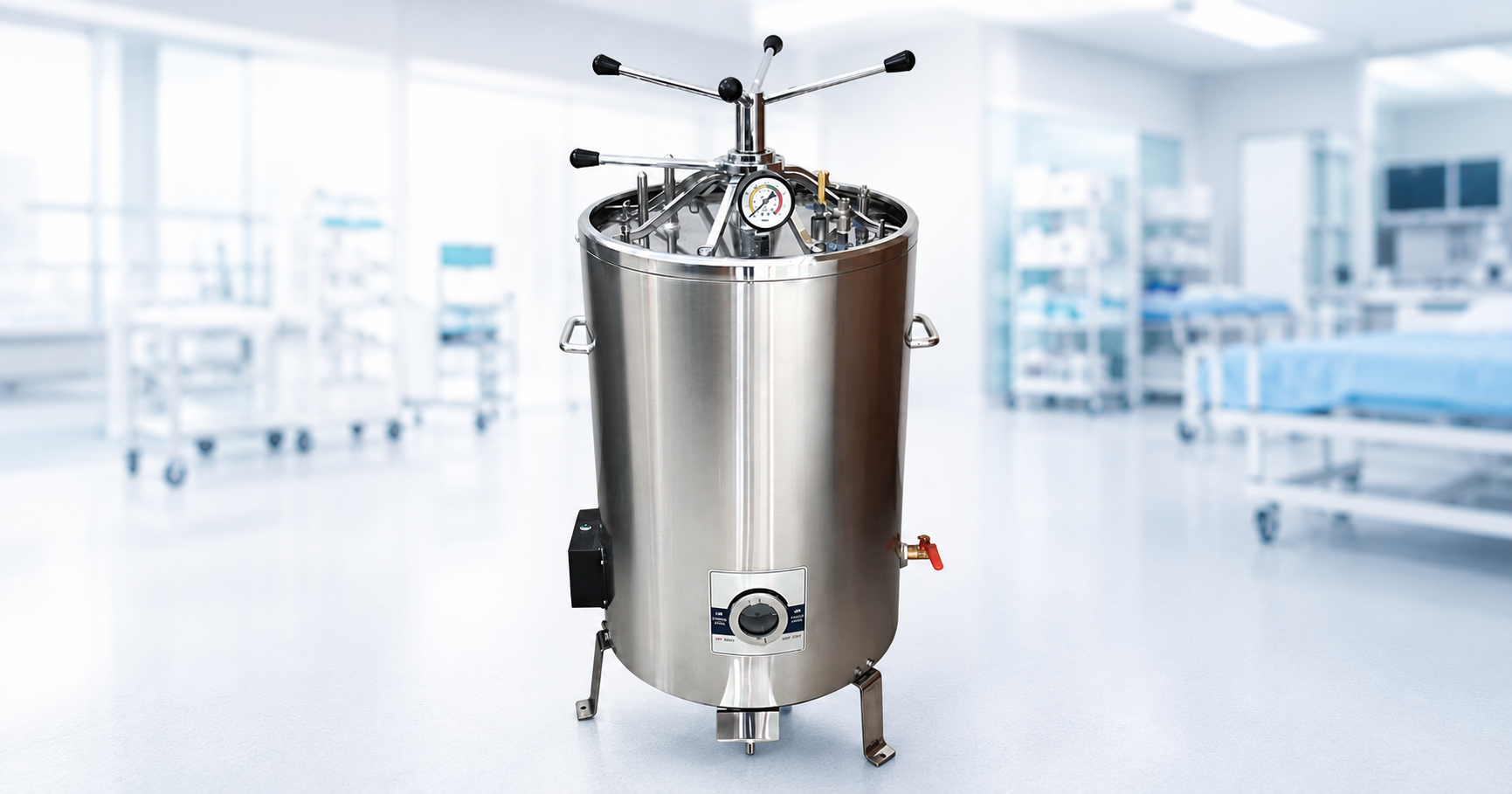
Vertical Autoclave manufacturer for best quality
Expert vertical autoclave manufacturer in Gujarat. Discover high-quality, reliable sterilization solutions for medical, lab, and industrial needs.
What is a Vertical Autoclave (Double Wall)? — Overview
A vertical autoclave is a pressurized steam sterilization chamber designed for efficient and thorough elimination of microorganisms. The "double wall" construction refers to an outer jacket surrounding the primary sterilization chamber. This outer jacket is typically filled with steam or air, which preheats the inner chamber and the load, leading to more uniform temperature distribution and faster sterilization cycles. The process relies on saturated steam under pressure to reach temperatures significantly above boiling point (typically 121°C to 134°C), effectively destroying all viable microorganisms.
Key Features and Technical Specifications
DM Sterile Industries engineers its vertical autoclaves with a focus on performance, safety, and durability. Key features include:
Robust double-wall construction utilizing high-grade stainless steel (SS 304 or SS 316) for both inner and outer chambers.
Advanced steam circulation system designed for uniform heat distribution throughout the chamber.
Integrated safety features such as a pressure gauge, steam release valve, and an automatic pressure cut-off system.
Precise temperature and pressure control, available with optional microprocessor-based digital controllers for enhanced accuracy and cycle management.
High-efficiency insulation, typically glass wool or ceramic fiber, to minimize heat loss and improve energy efficiency.
Corrosion-resistant components ensuring a long service life, even in demanding environments.
Fast heating capabilities and optimized cycle times to enhance operational productivity.
Availability in standard chamber sizes (e.g., 300 x 500 mm, 350 x 550 mm, 400 x 600 mm) with options for custom configurations.
Industrial Applications and Use Cases
The versatility of vertical autoclaves makes them indispensable across a range of sectors:
- Hospitals and Clinics: Sterilization of surgical instruments, dressings, glassware, and medical supplies.
- Pharmaceutical Manufacturing: Sterilization of culture media, laboratory glassware, stoppers, and packaging components.
- Research Laboratories: Sterilization of media, reagents, glassware, and biohazardous waste.
- Dental Practices: Sterilization of dental instruments and tools.
- Veterinary Services: Sterilization of surgical instruments and equipment.
- Food and Beverage Industry: Sterilization of laboratory equipment and packaging materials for quality control.
- Biotechnology: Sterilization of equipment and consumables for cell culture and genetic research.
How to Choose the Right Vertical Autoclave
Selecting the appropriate vertical autoclave involves considering several critical factors to match your specific operational needs:
- Chamber Capacity: Determine the volume and size of items you need to sterilize regularly. Autoclaves come in various sizes, and choosing one that is too small can lead to multiple cycles, while one that is too large may be inefficient for smaller loads.
- Material Requirements: Consider the types of materials you will be sterilizing. Stainless steel chambers (SS 304 or SS 316) offer excellent corrosion resistance and durability.
- Control System: Decide between a simpler analog thermostat or a more advanced microprocessor-based digital controller. Digital controls offer greater precision, programmability, and data logging capabilities.
- Safety Features: Ensure the autoclave is equipped with essential safety mechanisms like safety valves, pressure relief valves, and automatic cut-off systems to prevent over-pressurization.
- Power Requirements: Verify that the autoclave's power supply specifications (voltage, phase) are compatible with your facility's electrical infrastructure.
- Manufacturer's Reputation and Support: Look for manufacturers with a proven track record, strong quality control, and reliable after-sales service, including installation and maintenance support.
- Certifications and Compliance: Check if the autoclave meets relevant industry standards and regulatory requirements for your specific application.
Quality Standards and Compliance
For any sterilization equipment, adherence to stringent quality standards is non-negotiable. Manufacturers like DM Sterile Industries prioritize compliance with national and international standards. This often includes adherence to guidelines set by bodies such as the Bureau of Indian Standards (BIS) for specific equipment types, and general quality management systems like ISO 9001. Buyers should verify that the autoclave's design, materials, and manufacturing processes align with these recognized standards, ensuring consistent performance and safety. Documentation regarding material traceability, testing procedures, and calibration is also a key indicator of a manufacturer's commitment to quality.
Why DM Sterile Industries' Experience and Capability Matter
DM Sterile Industries brings a wealth of experience and technical expertise to the manufacturing of vertical autoclaves. Our commitment to quality is reflected in our meticulous manufacturing processes, from material selection to final assembly. We employ skilled technicians and engineers who understand the critical nature of sterilization. Our in-house capabilities allow for rigorous quality control at every stage, ensuring that each unit meets precise specifications.
We pride ourselves on offering robust, reliable equipment built for longevity and consistent performance. Our understanding of diverse industrial and medical needs enables us to provide not just standard models but also customized solutions. Furthermore, our dedication extends to providing comprehensive after-sales support, including installation guidance and maintenance services, ensuring our clients achieve optimal results and operational uptime.
Installation, Maintenance, and Care Tips
Proper installation and regular maintenance are vital for the longevity and effective operation of your vertical autoclave.
- Installation: Ensure the autoclave is installed on a level, stable surface, away from excessive heat or moisture. Connect it to a suitable, properly grounded power supply. Verify all safety valves and gauges are functioning correctly before the first use.
- Daily Checks: Before each cycle, inspect the door gasket for wear or damage, ensure the drain is clear, and check that the pressure gauge is functioning.
- Routine Cleaning: Clean the interior chamber regularly to remove any residue. Use only approved cleaning agents that will not damage the stainless steel.
- Periodic Maintenance: Schedule regular professional servicing for calibration of controls, inspection of safety valves, and checking of the steam generation system. Follow the manufacturer's recommended maintenance schedule.
- Gasket Care: The door gasket is crucial for a proper seal. Clean it regularly and replace it if it shows signs of hardening, cracking, or deformation.
- Water Quality: Use distilled or demineralized water in the boiler to prevent scale buildup, which can affect heating efficiency and potentially damage components.
Frequently Asked Questions
A vertical autoclave's primary function is to sterilize instruments, media, and other materials using high-pressure steam. It achieves sterilization by exposing the load to saturated steam at elevated temperatures (typically 121°C to 134°C) for a specified duration, effectively destroying all microorganisms, including bacteria, viruses, and spores.
The double-wall construction, featuring an outer jacket, preheats the inner chamber and the load. This leads to more uniform temperature distribution, reduces condensation on the load, and often results in faster heating and shorter overall sterilization cycles compared to single-wall designs.
Vertical autoclaves are suitable for sterilizing a wide range of heat- and moisture-stable materials, including surgical instruments, glassware, laboratory equipment, culture media, textiles, and some types of plasticware. However, heat-sensitive or moisture-sensitive items require different sterilization methods.
Standard vertical autoclaves typically operate at pressures between 15-20 psi (pounds per square inch), which corresponds to temperatures of 121°C to 134°C. These parameters can often be adjusted based on the specific sterilization requirements and the type of load being processed.
Essential safety features include a pressure gauge to monitor internal pressure, a safety valve to release excess pressure automatically, a steam release valve for controlled venting, and an automatic pressure cut-off system to prevent over-pressurization and ensure safe operation.
Routine servicing is typically recommended annually, or more frequently depending on usage intensity and the manufacturer's guidelines. This includes calibration checks, inspection of safety devices, and general system diagnostics to ensure optimal performance and safety.
Conclusion
For industries and institutions in Gujarat requiring dependable and efficient sterilization, a high-quality vertical autoclave is an indispensable piece of equipment. Manufacturers like DM Sterile Industries are committed to providing robust solutions that meet stringent quality standards and operational demands. When selecting an autoclave, careful consideration of chamber capacity, control systems, safety features, and manufacturer support is crucial. By investing in a well-engineered vertical autoclave and adhering to proper maintenance practices, facilities can ensure the highest levels of sterility, safety, and operational integrity.
Get In Touch
Dm Sterile Industries