
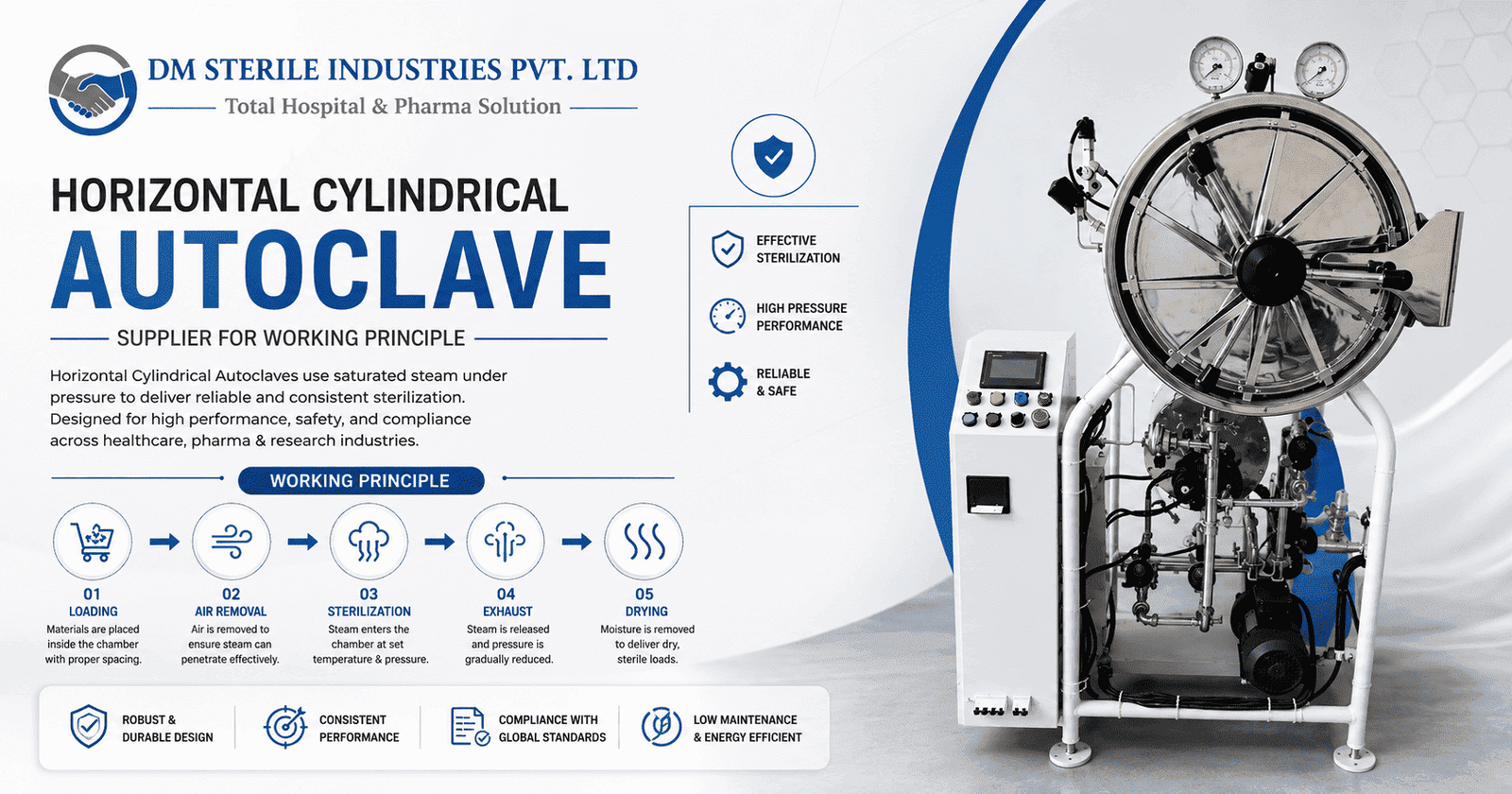
Horizontal Cylindrical Autoclave supplier for working principle
Horizontal Cylindrical Autoclaves are indispensable in environments demanding stringent sterility. As a leading provider, DM Sterile Industries offers advanced Horizontal Cylindrical High-Pressure Steam Sterilizers designed to meet the rigorous demands of pharmaceutical, healthcare, medical device, and biotechnology sectors. Understanding the core working principle of these autoclaves is key to appreciating their role in maintaining safety and compliance.
Understanding the Horizontal Cylindrical Autoclave
A Horizontal Cylindrical Autoclave operates on the principle of moist heat sterilization, utilizing saturated steam under pressure. This method is highly effective because steam can penetrate microbial cell walls more efficiently than dry heat, leading to rapid and comprehensive inactivation of microorganisms, including bacteria, viruses, fungi, and spores. The cylindrical design allows for robust construction capable of withstanding the high pressures and temperatures required for effective sterilization.
The working principle involves several key stages:
- Loading: Items to be sterilized are carefully loaded into the chamber, ensuring adequate space for steam penetration.
- Air Removal: Before the sterilization cycle begins, air is removed from the chamber. This is critical because air pockets can insulate microorganisms, preventing steam from reaching them and thus compromising the sterilization process. Various methods, such as gravity displacement or pre-vacuum cycles, are employed to achieve effective air removal.
- Sterilization: Once air is removed, steam is introduced into the chamber at a controlled temperature and pressure. Common sterilization parameters involve temperatures around 121°C (250°F) or 134°C (273°F) maintained for a specific duration, dictated by the load type and the effectiveness of air removal. The high pressure ensures the steam remains saturated and at the desired temperature.
- Exhaust: After the sterilization hold time, the steam is gradually released from the chamber, and the pressure is reduced.
- Drying: Depending on the autoclave model and cycle, a drying phase may follow, often using heated air or vacuum to remove residual moisture from the sterilized items.
The effectiveness of a Horizontal Cylindrical Autoclave supplier lies in their ability to provide units that precisely control these parameters, ensuring consistent and validated sterilization cycles. DM Sterile Industries focuses on delivering equipment that upholds these critical operational principles.
Applications Across Diverse Industries
The versatility and reliability of Horizontal Cylindrical Autoclaves make them essential across numerous sectors. Their robust design is particularly suited for handling larger loads or when higher throughput is required.
Pharmaceutical Manufacturing
Sterilization of raw materials, intermediate products, glassware, filters, and processing equipment to ensure product purity and patient safety.
Healthcare & Hospitals
Sterilization of surgical instruments, medical devices, linens, and waste, ensuring infection control and patient well-being within Central Sterile Supply Departments (CSSD).
Medical Device Manufacturing
Ensuring the sterility of implantable devices, diagnostic tools, and other medical equipment before packaging and distribution.
Biotechnology & Research Laboratories
Sterilization of laboratory glassware, media, equipment, and biological waste to maintain experimental integrity and prevent contamination.
Key Benefits of Advanced Horizontal Cylindrical Autoclaves
Investing in a high-quality Horizontal Cylindrical Autoclave provides significant advantages, ensuring both operational efficiency and the highest standards of safety.
- Effective Sterilization: Proven ability to kill all forms of microbial life, including resistant spores, through validated steam sterilization cycles.
- Load Capacity: Horizontal orientation and cylindrical chamber design often accommodate larger or bulkier items and higher volumes compared to vertical models.
- Durability and Reliability: Robust construction designed to withstand repeated cycles of high temperature and pressure, ensuring long-term performance.
- Versatility: Suitable for a wide range of materials and equipment, from heat-stable metals to certain plastics and fabrics (when appropriate cycles are used).
- Compliance: Facilitates adherence to stringent regulatory standards required in pharmaceutical, healthcare, and research environments.
Choosing the Right Horizontal Cylindrical Autoclave Supplier
Selecting the appropriate Horizontal Cylindrical Autoclave and a dependable supplier is crucial for operational success and regulatory compliance. Consider these factors:
Buyer Insight:
Prioritize suppliers who offer comprehensive support, including installation, validation, and maintenance services. This ensures your autoclave operates optimally and meets all required standards throughout its lifecycle.
Key Selection Criteria:
- Chamber Size and Configuration: Match the chamber dimensions to the typical size and volume of the items you need to sterilize.
- Cycle Capabilities: Ensure the autoclave offers the necessary cycle types (e.g., gravity, pre-vacuum) and temperature/pressure settings for your specific applications.
- Control System and Automation: Look for user-friendly interfaces, programmable cycles, and data logging capabilities for cycle monitoring and documentation.
- Material Compatibility: Verify that the autoclave is suitable for the materials you intend to sterilize, considering potential corrosion or damage.
- After-Sales Support: Evaluate the supplier's commitment to service, maintenance, spare parts availability, and technical assistance.
Questions to Ask Before Purchasing:
When evaluating a Horizontal Cylindrical Autoclave supplier, asking the right questions can prevent future issues:
| Question Category | Sample Questions |
|---|---|
| Operational Parameters | What temperature and pressure ranges does the autoclave achieve? What is the minimum cycle time for standard loads? |
| Safety Features | What safety interlocks are in place to prevent accidental door opening? How does the system manage over-pressure situations? |
| Validation & Compliance | Can the unit be validated to relevant industry standards? Does the control system support detailed record-keeping for compliance? |
| Maintenance & Service | What is the recommended preventive maintenance schedule? What is the typical lead time for service calls and spare parts? |
DM Sterile Industries: Your Trusted Partner in Sterilization
Established in 2024, DM Sterile Industries Private Limited is dedicated to providing advanced sterilization solutions to national and global markets. We offer a comprehensive range of Horizontal Cylindrical High-Pressure Steam Sterilizers, designed with precision and built for reliability. Our expertise in sterilization technology, coupled with robust quality standards, ensures that our clients receive equipment capable of meeting the most demanding operational requirements.
We understand that each application has unique needs. Therefore, DM Sterile Industries excels in offering custom solutions tailored to specific client requirements. Our product portfolio also includes ETO sterilizers, CSSD furniture, automatic washer-disinfectors, and ultrasonic cleaners, providing an end-to-end solution for sterile processing needs. We are committed to providing advanced automation, comprehensive end-to-end customer support, and ensuring ultimate client satisfaction, making us a premier choice for sterilization equipment.
Frequently Asked Questions
What is the primary function of a Horizontal Cylindrical Autoclave?
The primary function is to sterilize equipment and materials using high-pressure steam, effectively killing microorganisms through moist heat penetration.
Why is air removal important in an autoclave's working principle?
Air removal is crucial because trapped air pockets prevent steam from reaching all surfaces of the items being sterilized, creating 'cold spots' where microorganisms can survive. Effective air removal ensures complete steam contact and successful sterilization.
Can all materials be sterilized in a Horizontal Cylindrical Autoclave?
Most heat-stable and moisture-stable materials like glassware, metals, and certain fabrics can be sterilized. However, heat-sensitive materials like some plastics or electronics may require different sterilization methods, such as Ethylene Oxide (ETO) sterilization.
How does DM Sterile Industries ensure the quality of their autoclaves?
DM Sterile Industries focuses on robust quality standards throughout the design and manufacturing process, leveraging expertise in sterilization technology to deliver reliable and effective equipment.
Ready to Enhance Your Sterilization Capabilities?
Discover the reliability and efficiency of Horizontal Cylindrical Autoclaves from DM Sterile Industries. We provide advanced solutions tailored to your specific needs across the pharmaceutical, healthcare, medical device, and research sectors. Contact us today to discuss your requirements and request a customized quote.
Request a Solution