
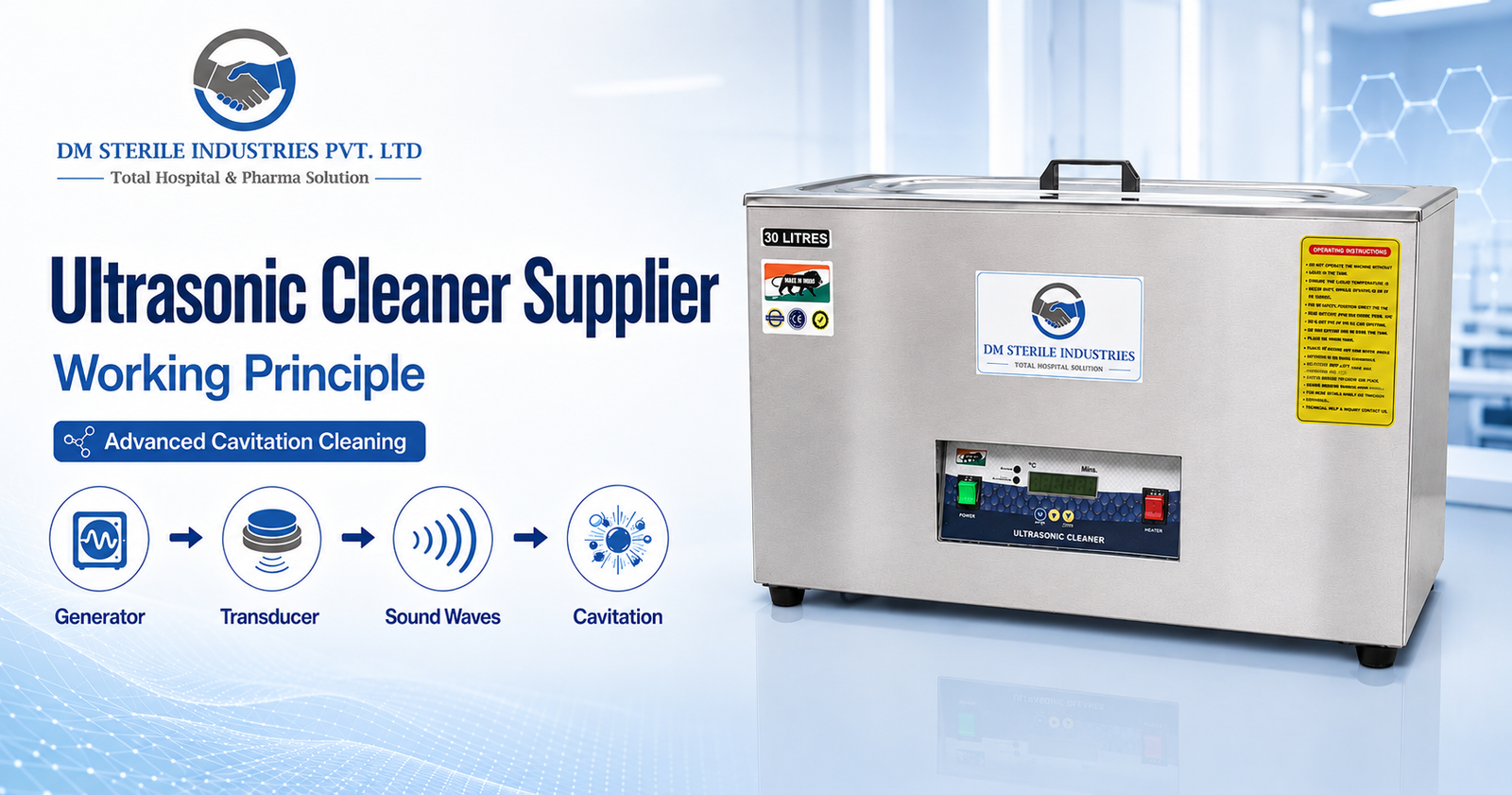
Achieving high-grade sterility in critical sectors requires more than standard surface washing. Modern decontamination demands a deep understanding of physical fluid dynamics, making it essential to consult an experienced Ultrasonic Cleaner supplier for working principle insights and system optimization.
In sterile processing, pharmaceutical manufacturing, and clinical environments, the presence of microscopic contaminants can compromise patient safety, ruin experimental batches, or cause mechanical failures in delicate medical instruments. Traditional manual scrubbing is not only time-consuming and labor-intensive, but it also fails to reach internal channels, blind holes, and micro-crevices. This is where ultrasonic technology becomes indispensable.
When selecting a system, working with a specialized Ultrasonic Cleaner supplier for working principle education ensures that your organization chooses the correct transducer configuration, frequency setting, and bath dimension for your specific application. A system configured without proper technical alignment can lead to inadequate cleaning or, conversely, surface erosion of delicate surgical tools and microelectronics.
Why Consult an Ultrasonic Cleaner Supplier for Working Principle Clarity?
The efficiency of an ultrasonic cleaning system relies entirely on physics. It is not merely a tub of vibrating water; it is a highly controlled cavitation field. For procurement officers and sterile processing department (SPD) managers, understanding this mechanism is key to making an informed investment.
A reputable supplier will explain that the system consists of three main components:
- The Generator: This electrical component transforms standard utility power into high-frequency electrical energy.
- The Transducer: Typically piezoelectric, these components convert electrical energy into high-frequency mechanical sound waves (vibrations).
- The Tank or Bath: A robust stainless steel chamber that holds the cleaning fluid and the items destined for decontamination.
When you consult a specialized Ultrasonic Cleaner supplier for working principle breakdowns, they will walk you through how these elements interact to generate millions of microscopic vacuum bubbles. This process, known as cavitation, is the core scientific mechanism that drives the entire cleaning cycle.
Frequency Matters: Lower frequencies (25–28 kHz) generate larger, high-energy cavitation bubbles suitable for heavy-duty industrial components, while higher frequencies (40–120 kHz) create gentler, micro-cavitation bubbles ideal for intricate surgical instruments, laboratory glassware, and sensitive electronics.
The Physics of Cavitation: How the Process Works
To fully appreciate the need for professional guidance, let us explore the step-by-step physical process that occurs inside an active ultrasonic bath:
- High-Frequency Wave Propagation: The transducer vibrates at high speeds, sending alternating high-pressure (compression) and low-pressure (rarefaction) acoustic waves through the liquid medium.
- Microscopic Bubble Formation: During the low-pressure cycle, the liquid is literally pulled apart, creating microscopic vacuum cavities or bubbles.
- Bubble Growth and Implosion: As these bubbles travel through subsequent high- and low-pressure waves, they grow to an unstable size. When they can no longer absorb energy, they violently collapse or implode.
- Micro-Jets and Scrubbing Force: The implosion of these tiny bubbles generates highly localized temperatures and extreme micro-jets of fluid traveling at speeds up to 400 km/h. This intense energy is directed onto the surface of the submerged object, shearing away contaminants instantly.
Because the cavitation bubbles are microscopic, they easily penetrate internal lumens, threads, hinges, and complex geometries that manual brushes simply cannot reach. Working with a dedicated Ultrasonic Cleaner supplier for working principle validation helps you match these physical attributes to your cleanroom or CSSD protocols.
Critical Industry Applications
Ultrasonic baths are not one-size-fits-all systems. Different industries require tailored parameters to protect their assets while ensuring absolute cleanliness. A high-quality Ultrasonic Cleaner supplier for working principle application guidance will typically support the following sectors:
Healthcare & CSSD
Pre-cleaning surgical instruments, endoscopes, and dental tools to remove bioburden before autoclave sterilization.
Pharmaceutical Industry
Thorough cleaning of formulation vessels, precise filling nozzles, and tablet punching dies to prevent batch cross-contamination.
Medical Device Manufacturing
Removing oils, polishing compounds, and particulate matter from newly fabricated implants, needles, and catheters.
Biotech & Laboratories
Decarbonizing and stripping residue from delicate analytical glassware, pipettes, and microfluidic components.
A Comparison of Ultrasonic Cleaning Parameters
Understanding which frequency and cavitation profile fits your workflow is vital. The table below outlines general industry standards for ultrasonic systems based on target applications:
| Frequency Range | Cavitation Intensity | Primary Target Applications | Contaminant Types Removed |
|---|---|---|---|
| 25 kHz - 28 kHz | High (Larger bubbles) | Heavy industrial parts, coarse tooling, cast molds | Thick oils, grease, carbon deposits, scale |
| 40 kHz | Medium (Balanced bubbles) | Medical instruments, lab glassware, optical parts | Bioburden, light oils, blood, chemical residues |
| 80 kHz - 120 kHz | Gentle (Micro-bubbles) | Semiconductors, ultra-delicate micro-optics, micro-electronics | Fine sub-micron dust, cosmetic smudges, light organic films |
Key Benefits of Professional Ultrasonic Cleaners
Implementing a premium ultrasonic cleaner within your sterile processing cycle offers significant advantages over outdated, manual cleaning practices:
- Unparalleled Microscopic Reach: Fluid agitation forces cavitation inside blind holes and highly complex hinges that manual brushes cannot access.
- Time and Labor Efficiency: Clean cycles typically take only 5 to 15 minutes, allowing staff to focus on other high-priority sterile supply tasks.
- Minimized Risk of Damage: Non-abrasive cleaning prevents the wear-and-tear associated with coarse mechanical scrubbing, protecting the life cycle of expensive medical tools.
- Improved Staff Safety: Sharps and contaminated biological materials are submerged in a closed bath, reducing manual handling and exposure risks for technicians.
Critical Factors to Evaluate Before Purchasing
When discussing options with your Ultrasonic Cleaner supplier for working principle choices, ensure your technical team covers these essential system features:
- Chamber Dimensions and Material: Ensure the tank is constructed from high-grade stainless steel (such as SUS304 or SUS316L) to withstand chemical detergents and continuous cavitation wear.
- Heating Elements: Cavitation is highly dependent on fluid temperature. Built-in, adjustable heaters ensure the bath reaches the optimal temperature range (usually 50°C to 65°C) to maximize the activity of the cleaning solution.
- Sweep and Degas Functions:
- Degas: Removes dissolved gases from fresh bath water, allowing cavitation bubbles to form and implode with maximum energy.
- Sweep: Constantly fluctuates the frequency around a central point, preventing "dead spots" inside the bath for uniform cleaning.
- Automation and Control Systems: Digital timers, temperature readouts, and process safety controls ensure high repeatability, which is critical for medical device manufacturing and healthcare certification compliance.
Aligning with Industry Expertise: DM Sterile Industries
For organizations looking to partner with a seasoned specialist, DM Sterile Industries provides elite solutions tailored to challenging industrial and medical demands. Established by industry experts Mr. Divyang Koshti and Mr. Maulik Jani, the company has built a reputation for excellence, delivering highly robust systems for sterilization and decontamination.
DM Sterile Industries manufactures and supplies a comprehensive range of sterile-focused equipment, including:
- Ultra Sonic Cleaners & Baths
- Autoclaves & Steam Sterilizers
- ETO Sterilizer Machines
- CSSD Furniture
Serving the Pharmaceutical Industry, Healthcare & Hospitals, Medical Device Manufacturing, and Biotechnology & Research Laboratories, DM Sterile Industries prides itself on delivering robust quality standards, custom engineering solutions, advanced automation controls, and thorough end-to-end customer support. By working with their team, you gain more than an equipment supplier; you gain a long-term partner who understands the deep technicalities of micro-cleaning and sterilization physics.
Frequently Asked Questions
What is cavitation in ultrasonic cleaning?
Cavitation is the rapid formation and collapse of microscopic vacuum bubbles in a liquid medium. When these bubbles implode, they release a concentrated energy burst in the form of high-speed fluid micro-jets, which physically dislodge dust, bioburden, and chemical residues from surfaces.
Why is a degas function important in an ultrasonic bath?
Freshly poured water contains dissolved air. If this air is not removed, it acts as a cushion, dampening the energy of the cavitation bubble implosion. A degas cycle removes these trapped gases, ensuring maximum cleaning power from the very start of the cycle.
Can ultrasonic cleaners damage delicate medical tools?
If configured at the incorrect frequency or if used without protective trays, extremely aggressive cavitation can cause pitting or microscopic wear on delicate metals. Consulting an experienced Ultrasonic Cleaner supplier for working principle configurations ensures you use the correct frequency (such as 40 kHz or higher) and appropriate baskets to preserve delicate tools.
What sectors does DM Sterile Industries serve?
DM Sterile Industries provides advanced sterilization and cleaning solutions to the Pharmaceutical Industry, Healthcare & Hospitals, Medical Device Manufacturing, and Biotechnology & Research Laboratories.
Optimize Your Sterilization Line Today
Don't leave your contamination control to chance. Partner with DM Sterile Industries to implement robust, high-performance cleaning solutions designed to meet the most rigorous quality standards. Reach out to Mr. Divyang Koshti, Mr. Maulik Jani, and the expert engineering team at DM Sterile Industries today to explore custom options for Ultra Sonic Cleaners & Baths, ETO Sterilizers, and Autoclaves.