
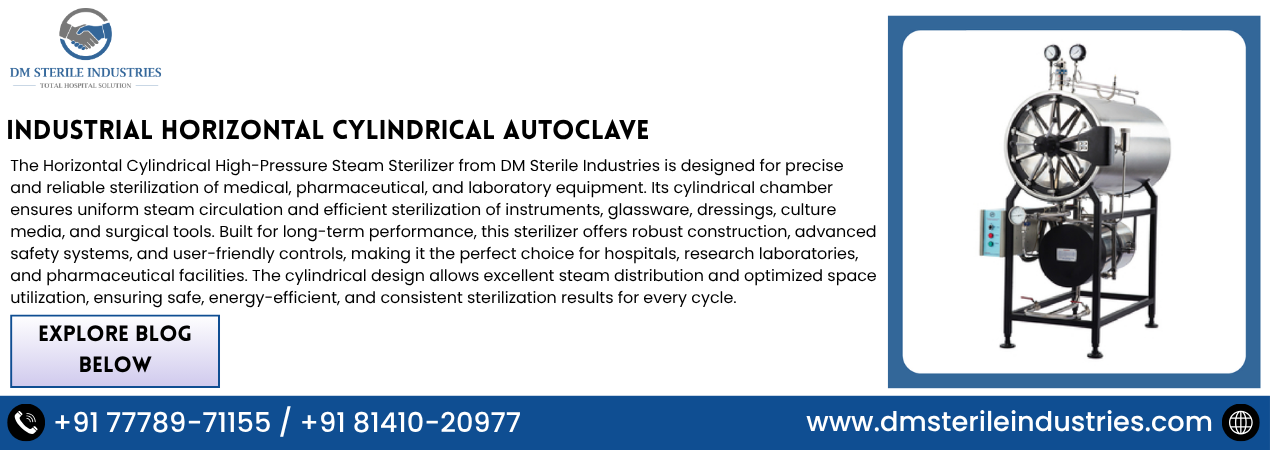
Industrial Horizontal Cylindrical Autoclave
Industrial Horizontal Cylindrical Autoclave
An industrial horizontal cylindrical autoclave is an essential sterilization machine used in hospitals, pharmaceutical units, laboratories, research centers, and industrial facilities where safe, reliable, and repeatable sterilization is required. It is designed to sterilize surgical instruments, laboratory glassware, culture media, dressings, pharmaceutical materials, and other heat-resistant items using high-pressure saturated steam.
The horizontal cylindrical design supports uniform steam circulation inside the chamber. This helps steam reach every part of the load properly and ensures consistent sterilization results. For organizations that handle critical instruments or sensitive laboratory materials, this type of autoclave offers a practical and dependable solution for routine sterilization work.
DM Sterile Industries offers horizontal cylindrical high-pressure steam sterilizers designed for accurate temperature control, pressure safety, easy operation, and long-term performance. The machine is suitable for users who need hygienic construction, a strong chamber design, and reliable sterilization cycles for regular use.
About DM Sterile Industries
DM Sterile Industries is involved in manufacturing sterilization and healthcare equipment for medical, laboratory, pharmaceutical, and industrial applications. The company offers products such as autoclaves, ETO sterilizer machines, CSSD furniture, automatic washer-disinfectors, ultrasonic cleaners, and steam sterilizer machines.
The company focuses on equipment that supports hygiene, safety, infection control, and efficient sterilization workflow. Its horizontal cylindrical autoclave is designed for users who require controlled steam sterilization with durable stainless steel construction and dependable operating features.
What Is an Industrial Horizontal Cylindrical Autoclave?
An industrial horizontal cylindrical autoclave is a high-pressure steam sterilizer with a cylindrical chamber positioned horizontally. It uses steam, pressure, and controlled temperature to destroy microorganisms, bacteria, spores, and contaminants from sterilizable materials.
The horizontal structure makes loading and unloading easier, especially when handling trays, containers, surgical instruments, glassware, and medium-sized loads. The cylindrical chamber helps maintain balanced pressure distribution and effective steam movement during the sterilization cycle.
This type of autoclave is commonly used where sterilization must be accurate, repeatable, and safe. It is suitable for hospitals, laboratories, pharmaceutical units, research institutes, diagnostic centers, and industrial sterilization processes.
Key Features of Industrial Horizontal Cylindrical Autoclave
The horizontal cylindrical high-pressure steam sterilizer is designed with practical features that support safety, durability, and sterilization efficiency.
- Cylindrical horizontal chamber for uniform steam penetration
- Stainless steel construction using SS 304 or SS 316
- Double-wall or triple-wall structure for improved heat retention
- Digital microprocessor or analog control panel
- Accurate temperature and pressure management
- Automatic steam pressure cut-off system
- Pressure gauge, safety valve, and steam release valve
- Water level indicator for safe operation
- Door safety lock for pressurized cycle protection
- Front-loading design for easy material handling
- Suitable for heavy-duty and continuous use
- Designed for surgical tools, lab glassware, culture media, and pharmaceutical materials
These features help improve sterilization consistency while supporting safe operation in demanding environments.
Technical Specifications
Technical specifications may vary depending on model size, automation level, and application requirement. Common specifications of an industrial horizontal cylindrical autoclave include:
- Construction: Stainless Steel SS 304 or SS 316
- Chamber Type: Cylindrical horizontal chamber
- Wall Design: Double-wall or triple-wall construction
- Available Chamber Sizes: 300 x 600 mm, 400 x 900 mm, 500 x 1000 mm, and custom sizes
- Working Pressure: 15–22 psi adjustable
- Working Temperature: 121°C to 134°C
- Temperature Control: Digital microprocessor controller or analog thermostat
- Safety System: Pressure cut-off, safety valve, steam release valve, water level indicator, and door lock
- Insulation: High-density glass wool or ceramic fiber
- Door Type: Manual hinged or automatic sliding, depending on model
- Power Supply: 440V AC, 3-phase, 50Hz
- Application Areas: Hospitals, labs, pharmaceutical units, research centers, and industrial sterilization
These specifications help users select the right machine based on load size, sterilization frequency, available space, and process requirements.
How Horizontal Cylindrical Autoclave Works
The working process of a horizontal cylindrical autoclave is based on steam sterilization. The chamber is loaded with sterilizable materials, and the door is locked securely. Steam is then generated and introduced into the chamber under controlled pressure.
As the temperature rises, saturated steam penetrates the load and destroys microorganisms. The sterilization cycle is maintained for a specific time depending on the material type and required sterilization level. After the cycle is completed, steam is released safely, pressure is reduced, and the sterilized load can be removed after proper cooling.
The main working stages include:
- Loading of sterilization materials
- Door locking and chamber sealing
- Steam generation and pressure build-up
- Temperature and pressure control
- Sterilization holding time
- Steam release and pressure reduction
- Safe unloading after cycle completion
A properly controlled cycle helps ensure that the sterilization process remains safe, repeatable, and effective.
Applications of Industrial Horizontal Cylindrical Autoclave
An industrial horizontal cylindrical autoclave is used across different sectors where steam sterilization is required. Its chamber design and pressure-based operation make it suitable for a wide range of sterilization tasks.
- Sterilization of surgical instruments
- Sterilization of laboratory glassware
- Sterilization of culture media
- Sterilization of dressings and linen
- Pharmaceutical material sterilization
- Microbiology laboratory sterilization
- Research institute sterilization work
- CSSD department sterilization support
- Sterilization of reusable medical tools
- Industrial sterilization of heat-resistant items
The machine is useful for both routine and critical sterilization processes where safety, hygiene, and process control are important.
Importance of Stainless Steel Construction
Stainless steel construction is one of the most important factors in an industrial autoclave. Since the machine operates with steam, pressure, and high temperature, the chamber must be strong, corrosion-resistant, and easy to clean.
SS 304 and SS 316 are commonly used because they provide durability, hygiene, and resistance against moisture-related corrosion. Stainless steel also helps maintain a clean internal surface, which is important in medical, laboratory, and pharmaceutical environments.
A well-built stainless steel chamber supports longer service life and helps maintain sterilization quality when the machine is operated and maintained properly.
Why Pressure and Temperature Control Matter
Steam sterilization depends on the correct balance of pressure, temperature, and time. If any of these parameters are not maintained properly, sterilization results may become inconsistent. That is why control systems are an important part of any horizontal cylindrical autoclave.
The machine usually operates between 121°C and 134°C, depending on the sterilization load and process requirement. Working pressure is commonly adjustable between 15 and 22 psi. Digital or analog control systems help users monitor and manage sterilization cycles more effectively.
Safety features such as pressure cut-off, safety valve, pressure gauge, and door lock help protect the operator and the machine during pressurized operation.
Benefits of Industrial Horizontal Cylindrical Autoclave
A horizontal cylindrical autoclave offers several practical benefits for organizations that need regular sterilization performance.
- Uniform steam distribution inside the chamber
- Reliable sterilization of instruments and materials
- Easy loading and unloading due to horizontal design
- Strong stainless steel chamber construction
- Suitable for medium and heavy sterilization loads
- Controlled pressure and temperature operation
- Improved safety through multiple protection systems
- Long operational life with proper maintenance
- Useful for hospitals, labs, pharma, and industrial use
- Supports hygienic and contamination-free workflow
These benefits make it a preferred sterilization machine for facilities where quality, safety, and consistent sterilization output are important.
Buyer Checklist for Industrial Horizontal Cylindrical Autoclave
Before selecting a horizontal cylindrical autoclave, buyers should evaluate the machine based on practical usage needs. The right selection helps improve performance, safety, and long-term value.
- Required chamber size and load capacity
- Type of materials to be sterilized
- Required temperature and pressure range
- SS 304 or SS 316 construction preference
- Manual, semi-automatic, or fully automatic operation
- Door type and safety locking arrangement
- Control panel type and ease of use
- Power supply compatibility
- Insulation quality and heat retention
- Safety valve and pressure cut-off features
- Cleaning and maintenance requirements
- Service and technical support availability
A proper checklist helps avoid under-sizing, overloading, and operational mismatch.
Maintenance and Safety Guidelines
Regular maintenance is important for safe and long-lasting autoclave performance. Since the machine works with pressure and high temperature, users should follow proper operating procedures and routine inspection practices.
- Check pressure gauge and safety valve regularly
- Inspect door gasket and locking system
- Clean the chamber after use
- Avoid overloading the sterilization chamber
- Monitor water level before operation
- Use correct cycle settings for each load
- Keep steam release valve functional
- Inspect electrical and control systems periodically
- Train operators for safe handling
- Follow manufacturer instructions for maintenance
Good maintenance helps reduce downtime, improves safety, and supports consistent sterilization performance.
Frequently Asked Questions
An industrial horizontal cylindrical autoclave is a high-pressure steam sterilization machine with a horizontal cylindrical chamber. It is used to sterilize surgical instruments, laboratory glassware, culture media, dressings, pharmaceutical materials, and other heat-resistant items.
A horizontal cylindrical autoclave is used in hospitals, laboratories, pharmaceutical facilities, research centers, diagnostic units, CSSD departments, and industrial sterilization applications where safe steam sterilization is required.
A horizontal cylindrical steam sterilizer commonly operates between 121°C and 134°C. The exact temperature depends on the sterilization load, process requirement, and selected cycle.
Industrial autoclaves are commonly made from stainless steel such as SS 304 or SS 316. Stainless steel provides durability, hygiene, corrosion resistance, and suitability for repeated steam sterilization cycles.
The cylindrical chamber design helps maintain balanced pressure distribution and uniform steam circulation. This supports better steam penetration and improves sterilization consistency across the load.
Yes, it is suitable for laboratories because it can sterilize glassware, media, tools, and other lab materials. It is also useful for microbiology labs, research labs, and testing facilities.
The right size depends on the volume of materials, frequency of use, chamber loading pattern, available space, and type of sterilization application. Buyers should also check safety features, control system, and utility requirements before selection.
Quick Links
Our Products
Get In Touch
Plot No. 16, Saffron Industrial Park 1. Opp V.K Bhattha, Nr Morriat Industrial Park, Indore Road. Shingarva, Ahmedubod Gujarat -302430.
info.dmsterileind@gmail.com
+91 7778971155
+91 81410 20977
DM STERILE INDUSTRIES | All Rights Reserved.