
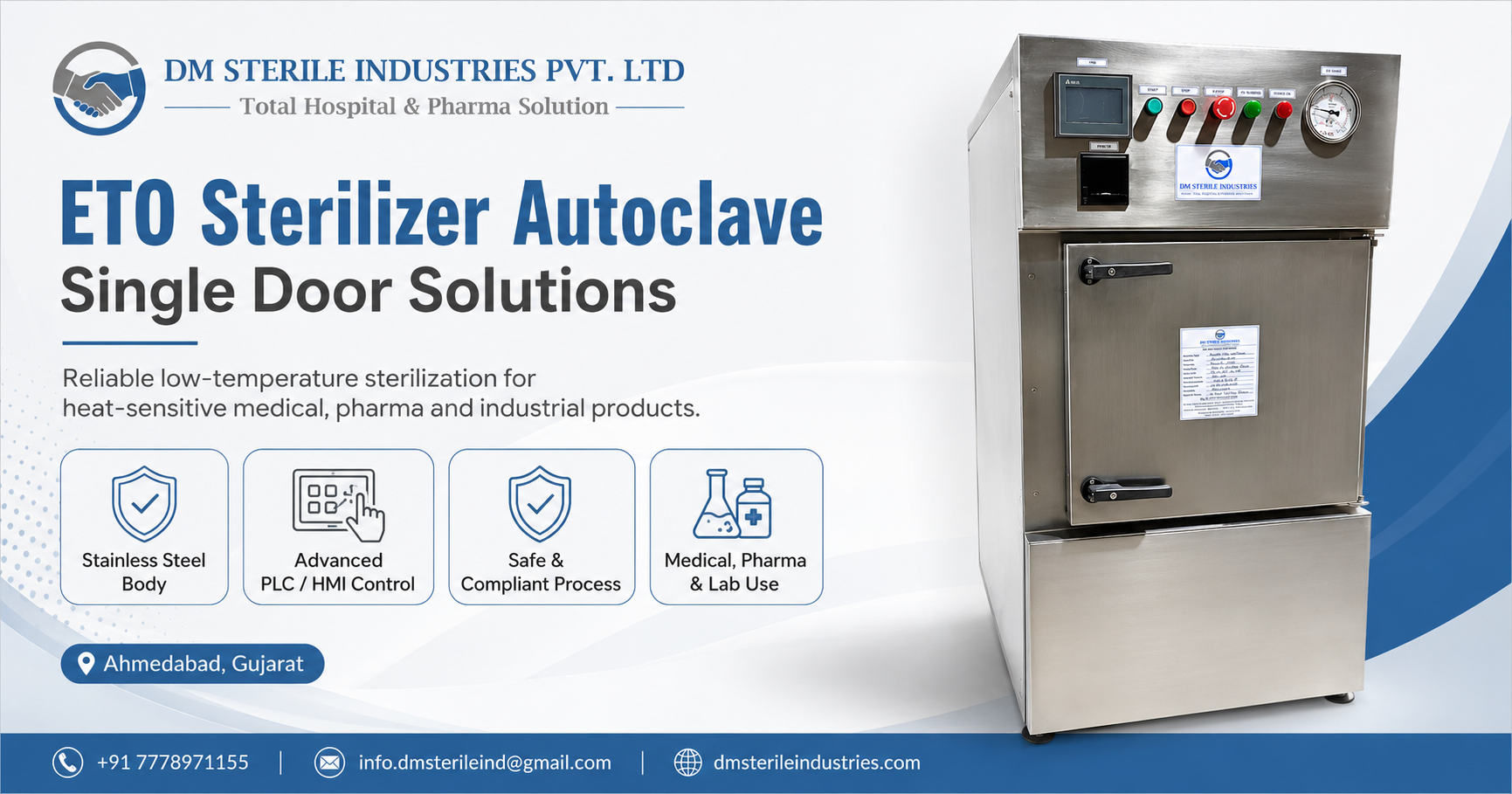
ETO Sterilizer Autoclave near me single door
Explore reliable single-door ETO sterilizer autoclaves for medical and industrial use in Ahmedabad. DM Sterile Industries offers robust, compliant sterilization
Why This Matters in Ahmedabad, Gujarat
Ahmedabad, situated in the heart of Gujarat, is a significant hub for the pharmaceutical, healthcare, and medical device manufacturing sectors. These industries operate under stringent regulatory frameworks where product sterility is non-negotiable. The demand for specialized sterilization equipment, particularly for heat-sensitive and moisture-sensitive materials, is consistently high. Local access to advanced ETO sterilizer autoclave single door units and reliable support services is crucial for maintaining operational efficiency and meeting production schedules within this dynamic industrial landscape.
What Is an ETO Sterilizer Autoclave — Overview
An ETO sterilizer autoclave is a specialized chamber designed to sterilize products using ethylene oxide gas. Unlike traditional steam autoclaves that rely on high heat and pressure, ETO sterilization is a chemical process suitable for items that would be damaged by heat or moisture. The term "autoclave" in this context refers to the enclosed, pressure-sealed chamber where the sterilization cycle takes place, ensuring controlled conditions for gas exposure and subsequent aeration. A single-door configuration means that loading and unloading occur through the same opening, making it ideal for facilities with specific layout constraints or for processes that do not require pass-through capabilities.
Key Features and Technical Specifications
- Robust Chamber Construction: Typically made from stainless steel (SS 304 or SS 316) to withstand ETO gas and vacuum cycles, ensuring durability and corrosion resistance.
- Advanced Control System: PLC-based (Programmable Logic Controller) with HMI (Human Machine Interface) for precise control over temperature, humidity, gas concentration, exposure time, and aeration phases.
- Integrated Safety Mechanisms: Features include gas leakage detection, emergency stop buttons, pressure interlocks, and exhaust systems to ensure operator safety and environmental protection.
- Efficient Gas Delivery System: Designed for uniform gas distribution within the chamber, ensuring consistent sterilization efficacy for all loaded items.
- Vacuum and Aeration Capabilities: High-performance vacuum pumps for pre-conditioning and post-sterilization aeration to remove residual ETO gas from products.
- Single-Door Design: Optimized for facilities requiring a compact footprint or specific workflow, where loading and unloading from a single access point is preferred.
- Temperature and Humidity Control: Precise regulation of chamber temperature and humidity, which are critical parameters for effective ETO sterilization.
- Data Logging and Reporting: Capabilities for recording cycle parameters, alarms, and events, essential for validation, compliance, and quality control.
Industrial Applications and Use Cases
- Medical Device Manufacturing: Sterilization of disposable medical devices, surgical instruments, catheters, and implants made from plastics, polymers, or heat-sensitive materials.
- Pharmaceutical Industry: Sterilization of certain drug delivery systems, packaging components, and raw materials that cannot tolerate steam sterilization.
- Healthcare & Hospitals: Processing of delicate instruments, endoscopes, and other heat-sensitive items in CSSD (Central Sterile Supply Department) settings.
- Biotechnology & Research Laboratories: Sterilization of specialized labware, culture media components, and research tools that require low-temperature processing.
- Textile and Fabric Sterilization: For medical gowns, drapes, and other fabric-based products used in sterile environments.
- Electronics and Optics: Sterilization of sensitive electronic components or optical devices where heat and moisture could cause damage.
- Veterinary Medicine: Sterilization of instruments and supplies used in animal healthcare that are sensitive to traditional sterilization methods.
How to Choose the Right ETO Sterilizer Autoclave
Selecting an ETO sterilizer autoclave single door unit requires careful consideration of several factors to ensure it meets specific operational and regulatory needs. A thorough evaluation helps in making an informed investment that supports long-term sterilization requirements.
- Capacity and Chamber Size: Assess the volume and dimensions of items to be sterilized to ensure the chamber can accommodate current and future loads efficiently.
- Material Compatibility: Verify that the sterilizer is suitable for the specific materials of your products, particularly concerning temperature, humidity, and ETO gas exposure.
- Safety Features and Protocols: Prioritize units with comprehensive safety systems, including gas detection, interlocks, and robust exhaust mechanisms, to protect personnel and the environment.
- Automation and Control System: Evaluate the level of automation, ease of programming, and data logging capabilities for consistent cycle reproducibility and regulatory compliance.
- Regulatory Certifications and Compliance: Ensure the unit meets relevant national and international standards such as ISO 11135 for ETO sterilization and local regulatory requirements.
- Supplier Experience and Support: Consider the manufacturer's expertise in sterilization technology, their track record, and the availability of installation, training, and after-sales service.
- Customization Options: Determine if the supplier can offer modifications or specific features to tailor the sterilizer to unique product geometries or process requirements.
- Aeration Efficiency: Understand the unit's aeration capabilities to ensure minimal residual ETO levels on products post-sterilization, crucial for product safety.
Quality Standards and Compliance
Adherence to rigorous quality standards is paramount for any sterilization equipment, especially an ETO sterilizer autoclave. Buyers must verify that the chosen unit complies with international and national regulations to ensure product safety and efficacy. Key standards include ISO 11135, which specifies requirements for the development, validation, and routine control of an ethylene oxide sterilization process for medical devices. Additionally, compliance with Good Manufacturing Practices (GMP) and relevant local health and safety regulations, such as those set by the Central Drugs Standard Control Organization (CDSCO) in India, is essential. A reputable supplier will provide documentation and certification confirming their equipment meets these critical benchmarks.
Why DM Sterile Industries' Experience and Capability Matters
DM Sterile Industries, established in Ahmedabad, Gujarat, understands the precise demands of sterilization in critical sectors. Our team, led by Mr. Divyang Koshti and Mr. Maulik Jani, brings focused expertise in sterilization technology, particularly for industrial and medical applications. We emphasize robust manufacturing processes, utilizing quality materials like stainless steel for durable and reliable ETO sterilizer autoclave single door units. Our technical capability extends to developing advanced automation and control systems that ensure consistent cycle performance and comprehensive data logging. We offer custom solutions, recognizing that each client has unique sterilization needs, and our quality control measures are integrated throughout the production cycle. This commitment ensures reliable delivery and comprehensive after-sales support, providing clients with equipment that performs consistently and meets their operational requirements.
Installation, Maintenance and Care Tips
Proper installation and ongoing maintenance are crucial for the safe and efficient operation of an ETO sterilizer autoclave. Following manufacturer guidelines ensures optimal performance and extends the equipment's lifespan.
- Professional Installation: Always engage qualified technicians for installation, ensuring correct utility connections (power, gas, vacuum, ventilation) and proper chamber leveling.
- Ventilation System: Verify that the dedicated ventilation and exhaust systems for ETO gas are correctly installed and functioning to safely remove residual gas from the chamber and surrounding area.
- Regular Calibration: Calibrate temperature, pressure, and humidity sensors periodically to maintain accuracy and ensure cycle parameters are precisely controlled.
- Leak Detection: Implement routine leak detection checks on gas lines, chamber seals, and valves to prevent ETO gas escape and maintain chamber integrity.
- Filter Replacement: Replace air and gas filters according to the manufacturer's schedule to ensure clean gas delivery and efficient aeration.
- Preventive Maintenance: Schedule regular preventive maintenance checks with qualified service personnel to inspect components, identify potential issues, and ensure all safety features are operational.
- Operator Training: Ensure all personnel operating the sterilizer are thoroughly trained on its functions, safety protocols, and emergency procedures.
- Documentation: Maintain detailed records of all sterilization cycles, maintenance activities, and calibration reports for compliance and troubleshooting.
Frequently Asked Questions
Ethylene oxide sterilization is suitable for a wide range of heat-sensitive and moisture-sensitive materials. This includes plastics, polymers, rubber, certain medical devices with complex geometries, electronic components, and delicate instruments that would be damaged by high temperatures or steam. It is commonly used for single-use medical products and items with intricate lumens.
A single-door ETO sterilizer autoclave allows loading and unloading of products through the same opening, typically from a non-sterile area. A double-door unit, conversely, has separate doors on opposite sides, enabling loading from a non-sterile area and unloading into a sterile area, creating a physical barrier that helps maintain cleanroom integrity and prevents cross-contamination in critical environments.
Operating an ETO sterilizer requires strict safety protocols due to the hazardous nature of ethylene oxide gas. Essential precautions include ensuring adequate ventilation, using personal protective equipment (PPE) such as respirators and chemical-resistant gloves, implementing gas detection systems, and having emergency response plans in place. Regular training for operators is also crucial.
The frequency of ETO sterilizer maintenance depends on usage intensity and manufacturer recommendations. Generally, routine checks should be performed daily or weekly, while more comprehensive preventive maintenance should be scheduled quarterly or semi-annually by qualified technicians. Regular calibration of sensors and replacement of filters are also critical for consistent performance.
The primary international standard for ETO sterilization of medical devices is ISO 11135. This standard outlines requirements for the development, validation, and routine control of the sterilization process. Additionally, facilities must comply with local regulatory guidelines, such as those from health authorities, regarding gas emissions, worker safety, and product quality.
Yes, ETO sterilizers can often be customized to meet specific application requirements. This may involve adjusting chamber dimensions, integrating specialized loading systems, tailoring control software for unique cycle parameters, or incorporating specific safety features. Customization ensures the sterilizer integrates seamlessly into existing workflows and processes, optimizing efficiency and compliance.
Conclusion
For industries in Ahmedabad, Gujarat, requiring precise and reliable sterilization of heat and moisture-sensitive products, a single-door ETO sterilizer autoclave represents a vital investment. These units provide the controlled environment necessary for effective ethylene oxide sterilization, ensuring product safety and regulatory compliance. When considering such critical equipment, factors like chamber capacity, advanced safety features, adherence to quality standards like ISO 11135, and the supplier's proven experience are paramount. Partnering with a knowledgeable manufacturer like DM Sterile Industries ensures access to robust technology and dedicated support, contributing to operational excellence and product integrity within demanding industrial settings.
Get In Touch
Dm Sterile Industries