
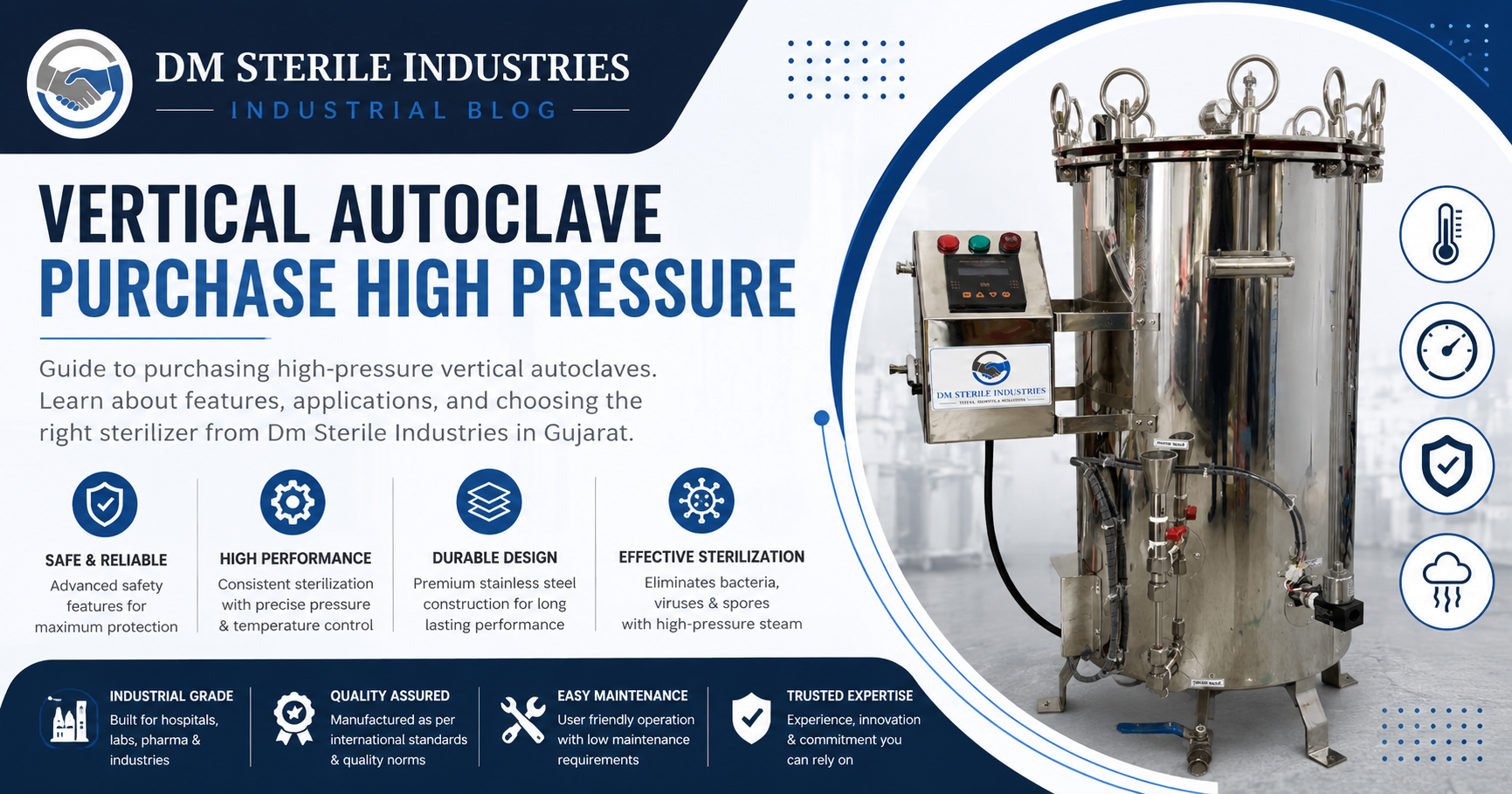
Vertical Autoclave purchase high pressure
Guide to purchasing high-pressure vertical autoclaves. Learn about features, applications, and choosing the right sterilizer from Dm Sterile Industries in Gujar
What is a Vertical Autoclave — Overview
A vertical autoclave is a pressurized steam sterilization chamber designed for efficient microbial inactivation. It operates by using saturated steam under pressure to reach temperatures significantly above boiling point, typically 121°C or higher. This high temperature and pressure combination effectively destroys all forms of microbial life, including resistant bacterial spores. The vertical design allows for a smaller footprint compared to horizontal models, making it ideal for facilities with space constraints, while still offering substantial chamber volumes for sterilizing various items like surgical instruments, glassware, media, and biohazardous waste.
Key Features and Technical Specifications
When considering a vertical autoclave purchase, several key features and technical specifications are crucial for optimal performance and safety:
- Chamber Material: Typically constructed from high-grade stainless steel (e.g., SS 304 or SS 316) for durability, corrosion resistance, and ease of cleaning.
- Pressure & Temperature Range: Capable of reaching operating pressures of 1.5 kg/cm² to 2.2 kg/cm² (or higher) and temperatures of 121°C to 134°C, ensuring effective sterilization cycles.
- Safety Valves: Multiple safety mechanisms, including spring-loaded safety valves and electromagnetic door locks, to prevent over-pressurization and accidental opening.
- Control System: Options range from manual operation with pressure gauges and timers to fully automatic PLC-based systems with digital displays for precise cycle control and monitoring.
- Chamber Capacity: Available in a wide range of volumes, from small benchtop units to large industrial sizes, to accommodate varying load requirements.
- Drain Valve: A well-placed drain valve for easy removal of condensate and efficient drying of sterilized items.
- Water Level Indicator: A clear indicator to monitor the water level inside the chamber, crucial for steam generation.
- Insulation: High-quality insulation to minimize heat loss, improve energy efficiency, and ensure operator safety.
Industrial Applications and Use Cases
The versatility of vertical autoclaves makes them indispensable across numerous sectors:
- Hospitals and Clinics: Sterilization of surgical instruments, dressings, syringes, and other medical devices to prevent infections.
- Laboratories (Research & Diagnostic): Sterilizing glassware, culture media, pipettes, and biohazardous waste to maintain sterile environments and ensure accurate experimental results.
- Pharmaceutical Industry: Sterilizing equipment, stoppers, vials, and raw materials used in drug manufacturing to meet stringent quality control standards.
- Biotechnology: Sterilizing media, consumables, and equipment in cell culture and genetic engineering applications.
- Dental Practices: Ensuring the sterility of dental instruments for patient safety.
- Veterinary Clinics: Sterilizing instruments and equipment used in animal care.
- Food and Beverage Industry: Sterilizing canning equipment and testing samples for quality assurance.
- Cosmetic Industry: Sterilizing tools and packaging materials for hygiene-sensitive product manufacturing.
How to Choose the Right Vertical Autoclave
Selecting the appropriate vertical autoclave involves careful consideration of your specific needs and operational requirements. Use this checklist to guide your decision:
- Capacity Requirements: Determine the volume and size of items you need to sterilize regularly. Consider peak load times and potential future growth.
- Sterilization Standards: Identify the specific sterilization standards (e.g., ISO, local regulatory requirements) your industry or application demands.
- Automation Level: Decide between manual, semi-automatic, or fully automatic control systems based on your budget, operational complexity, and need for precise cycle logging.
- Chamber Configuration: Evaluate whether a single-wall, double-wall, or triple-wall construction is most suitable for your application, considering insulation and energy efficiency.
- Power Source: Ensure compatibility with your facility's available power supply (e.g., single-phase, three-phase).
- Safety Features: Verify the presence and type of safety interlocks, pressure relief valves, and emergency shut-off mechanisms.
- Supplier Reputation and Support: Research the manufacturer's track record, warranty offerings, and availability of after-sales service and spare parts.
- Customization Options: Assess if the manufacturer can accommodate specific modifications to meet unique operational needs.
Quality Standards and Compliance
Adherence to recognized quality standards and regulatory compliance is non-negotiable when purchasing a vertical autoclave. Reputable manufacturers will ensure their equipment meets stringent specifications. Look for autoclaves that comply with standards such as ISO 13485 for medical devices, which signifies a robust quality management system. In India, compliance with Bureau of Indian Standards (BIS) certifications where applicable, and adherence to relevant Indian Pharmacopoeia (IP) or other pharmacopoeial guidelines for pharmaceutical applications, is crucial. Verification of the materials used, such as SS 304 or SS 316 grade stainless steel, and the presence of certifications like CE marking for European markets, indicates a commitment to quality and safety.
Why Dm Sterile Industries' Experience and Capability Matters
At Dm Sterile Industries, our extensive experience in designing and manufacturing sterilization equipment, including high-pressure vertical autoclaves, is a testament to our commitment to quality and innovation. We understand the critical role these machines play in ensuring safety and compliance across diverse industries in Gujarat and beyond. Our manufacturing processes are meticulously controlled, leveraging advanced technology and skilled craftsmanship to produce robust, reliable, and efficient autoclaves.
Our technical team possesses deep expertise in sterilization science and engineering, enabling us to offer solutions that meet precise operational demands. We pride ourselves on rigorous quality control at every stage of production, from material selection to final testing, ensuring each unit performs to the highest standards. Dm Sterile Industries is equipped to provide customized solutions, adapting our designs to fit unique requirements, and we are dedicated to offering comprehensive after-sales support, including installation, training, and maintenance services, ensuring your investment delivers long-term value and operational peace of mind.
Installation, Maintenance, and Care Tips
Proper installation, regular maintenance, and careful operation are vital for the longevity and effective performance of your vertical autoclave.
Installation
Ensure the autoclave is installed on a level, stable surface, away from excessive heat or moisture. Connect it to a suitable and stable power source as per the manufacturer's specifications. Allow adequate clearance around the unit for ventilation and access.
Routine Maintenance:
- Daily: Check the door gasket for any damage or debris and clean it. Ensure the chamber is clean and free from residues.
- Weekly: Inspect safety valves and test their functionality. Clean the chamber interior thoroughly. Check the drain valve for blockages.
- Monthly: Inspect all external components, including the control panel and wiring. Calibrate temperature and pressure gauges if necessary.
- Annually: A professional service check by a qualified technician is recommended to inspect internal components, perform detailed calibration, and ensure all safety features are functioning optimally.
Care Tips
Always use distilled or demineralized water to prevent mineral buildup and corrosion.
Do not overload the chamber; ensure proper steam circulation by arranging items loosely.
Follow recommended sterilization cycles for different types of loads.
Keep the exterior clean using a mild detergent and soft cloth.
- Refer to the user manual for specific operating and maintenance instructions.
Frequently Asked Questions
A standard vertical autoclave typically operates at temperatures around 121°C (250°F) or 134°C (273°F), with corresponding pressures ranging from 1.5 kg/cm² to 2.2 kg/cm² (approximately 20-30 psi). These parameters are crucial for effectively destroying microorganisms, including heat-resistant spores, ensuring complete sterilization.
Effective sterilization is confirmed through the use of biological indicators (e.g., spore strips) and chemical indicators (e.g., autoclave tape, process challenge devices). Biological indicators are the most reliable method, showing whether the specific target organism has been killed. Chemical indicators change color when exposed to the correct temperature and time, indicating that the cycle parameters have been met.
Vertical autoclaves are suitable for sterilizing a wide range of heat-stable and moisture-stable items, including surgical instruments, glassware, laboratory equipment, culture media, dental instruments, and biohazardous waste. However, items sensitive to heat or moisture, such as certain plastics, electronic devices, or sharp instruments prone to corrosion, may require alternative sterilization methods.
A single-wall autoclave has a basic chamber and jacket. A double-wall unit includes an inner chamber and an outer jacket, with steam circulating in the jacket to preheat the chamber, reducing condensation and improving drying. A triple-wall autoclave adds an extra layer of insulation for enhanced energy efficiency and operator safety, maintaining higher temperatures for longer periods.
The door gasket should be inspected daily for wear, cracks, or debris. Replacement frequency varies based on usage, typically ranging from every 6 months to 2 years. A damaged or worn gasket can lead to steam leaks, compromising the sterilization cycle and potentially posing a safety hazard. Prompt replacement is essential for maintaining operational integrity.
It is strongly recommended to use distilled or demineralized water in your vertical autoclave. Tap water contains minerals and impurities that can build up inside the chamber and heating elements over time, leading to corrosion, scaling, and reduced efficiency. Using purified water significantly extends the lifespan of the autoclave and ensures consistent performance.
Conclusion
Investing in a high-pressure vertical autoclave is a significant decision that directly impacts the safety, compliance, and operational integrity of your facility. From healthcare providers in Gujarat's bustling cities to research institutions and pharmaceutical manufacturers, the need for dependable sterilization is universal. By carefully evaluating key features, understanding industrial applications, adhering to quality standards, and choosing an experienced manufacturer like Dm Sterile Industries, you can secure a sterilization solution that meets your precise requirements. Prioritizing robust construction, advanced safety features, and reliable after-sales support will ensure your vertical autoclave serves as a trustworthy asset for years to come.
Get In Touch
Dm Sterile Industries