
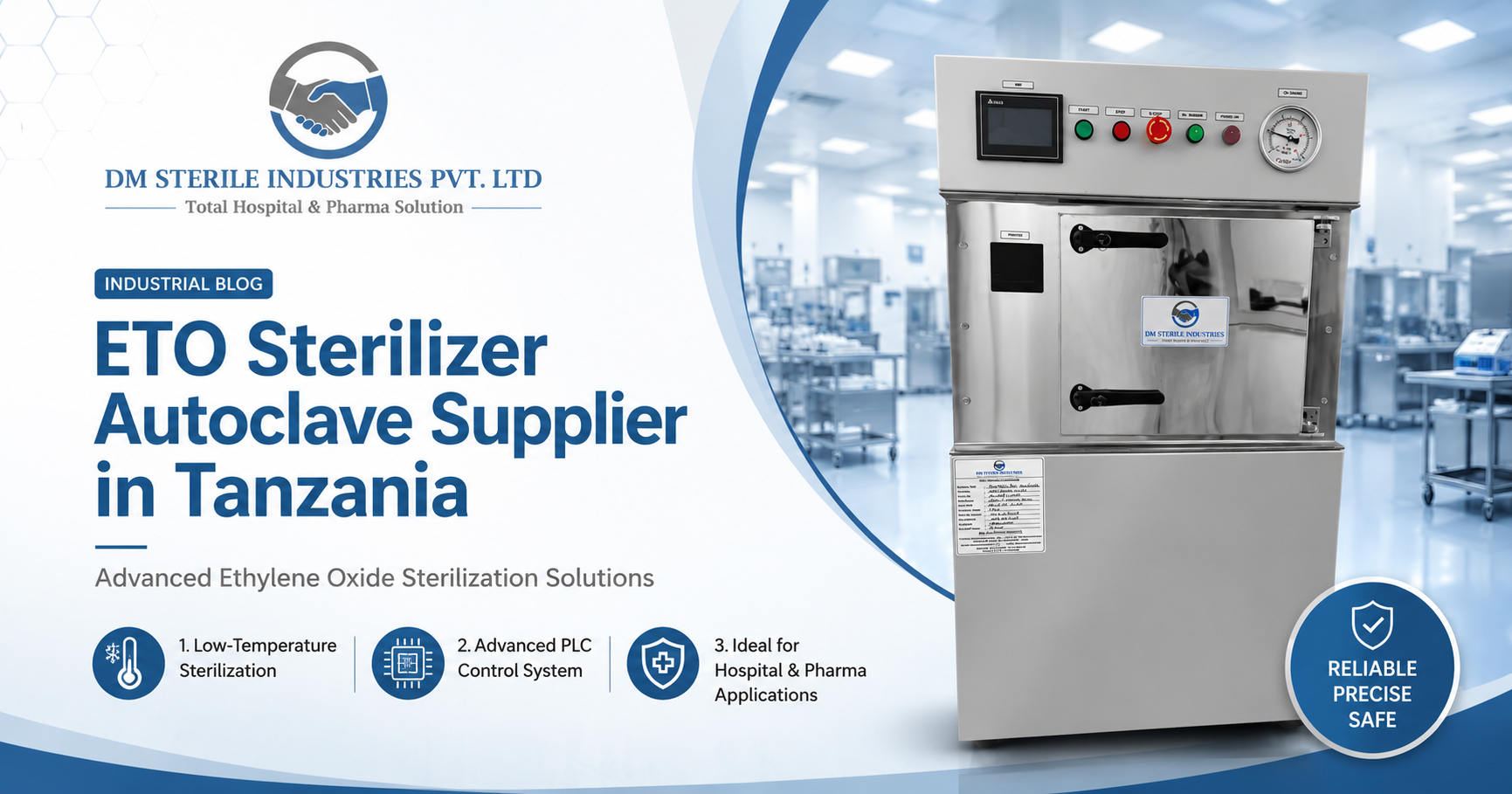
ETO Sterilizer Autoclave supplier in Tanzania
Find a reliable ETO sterilizer autoclave supplier in Tanzania. DM Sterile Industries offers advanced ethylene oxide sterilization solutions for healthcare and p
What is an ETO Sterilizer Autoclave? — Overview
An Ethylene Oxide (ETO) sterilizer autoclave is a specialized piece of equipment designed to sterilize heat- and moisture-sensitive medical devices and pharmaceutical products using gaseous ethylene oxide. Unlike traditional steam autoclaves, ETO sterilization operates at lower temperatures, typically between 37°C and 63°C. The process involves exposing the items to a controlled concentration of ETO gas within a sealed chamber under specific conditions of temperature, humidity, and pressure. This gas effectively penetrates packaging materials and complex lumens, killing microorganisms like bacteria, viruses, fungi, and spores. After the sterilization cycle, a aeration phase is crucial to remove residual ETO gas from the sterilized items.
Key Features and Technical Specifications
When selecting an ETO sterilizer, several technical specifications are critical for effective and safe operation:
- Chamber Volume: Available in various capacities to suit different throughput needs, from small laboratory units to large industrial sterilizers.
- Temperature Range: Operates effectively between 37°C and 63°C, ideal for heat-sensitive materials.
- Gas Concentration Control: Precise management of ETO gas concentration ensures effective sterilization while minimizing residuals.
- Humidity Control: Maintains optimal humidity levels, which is essential for ETO's microbial kill efficacy.
- Pressure and Vacuum Capabilities: Utilizes vacuum and pressure cycles to introduce gas and remove residuals efficiently.
- Aeration System: Integrated or separate aeration phase to safely remove toxic ETO residues from sterilized items.
- Safety Features: Multiple safety interlocks, gas leak detection, and emergency shutdown protocols.
- Control System: Advanced PLC-based controls with programmable cycles, data logging, and user-friendly interfaces.
Industrial Applications and Use Cases
ETO sterilizers are indispensable across several critical sectors in Tanzania:
- Hospitals and Central Sterile Supply Departments (CSSDs): Sterilizing complex surgical instruments, endoscopes, catheters, and other heat-sensitive devices.
- Pharmaceutical Manufacturing: Sterilizing final product packaging, vials, syringes, and other components that cannot tolerate heat.
- Medical Device Manufacturers: Ensuring the sterility of manufactured devices before they reach healthcare providers or consumers.
- Research and Development Laboratories: Sterilizing delicate laboratory equipment and consumables.
- Dental Clinics: Sterilizing specialized dental instruments that are not steam-compatible.
- Veterinary Practices: Sterilizing instruments used in animal care.
- Biotechnology Firms: Sterilizing sensitive materials and equipment used in biological research.
How to Choose the Right ETO Sterilizer
Selecting the appropriate ETO sterilizer requires careful consideration of your specific needs. Here’s a checklist to guide your decision:
- Sterilization Load Requirements: Determine the volume and type of items you need to sterilize regularly. This dictates the required chamber size and cycle duration.
- Material Compatibility: Ensure the sterilizer is suitable for the materials of the items you process, especially plastics and electronics.
- Regulatory Compliance: Verify that the sterilizer meets relevant international and local standards (e.g., ISO 11135, ISO 13485, local health regulations).
- Safety Features: Prioritize units with robust safety systems, including gas leak detection and proper ventilation/aeration.
- Ease of Operation and Maintenance: Look for user-friendly control systems and readily available technical support for maintenance.
- Supplier Reputation and Support: Choose a supplier with a proven track record, good customer service, and reliable after-sales support.
- Customization Options: Assess if the supplier can offer modifications to meet unique operational requirements.
- Validation and Documentation: Ensure the manufacturer provides comprehensive documentation for installation, operation, and performance qualification (IQ/OQ/PQ).
Quality Standards and Compliance
Adherence to stringent quality standards is non-negotiable for ETO sterilizers. Manufacturers must comply with international standards such as ISO 11135, which outlines the requirements for the validation and routine control of a sterilization process for medical devices using ethylene oxide. Additionally, ISO 13485 certification for quality management systems is crucial, demonstrating a commitment to producing safe and effective medical devices and equipment. Buyers in Tanzania should always verify that the ETO sterilizer they are considering is manufactured in compliance with these standards and that the supplier can provide all necessary documentation and certifications. This ensures both the efficacy of the sterilization process and the safety of operators and end-users.
Why DM Sterile Industries' Experience and Capability Matters
DM Sterile Industries brings a wealth of experience and technical capability to the supply of ETO sterilizers for the Tanzanian market. Established with a vision to provide advanced sterilization solutions, our company focuses on manufacturing equipment that meets rigorous international quality benchmarks. Our manufacturing processes are designed for precision and reliability, ensuring that each ETO sterilizer performs optimally. Our team comprises experienced engineers and technicians who understand the critical nature of sterilization in healthcare and pharmaceutical applications. We are committed to providing robust, safe, and efficient ETO sterilization systems, backed by comprehensive after-sales support and a dedication to customer satisfaction.
Installation, Maintenance, and Care Tips
Proper installation, regular maintenance, and careful operation are key to the longevity and effectiveness of your ETO sterilizer.
- Installation: Ensure installation is performed by qualified technicians according to the manufacturer's specifications. This includes proper ventilation, electrical connections, and gas supply setup.
- Pre-Sterilization Checks: Always verify that items are clean, dry, and properly packaged before loading. Ensure the sterilizer chamber is clean and free from debris.
- Cycle Monitoring: Closely monitor each sterilization cycle, paying attention to temperature, humidity, gas concentration, and pressure readings.
- Aeration: Crucially, ensure the aeration phase is completed fully to reduce ETO residuals to safe levels, as per regulatory guidelines.
- Routine Maintenance: Schedule regular preventive maintenance as recommended by the manufacturer. This includes checking seals, filters, gas sensors, and control systems.
- Calibration: Periodically calibrate sensors and monitoring equipment to ensure accuracy.
- Operator Training: Ensure all personnel operating the ETO sterilizer receive thorough training on its safe and effective use.
Frequently Asked Questions
ETO sterilizers are ideal for heat- and moisture-sensitive materials such as plastics, electronics, rubber, and delicate instruments with lumens or complex shapes that cannot withstand high temperatures of steam sterilization.
Ethylene oxide gas is flammable, explosive, and toxic. However, when used in a properly designed and maintained ETO sterilizer with appropriate safety features and ventilation, and when followed by a thorough aeration cycle, it can be used safely.
A complete ETO sterilization cycle, including pre-conditioning, exposure, and aeration, can vary significantly but typically ranges from several hours to over 24 hours, depending on the sterilizer model, cycle parameters, and aeration time required.
ETO is a volatile organic compound (VOC) and an ozone-depleting substance. Modern ETO sterilizers are designed with advanced emission control systems and efficient aeration processes to minimize environmental impact and comply with regulations.
Steam sterilization (autoclaving) uses high-temperature steam under pressure and is effective for heat- and moisture-stable items. ETO sterilization uses a gas at lower temperatures, making it suitable for heat- and moisture-sensitive items.
Effective removal of ETO residuals is achieved through a controlled aeration phase, where the sterilized items are exposed to air or a specific gas mixture under controlled conditions to allow the ETO to dissipate. The duration depends on the item's material and packaging.
Conclusion
For healthcare facilities, pharmaceutical manufacturers, and research institutions in Tanzania, investing in a reliable ETO sterilizer autoclave is a critical step towards ensuring product safety and operational integrity. Choosing the right equipment involves understanding the unique benefits of ETO sterilization, verifying compliance with quality standards, and partnering with an experienced supplier like DM Sterile Industries. Our commitment to quality manufacturing, technical expertise, and comprehensive support ensures that our clients in Tanzania receive ETO sterilization solutions that meet their demanding requirements, contributing to higher standards of care and production.
Get In Touch
Dm Sterile Industries