
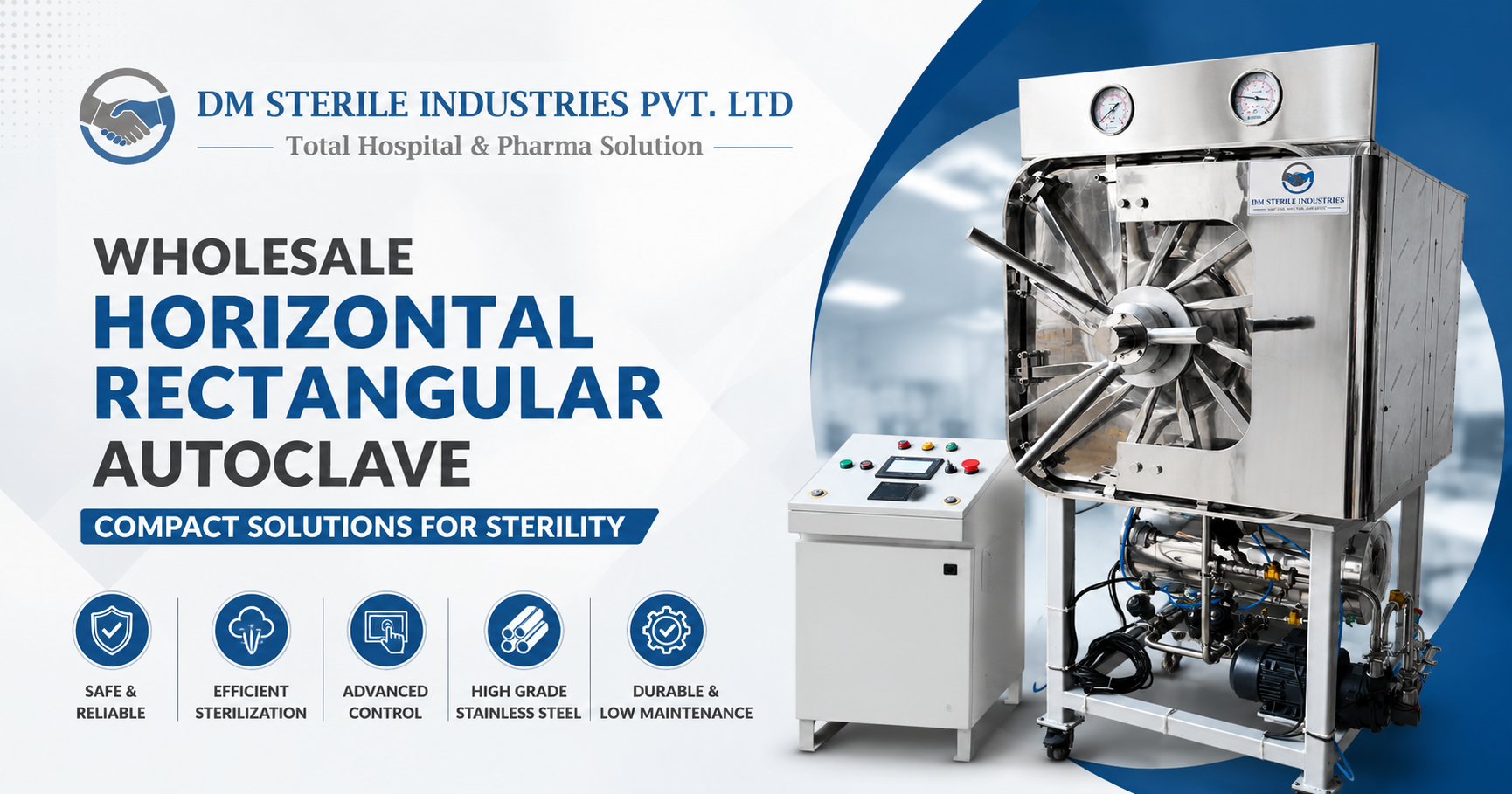
wholesale Horizontal Rectangular Autoclave for compact
Find compact, wholesale Horizontal Rectangular Autoclaves in Ahmedabad. Ensure sterile medical instruments with reliable steam sterilization solutions from DM S
What is a Horizontal Rectangular Autoclave? — Overview
A horizontal rectangular autoclave is a type of steam sterilizer that uses pressurized steam to kill microorganisms on medical and laboratory equipment. Unlike vertical autoclaves, these units feature a horizontal chamber, typically rectangular in shape, which allows for the loading of larger or longer items. The sterilization process involves creating a vacuum to remove air, followed by the introduction of saturated steam at controlled temperature and pressure for a specific duration. This method is highly effective against bacteria, viruses, fungi, and spores, making it a cornerstone of infection control.
Key Features and Technical Specifications
When evaluating horizontal rectangular autoclaves, several key features and specifications are crucial for optimal performance and reliability:
- Chamber Material: Typically constructed from high-grade stainless steel (e.g., SS 304 or SS 316) for corrosion resistance and durability.
- Door Mechanism: Features a robust, safety-interlocked door to prevent accidental opening during operation and ensure a secure seal.
- Steam Generation: Integrated or separate steam generator for efficient and consistent steam production.
- Control System: Advanced PLC-based control systems with digital displays for precise monitoring of temperature, pressure, and cycle time.
- Safety Features: Multiple safety interlocks, pressure relief valves, and emergency stop functions.
- Vacuum System: Efficient vacuum pump for air removal and effective steam penetration, often including a post-sterilization drying cycle.
- Capacity and Dimensions: Available in various chamber sizes to accommodate different volumes of instruments and materials.
- Power Requirements: Operates on standard industrial power supply, with options for different voltage and phase configurations.
Industrial Applications and Use Cases
The versatility of horizontal rectangular autoclaves makes them indispensable across various sectors:
- Hospitals and Clinics: Sterilization of surgical instruments, linens, glassware, and other reusable medical supplies in Central Sterile Supply Departments (CSSD).
- Pharmaceutical Manufacturing: Sterilization of equipment, media, and packaging materials to maintain aseptic conditions in production environments.
- Medical Device Manufacturers: Sterilization of finished medical devices and components to ensure product safety and efficacy.
- Research and Development Laboratories: Sterilization of laboratory glassware, media, and waste materials to prevent contamination and ensure experimental integrity.
- Veterinary Clinics: Sterilization of surgical instruments and equipment used in animal healthcare.
- Dental Practices: Sterilization of dental instruments, handpieces, and other reusable tools.
- Biotechnology Firms: Sterilization of equipment and consumables used in sensitive biological processes.
How to Choose the Right Horizontal Rectangular Autoclave
Selecting the appropriate horizontal rectangular autoclave is a critical decision that impacts efficiency, safety, and compliance. Consider these factors:
- Capacity Requirements: Assess the volume and type of items you need to sterilize daily to determine the required chamber size.
- Sterilization Cycle Needs: Identify the specific sterilization parameters (temperature, pressure, time) needed for your materials, such as heat-sensitive items or high-risk instruments.
- Automation Level: Decide between fully automatic or semi-automatic models based on your operational workflow and staffing.
- Safety Certifications: Verify that the autoclave meets relevant safety standards and certifications (e.g., ASME, CE, local regulatory approvals).
- Supplier Reputation and Support: Choose a manufacturer with a proven track record, reliable after-sales service, and readily available spare parts.
- Space and Installation: Ensure adequate space for the unit and consider any specific installation requirements, such as steam or water connections.
- Energy Efficiency: Look for models designed for optimal energy consumption to reduce operational costs.
Quality Standards and Compliance
Adherence to stringent quality standards and regulatory compliance is paramount for autoclaves used in critical applications. Reputable manufacturers ensure their equipment meets international and national standards, such as ISO 13485 for medical device quality management systems. In India, compliance with Bureau of Indian Standards (BIS) specifications for autoclaves is often a requirement. Buyers should always verify that the autoclave comes with necessary certifications and documentation, demonstrating its safety, efficacy, and reliability for its intended use. This ensures that the sterilization process is validated and consistently achieves the desired level of microbial inactivation.
Why DM Sterile Industries' Experience and Capability Matters
At DM Sterile Industries, our foundation in 2024, built by experienced leaders like Mr. Divyang Koshti and Mr. Maulik Jani, brings a fresh yet expert perspective to sterilization technology. We understand the critical nature of sterile environments, especially for our clients in Ahmedabad and beyond. Our manufacturing process emphasizes precision engineering and robust construction, utilizing high-quality materials to ensure longevity and performance.
Our technical team possesses deep expertise in steam sterilization, allowing us to develop and manufacture autoclaves that meet diverse industrial needs. We are committed to rigorous quality control at every stage of production, from component selection to final testing. This dedication ensures that each horizontal rectangular autoclave leaving our facility is reliable, efficient, and compliant with industry standards. Furthermore, our ability to offer customized solutions and provide comprehensive end-to-end customer support, including installation guidance and after-sales service, sets us apart. We aim to be a trusted partner, delivering not just equipment, but peace of mind.
Installation, Maintenance, and Care Tips
Proper installation and regular maintenance are key to maximizing the lifespan and performance of your horizontal rectangular autoclave.
- Installation: Ensure the autoclave is installed on a level, stable surface by qualified technicians. Proper electrical and steam connections are vital for safe and efficient operation. Follow the manufacturer's guidelines meticulously.
- Daily Checks: Before each use, inspect the door gasket for wear or damage and ensure it seals properly. Check the chamber for any debris.
- Regular Cleaning: Clean the chamber and door gasket regularly with a mild detergent and water to prevent residue buildup. Avoid abrasive cleaners that can damage the stainless steel.
- Scheduled Maintenance: Adhere to the manufacturer's recommended maintenance schedule. This typically includes checking safety valves, vacuum systems, and control panel calibration.
- Steam Quality: Use distilled or demineralized water for steam generation to prevent mineral deposits that can clog valves and damage the chamber.
- Record Keeping: Maintain a log of all sterilization cycles, maintenance activities, and any repairs performed. This is crucial for quality assurance and regulatory compliance.
Frequently Asked Questions
The primary function of a horizontal rectangular autoclave is to sterilize medical instruments, laboratory equipment, and other materials using saturated steam under pressure. Its design allows for efficient processing of larger or longer items compared to vertical models, making it suitable for high-volume sterilization needs in healthcare and research settings.
Effective sterilization is achieved through a controlled process involving high-temperature steam. The autoclave first removes air from the chamber to ensure steam penetration, then maintains a specific temperature and pressure for a set duration. This combination effectively destroys all forms of microbial life, including resistant spores.
A wide range of items can be sterilized, including surgical instruments, dental tools, laboratory glassware, media, textiles (like surgical gowns and drapes), and certain types of plasticware that can withstand high temperatures and pressure. It is crucial to consult the autoclave's manual for material compatibility.
Key safety features include multiple interlocks on the door to prevent opening during operation, pressure relief valves to prevent over-pressurization, and emergency stop buttons. Digital displays for monitoring temperature and pressure, along with audible and visual alarms, are also critical safety indicators.
Regular maintenance is essential for optimal performance and safety. Daily checks of the door gasket and chamber are recommended. Scheduled preventative maintenance, including calibration and inspection of safety systems, should be performed according to the manufacturer's guidelines, typically on a monthly or quarterly basis, with more in-depth servicing annually.
The main difference lies in the chamber shape. A rectangular chamber offers a more uniform internal space, often allowing for better loading density and easier placement of specific instrument trays. Cylindrical chambers are inherently stronger under pressure but may have limitations in accommodating certain tray configurations or very long instruments.
Conclusion
For businesses in Ahmedabad requiring dependable and space-efficient sterilization, wholesale horizontal rectangular autoclaves represent a vital investment. Their capacity, efficiency, and effectiveness in achieving high-level disinfection make them indispensable for maintaining sterile environments across healthcare, pharmaceutical, and research sectors. When selecting a unit, prioritize robust construction, advanced safety features, compliance with quality standards, and the support of an experienced manufacturer like DM Sterile Industries. By choosing the right autoclave and adhering to proper maintenance practices, you ensure the safety of your patients, staff, and the integrity of your operations.
Get In Touch
Dm Sterile Industries