
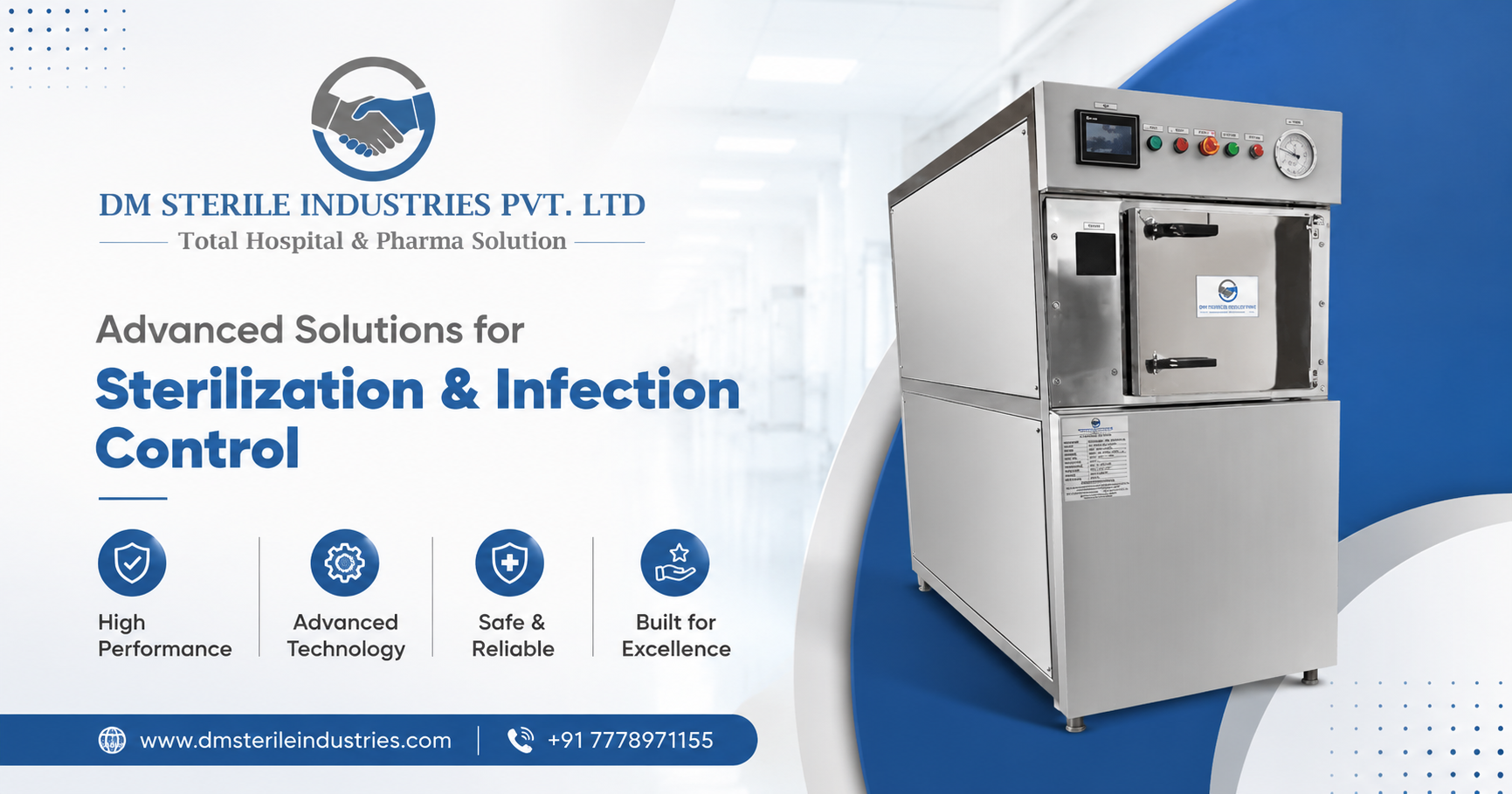
ETO Sterilizer Autoclave purchase portable
Find portable ETO sterilizer autoclaves for sale in Ahmedabad. Ensure sterile medical equipment with reliable Ethylene Oxide sterilization solutions from DM Ste
Key Features and Technical Specifications
When evaluating portable ETO sterilizer autoclaves, several technical specifications and features are critical for optimal performance and safety:
- Chamber Volume: Available in various capacities to suit different batch sizes, from small clinics to larger departments.
- Sterilization Cycle Parameters: Precise control over temperature (typically 37-55°C), humidity, ETO concentration, and exposure time.
- Gas Type: Utilizes 100% Ethylene Oxide gas or ETO/inert gas mixtures for safety and efficacy.
- Aeration System: Integrated or optional aeration phase to safely remove residual ETO gas.
- Safety Interlocks: Multiple safety features, including door locks, pressure monitoring, and gas leak detection.
- Control System: User-friendly interface, often with programmable cycles and data logging capabilities.
- Material Construction: Stainless steel chamber and components for durability and resistance to corrosion.
- Power Requirements: Standard electrical connections, making them adaptable to most facility power grids.
Industrial Applications and Use Cases
Portable ETO sterilizer autoclaves find indispensable applications across a range of industries, particularly where material sensitivity is a concern:
- Hospitals and Surgical Centers: Sterilizing delicate surgical instruments, endoscopes, catheters, and other heat-sensitive medical devices.
- Dental Clinics: Ensuring the sterility of specialized dental instruments and prosthetics.
- Pharmaceutical Manufacturing: Sterilizing packaging materials, vials, and certain drug components that cannot tolerate steam.
- Medical Device Manufacturers: Validating and performing routine sterilization for a variety of medical devices before distribution.
- Research and Development Laboratories: Sterilizing laboratory equipment, consumables, and biological samples.
- Veterinary Clinics: Sterilizing instruments and equipment used in animal care.
- Ambulatory Surgery Centers: Providing on-site sterilization for a range of surgical tools.
- Central Sterile Supply Departments (CSSD): Offering flexible sterilization capacity for specific instrument sets.
How to Choose the Right Portable ETO Sterilizer Autoclave
Selecting the appropriate portable ETO sterilizer autoclave involves a careful assessment of your facility's specific needs. Consider these key factors:
- Sterilization Volume and Frequency: Determine the quantity and type of items you need to sterilize regularly to select an appropriate chamber size and cycle time.
- Material Compatibility: Ensure the sterilizer is suitable for the specific materials of your instruments and devices, especially those that are heat-sensitive or moisture-sensitive.
- Regulatory Compliance: Verify that the sterilizer meets relevant national and international standards (e.g., ISO 13485, local health regulations).
- Safety Features: Prioritize units with robust safety interlocks, gas leak detection, and effective aeration systems.
- Ease of Operation and Maintenance: Look for intuitive control panels and readily available technical support for maintenance.
- Supplier Reputation and Support: Choose a reputable manufacturer or supplier with a proven track record and reliable after-sales service.
- Space and Installation Requirements: Assess the available space and ensure the portable unit can be easily integrated into your workflow.
- Budget and Total Cost of Ownership: Consider not only the initial purchase price but also the ongoing costs of consumables (ETO gas, filters) and maintenance.
Quality Standards and Compliance
Adherence to stringent quality standards and regulatory compliance is non-negotiable when purchasing an ETO sterilizer autoclave. Reputable manufacturers will ensure their equipment meets critical standards such as ISO 13485 for medical device quality management systems. Furthermore, the sterilizer should comply with relevant national standards, such as those set by the Bureau of Indian Standards (BIS) or international norms like IEC standards for electrical safety. Buyers should always inquire about the specific certifications and compliance documentation provided by the manufacturer, ensuring the unit has undergone rigorous testing for safety, efficacy, and environmental impact. Verification of these standards provides confidence in the sterilizer's performance and reliability.
Why DM Sterile Industries' Experience and Capability Matters
At DM Sterile Industries, our commitment to sterilization excellence is built on a foundation of deep industry understanding and technical expertise. Established in 2024 by experienced leaders, we have rapidly focused on delivering high-quality sterilization solutions tailored to the evolving needs of the healthcare and pharmaceutical sectors. Our manufacturing processes are designed for precision and reliability, ensuring each portable ETO sterilizer autoclave meets stringent quality control measures. Our technical team possesses extensive knowledge in sterilization technology, enabling us to offer not just equipment, but comprehensive solutions.
We understand that customization is often key, and we pride ourselves on our ability to adapt designs to specific client requirements. Our focus extends beyond the sale; we are dedicated to providing dependable after-sales support and maintenance services, ensuring your investment continues to perform optimally. Choosing DM Sterile Industries means partnering with a company that prioritizes your operational efficiency, safety, and compliance through proven capability and a customer-centric approach.
Installation, Maintenance, and Care Tips
Proper installation, regular maintenance, and careful operation are crucial for the longevity and effectiveness of your portable ETO sterilizer autoclave.
- Installation: Ensure the unit is placed on a stable, level surface with adequate ventilation. Connect to appropriate power sources and, if applicable, gas supply lines as per the manufacturer's instructions. Initial setup and testing should ideally be performed by a qualified technician.
- Daily Checks: Before each use, inspect the chamber, door seal, and filters for any visible damage. Verify that all safety interlocks are functioning correctly.
- Routine Maintenance: Follow the manufacturer's recommended maintenance schedule. This typically includes cleaning the chamber, replacing filters, checking gas sensors, and calibrating cycle parameters. Regular servicing by authorized technicians is essential.
- Consumable Management: Monitor the supply of ETO gas cartridges or cylinders and ensure they are stored safely. Use only approved consumables.
- Record Keeping: Maintain detailed logs of all sterilization cycles, maintenance activities, and any operational issues. This is vital for quality assurance and troubleshooting.
- Operator Training: Ensure all personnel operating the sterilizer are thoroughly trained on its functions, safety procedures, and emergency protocols.
Frequently Asked Questions
The main advantage is its flexibility. Portable units can be moved between locations or integrated into different workflows without permanent installation, making them ideal for facilities with varying sterilization needs or limited space.
An ETO sterilization cycle, including the sterilization phase and aeration, can vary significantly but typically ranges from a few hours to over 24 hours, depending on the sterilizer model, cycle parameters, and aeration requirements.
Ethylene Oxide is a toxic and flammable gas. However, when used in a properly designed and maintained ETO sterilizer with effective aeration and safety protocols, it is a safe and highly effective sterilization method. Strict adherence to safety guidelines is paramount.
ETO sterilization is ideal for heat-sensitive and moisture-sensitive items, including plastics, electronics, delicate medical instruments, endoscopes, catheters, and certain pharmaceutical products that cannot withstand high temperatures or steam.
Aeration is a critical post-sterilization phase where residual ETO gas is removed from the sterilized items. This process is essential to reduce ETO levels to safe, acceptable limits before the items can be used on patients or distributed.
Preventive maintenance schedules vary by manufacturer, but typically, ETO sterilizers require servicing every 6 to 12 months. This includes calibration, filter replacement, and system checks to ensure optimal performance and safety.
Conclusion
For healthcare providers, pharmaceutical manufacturers, and research institutions in Ahmedabad, investing in a portable ETO sterilizer autoclave is a strategic decision that enhances sterilization capabilities for sensitive materials. Understanding the technical specifications, application suitability, and crucial quality standards is key to making an informed purchase. By prioritizing safety, compliance, and reliable performance, and by partnering with experienced suppliers like DM Sterile Industries, you can ensure your facility maintains the highest levels of sterility and operational efficiency.
Get In Touch
Dm Sterile Industries