
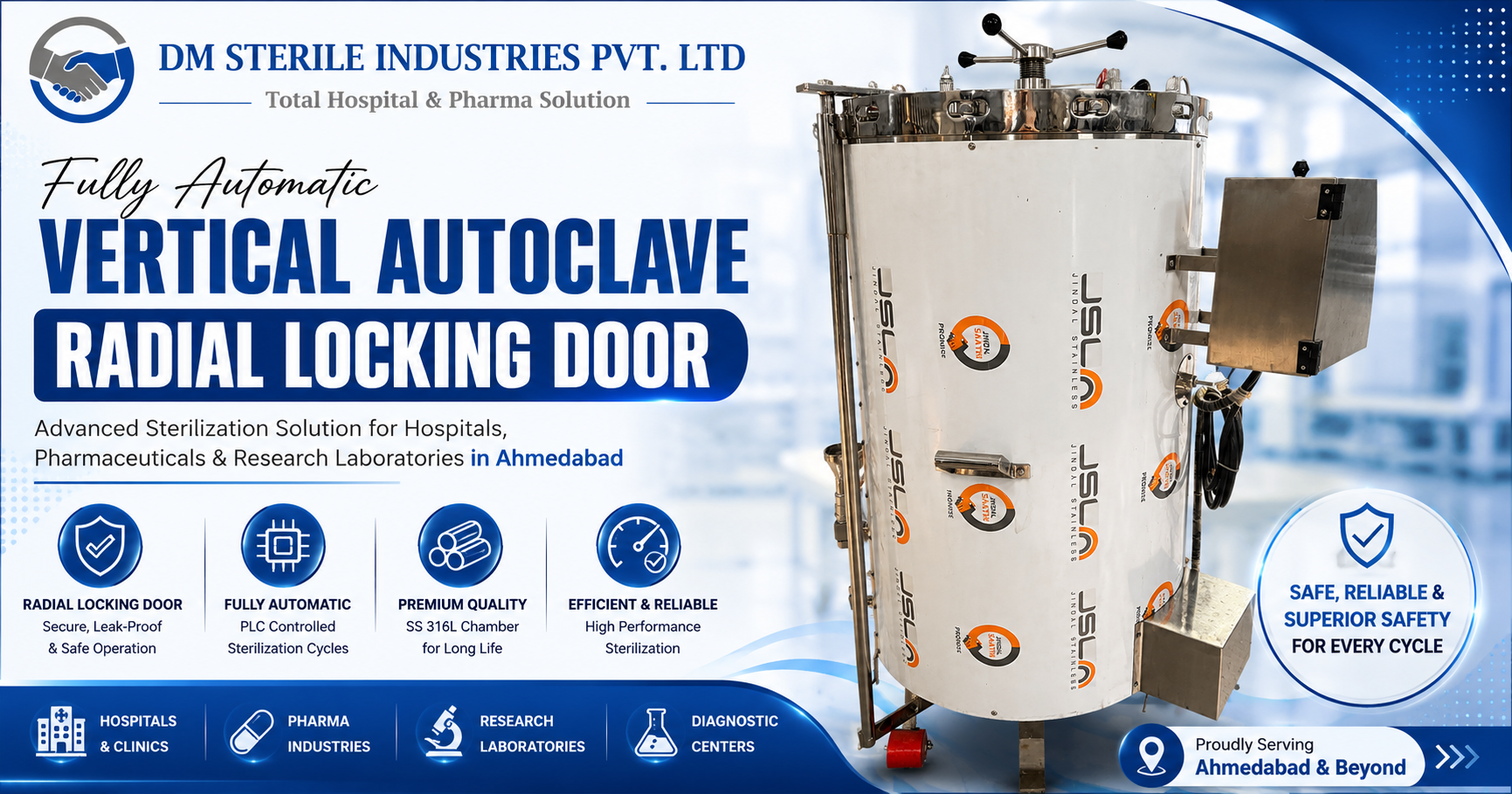
Fully automatic Vertical autoclave radial locking door
Discover the fully automatic vertical autoclave with radial locking door for efficient sterilization in Ahmedabad. Learn about features, applications, and selec
Why This Matters in Ahmedabad
Ahmedabad, a major industrial and commercial hub in Gujarat, hosts a significant number of hospitals, pharmaceutical manufacturers, and research institutions. These sectors rely heavily on advanced sterilization equipment to meet both regulatory requirements and the high standards of patient care and product quality. The growing healthcare infrastructure and the presence of numerous life sciences companies in and around Ahmedabad create a consistent demand for dependable sterilization solutions. Investing in a fully automatic vertical autoclave with a radial locking door is crucial for these organizations to maintain operational efficiency and uphold public trust.
What is a Fully Automatic Vertical Autoclave with Radial Locking Door — Overview
A fully automatic vertical autoclave is a sophisticated steam sterilization unit designed for efficient and safe operation. It utilizes saturated steam under pressure to eliminate microorganisms from medical instruments, laboratory equipment, and other sensitive materials. The "fully automatic" aspect signifies that the entire sterilization cycle—from loading and sealing to sterilization, exhaust, and drying—is managed by an integrated control system, minimizing manual intervention and reducing the risk of human error. The "vertical" orientation allows for a smaller footprint, making it ideal for space-constrained environments.
The "radial locking door" is a key safety and operational feature. Unlike simpler locking mechanisms, a radial lock system distributes the pressure evenly around the door's circumference. This ensures a secure seal during the high-pressure sterilization cycle, preventing steam leaks and enhancing overall safety for operators. The automatic nature of the door locking and unlocking further streamlines the process, contributing to faster turnaround times and improved workflow in busy departments.
Key Features and Technical Specifications
- Fully Automatic Operation: Integrated PLC control system for automated cycle management, including pre-vacuum, sterilization, exhaust, and drying phases.
- Radial Locking Door Mechanism: Ensures uniform pressure distribution for a secure, leak-proof seal, enhancing safety and operational reliability.
- Vertical Chamber Design: Space-saving configuration suitable for installations with limited floor space.
- High-Quality Stainless Steel Chamber: Constructed from durable, corrosion-resistant SS 316L material for longevity and easy cleaning.
- Advanced Safety Features: Includes multiple safety interlocks, pressure relief valves, and emergency stop functions.
- Programmable Cycles: Ability to store and recall various sterilization programs tailored to different load types and materials.
- Integrated Steam Generator: Provides a consistent and reliable source of high-quality steam for efficient sterilization.
- Digital Display and Controls: User-friendly interface for monitoring cycle progress, temperature, pressure, and time.
Industrial Applications and Use Cases
- Central Sterile Supply Departments (CSSD): Sterilizing surgical instruments, anesthesia equipment, and other reusable medical devices in hospitals and clinics.
- Pharmaceutical Manufacturing: Sterilizing laboratory glassware, stoppers, filters, and small equipment used in drug production and quality control.
- Research and Development Laboratories: Ensuring the sterility of media, equipment, and consumables for biological, chemical, and materials science research.
- Dental Clinics: Sterilizing dental instruments, handpieces, and other tools to maintain infection control standards.
- Veterinary Hospitals: Sterilizing surgical instruments and equipment used in animal care.
- Biotechnology Firms: Sterilizing components and equipment for cell culture, genetic engineering, and other sensitive processes.
- Medical Device Manufacturers: Sterilizing finished medical devices and components prior to packaging and distribution.
How to Choose the Right Fully Automatic Vertical Autoclave with Radial Locking Door
Selecting the appropriate autoclave is crucial for operational efficiency and compliance. Consider these factors:
Chamber Capacity: Determine the volume and size of items you need to sterilize. Autoclaves come in various capacities, from small benchtop units to large industrial models.
Sterilization Cycle Requirements: Assess the types of materials and instruments you will be processing. Different cycles (e.g., gravity displacement, pre-vacuum) are suited for specific applications.
Automation Level: Decide on the degree of automation needed. Fully automatic units offer convenience and reduced error potential, while semi-automatic models may be more cost-effective for simpler needs.
Safety Certifications and Standards: Verify that the autoclave meets relevant national and international safety and performance standards (e.g., ISO, CE, local regulatory requirements).
Supplier Reputation and Support: Choose a reputable manufacturer or supplier with a proven track record, offering reliable after-sales service, maintenance, and spare parts.
Customization Options: If you have unique requirements for chamber size, accessories, or control features, inquire about customization capabilities.
Energy Efficiency: Consider models designed for lower energy consumption, which can lead to significant operational cost savings over time.
Quality Standards and Compliance
For any sterilization equipment, adherence to stringent quality standards and regulatory compliance is non-negotiable. In India, organizations like the Bureau of Indian Standards (BIS) set benchmarks for safety and performance. Internationally recognized standards such as ISO 13485 (for medical devices) and ISO 17665 (for sterilization of health care products – moist heat) are critical indicators of a manufacturer's commitment to quality. Buyers should always verify that the autoclave they are considering is manufactured in compliance with these relevant standards and possesses the necessary certifications. This ensures the equipment is safe, effective, and legally compliant for its intended use, providing peace of mind and protecting against potential liabilities.
Why DM Sterile Industries' Experience and Capability Matters
DM Sterile Industries Private Limited, established in 2024, brings a focused approach to providing essential sterilization solutions. While a newer entrant, the company is built on the vision of its founders, Mr. Divyang Koshti and Mr. Maulik Jani, who aim to lead in CSSD machines and furniture. Their commitment lies in understanding the precise needs of industries like healthcare and pharmaceuticals.
The company's capability is demonstrated through its product range, which includes various types of autoclaves and sterilization equipment. They emphasize robust quality standards and offer custom solutions, indicating an ability to adapt to specific client requirements. For buyers in Ahmedabad and beyond, DM Sterile Industries offers a partnership focused on delivering reliable equipment backed by end-to-end customer support. Their dedication to advanced automation and controls ensures that the equipment provided is not only effective but also user-friendly and safe, contributing to the operational integrity of their clients' facilities.
Installation, Maintenance, and Care Tips
Proper installation and regular maintenance are key to ensuring the longevity and optimal performance of your fully automatic vertical autoclave. Upon delivery, professional installation by trained technicians is recommended to ensure correct setup, electrical connections, and steam supply integration.
Regular maintenance should include:
- Daily Checks: Inspect door seals for wear and tear, ensure the chamber is clean, and verify that safety valves are unobstructed.
- Weekly Cleaning: Thoroughly clean the chamber interior, shelves, and door gasket with appropriate cleaning agents to remove any residue.
- Monthly Inspections: Check all external components, control panel functions, and water levels.
- Periodic Servicing: Schedule annual or bi-annual preventive maintenance with qualified service personnel. This typically includes calibration of sensors, testing of safety features, and replacement of worn parts like gaskets and filters.
- Load Management: Avoid overloading the autoclave, as this can impede steam circulation and compromise sterilization effectiveness. Ensure proper spacing between items.
- Water Quality: Use distilled or demineralized water in the steam generator to prevent mineral buildup and corrosion within the system.
Following these guidelines will help maintain the efficiency, safety, and reliability of your autoclave, extending its operational life and ensuring consistent sterilization results.
Frequently Asked Questions
The radial locking door mechanism is designed to distribute the chamber pressure evenly around the door's circumference. This ensures a secure and leak-proof seal during the high-pressure sterilization cycle, significantly enhancing operator safety and preventing steam loss.
Fully automatic operation streamlines the entire sterilization process, from loading to drying, with minimal manual intervention. This reduces the risk of human error, ensures consistent cycle parameters, and frees up staff time for other critical tasks, thereby improving overall operational efficiency.
These autoclaves are suitable for sterilizing a wide range of heat- and moisture-stable items, including surgical instruments, laboratory glassware, dental tools, media, and certain types of medical devices. The specific load compatibility depends on the autoclave's cycle configurations.
Using distilled or demineralized water prevents the buildup of mineral deposits and scale within the autoclave's chamber and steam generator. This scale can reduce heating efficiency, cause corrosion, and potentially damage internal components, leading to costly repairs and reduced equipment lifespan.
The door gasket should be inspected daily for any signs of wear, cracks, or hardening. Depending on usage frequency and environmental conditions, it typically needs replacement every 6 to 12 months to maintain a proper seal and prevent steam leaks.
Standard safety features include multiple interlocks to prevent door opening under pressure, pressure relief valves to manage excess steam, emergency stop buttons, and over-temperature/over-pressure alarms. These features are critical for protecting both the operator and the equipment.
Conclusion
For facilities in Ahmedabad requiring dependable and efficient sterilization, a fully automatic vertical autoclave with a radial locking door represents a significant investment in safety, compliance, and operational excellence. The combination of automated cycle management and the secure radial locking mechanism ensures effective microbial inactivation while minimizing user error and enhancing operator safety. When selecting a unit, careful consideration of chamber capacity, specific sterilization needs, and adherence to quality standards is paramount. Partnering with experienced providers like DM Sterile Industries, who understand these critical requirements and offer robust support, ensures that your sterilization processes meet the highest benchmarks, safeguarding both your operations and the well-being of those you serve.
Get In Touch
Dm Sterile Industries