
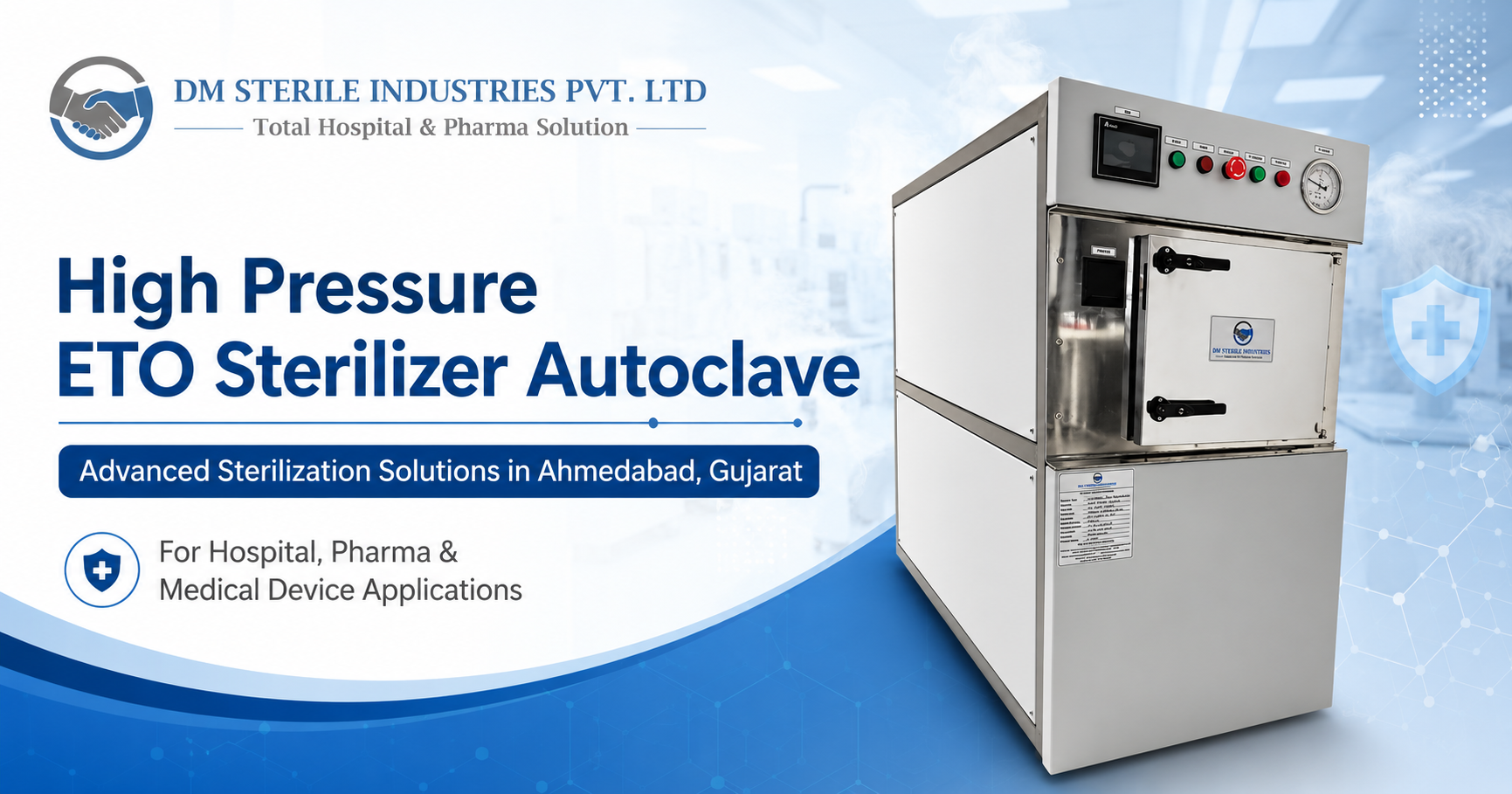
high pressure ETO Sterilizer Autoclave
Explore high pressure ETO sterilizer and autoclave systems for critical sterilization needs in Ahmedabad, Gujarat. Understand features, applications, and compli
Why This Matters in Ahmedabad, Gujarat
Ahmedabad and the broader Gujarat region stand as a significant hub for the pharmaceutical, healthcare, and medical device sectors in India. This concentration of industries drives a constant demand for advanced sterilization technologies. Local manufacturers and healthcare providers face the challenge of processing heat-sensitive materials, complex medical instruments, and large volumes of pharmaceutical products, all while adhering to national and international quality benchmarks. Reliable access to high-performance sterilization equipment and expert support within the region is therefore essential for operational continuity and compliance.
What is a High Pressure ETO Sterilizer Autoclave — Overview
The term "high pressure ETO Sterilizer Autoclave" encompasses two distinct yet equally vital sterilization technologies: high pressure steam autoclaves and Ethylene Oxide (ETO) sterilizers. High pressure steam autoclaves utilize saturated steam under elevated pressure and temperature to denature and kill microorganisms, making them highly effective for heat-resistant materials. ETO sterilizers, on the other hand, employ ethylene oxide gas in a controlled environment to sterilize heat-sensitive, moisture-sensitive, or complex devices that cannot withstand high temperatures or steam. Both systems are designed to achieve a high Sterility Assurance Level (SAL), crucial for preventing contamination in critical applications.
Key Features and Technical Specifications
- High-Pressure Steam Autoclave: Robust stainless steel chamber construction, often with double or triple wall designs for thermal efficiency and safety.
- High-Pressure Steam Autoclave: Precision temperature and pressure control systems, ensuring consistent sterilization cycles.
- High-Pressure Steam Autoclave: Advanced vacuum systems for effective air removal and steam penetration, followed by efficient drying.
- ETO Sterilizer: Gas delivery and evacuation systems designed for precise ETO concentration control and safe residual gas removal.
- ETO Sterilizer: Integrated aeration cycles to reduce ETO residuals on sterilized products to acceptable levels.
- ETO Sterilizer: Humidity and temperature control within the chamber to optimize ETO gas efficacy.
- Both Systems: Programmable logic controllers (PLCs) with user-friendly interfaces for cycle management and data logging.
- Both Systems: Comprehensive safety interlocks and alarms to protect operators and prevent process deviations.
Industrial Applications and Use Cases
- Pharmaceutical Industry: Sterilization of bulk drug components, glassware, process equipment, and certain finished products that can withstand steam.
- Healthcare & Hospitals: Sterilization of surgical instruments, drapes, gowns, and other reusable medical devices in Central Sterile Supply Departments (CSSD).
- Medical Device Manufacturing: Processing of heat-sensitive and complex devices such as catheters, implants, and electronic medical equipment using ETO.
- Biotechnology & Research Laboratories: Sterilization of laboratory media, glassware, waste, and specialized research tools.
- Food & Beverage Industry (Autoclaves): Sterilization of packaged foods and beverages to extend shelf life and ensure product safety.
- Cosmetics Industry (ETO Sterilizers): Sterilization of raw materials and finished products that are sensitive to heat or moisture.
How to Choose the Right High Pressure ETO Sterilizer Autoclave
Selecting the appropriate sterilization equipment involves a careful assessment of several critical factors to ensure operational efficiency and compliance.
- Material Compatibility: Determine if your products are heat-resistant (suitable for autoclaves) or heat/moisture-sensitive (requiring ETO sterilization).
- Chamber Capacity: Evaluate the volume and dimensions of items to be sterilized to select a chamber size that meets current and future throughput needs.
- Regulatory Compliance: Verify that the equipment meets relevant national and international standards such as ISO 13485, GMP guidelines, and local health regulations.
- Automation Level: Consider the degree of automation required for cycle control, data logging, and integration with existing facility systems.
- Supplier Experience and Support: Assess the manufacturer's track record, technical expertise, installation services, and availability of spare parts and maintenance.
- Safety Features: Ensure the system incorporates robust safety mechanisms for gas handling, pressure containment, and operator protection.
- Environmental Considerations: For ETO sterilizers, evaluate the efficiency of gas removal and emission control systems to meet environmental regulations.
- Customization Options: Determine if the supplier can tailor the equipment to specific process requirements or facility layouts.
Quality Standards and Compliance
Adherence to rigorous quality standards is paramount for any sterilization equipment. Buyers should ensure that high pressure ETO sterilizer autoclaves comply with international benchmarks such as ISO 11135 for ETO sterilization and ISO 17665 for moist heat sterilization. Additionally, equipment used in pharmaceutical and medical device manufacturing must align with Good Manufacturing Practices (GMP) and relevant national standards like those from the Bureau of Indian Standards (BIS) where applicable. Verifying supplier certifications, validation protocols, and documentation for installation qualification (IQ), operational qualification (OQ), and performance qualification (PQ) is essential to confirm the equipment's reliability and compliance.
Why Dm Sterile Industries' Experience and Capability Matters
Dm Sterile Industries brings focused experience to the field of sterilization technology, understanding the precise requirements of industries in Ahmedabad and beyond. Our manufacturing process emphasizes durable construction and precise engineering, ensuring that each high pressure ETO sterilizer autoclave system performs reliably under demanding conditions. The technical team possesses the expertise to design and implement solutions tailored to specific client needs, from chamber dimensions to control system integration. Quality control is embedded at every stage, from material selection to final testing, ensuring that equipment meets stringent performance criteria. We prioritize customization ability, offering configurations that optimize space and workflow, alongside dependable delivery and comprehensive after-sales support to maintain peak operational efficiency for our clients.
Installation, Maintenance and Care Tips
Proper installation and ongoing maintenance are crucial for the longevity and reliable performance of high pressure ETO sterilizer autoclaves.
- Professional Installation: Always engage qualified technicians for installation to ensure correct setup, calibration, and safety checks. This includes proper utility connections for steam, water, air, and electrical supply, as well as exhaust systems for ETO units.
- Routine Cleaning: Regularly clean the interior and exterior surfaces of the sterilizer chamber according to manufacturer guidelines to prevent residue buildup and maintain hygiene.
- Component Inspection: Periodically inspect seals, gaskets, valves, and filters for wear and tear. Replace worn components promptly to prevent leaks and ensure efficient operation.
- Calibration and Validation: Schedule regular calibration of temperature, pressure, and gas sensors. Conduct periodic re-validation of sterilization cycles to confirm continued efficacy and compliance.
- Preventive Maintenance Schedule: Follow a comprehensive preventive maintenance schedule recommended by the manufacturer, which typically includes checks on pumps, heating elements, and control systems.
- Operator Training: Ensure all personnel operating the equipment receive thorough training on safe operation, cycle programming, troubleshooting, and emergency procedures.
- ETO Safety Protocols: For ETO sterilizers, strictly adhere to safety protocols for gas handling, personal protective equipment (PPE), and ventilation to minimize operator exposure.
Frequently Asked Questions
An autoclave uses high-pressure saturated steam at elevated temperatures to sterilize heat-resistant items by denaturing proteins. An ETO sterilizer, conversely, uses ethylene oxide gas at lower temperatures to sterilize heat-sensitive and moisture-sensitive materials by alkylating microbial DNA. Each method is suited for different types of materials and applications based on their physical properties.
Sterilization equipment should undergo initial validation (IQ, OQ, PQ) upon installation. Re-validation is typically required annually or biennially, and also after any significant repairs, modifications, or changes in the sterilization process. This ensures the equipment consistently meets specified performance parameters and regulatory requirements.
No, neither a single high pressure ETO sterilizer nor an autoclave can sterilize all types of medical devices. Autoclaves are ideal for heat and moisture-stable items. ETO sterilizers are used for heat and moisture-sensitive devices, including many plastics, electronics, and complex instruments. The choice depends entirely on the material compatibility of the device.
Operating an ETO sterilizer requires strict adherence to safety protocols due to the hazardous nature of ethylene oxide gas. This includes ensuring proper ventilation, using personal protective equipment (PPE), monitoring ETO levels in the work environment, and having emergency response plans in place. Regular maintenance of the gas delivery and exhaust systems is also crucial.
Autoclave cycle time is influenced by several factors, including the type and volume of items being sterilized, the desired temperature and pressure, the efficiency of air removal, and the drying requirements. Larger loads or denser materials typically require longer exposure and drying phases to ensure complete sterilization and moisture removal.
Dm Sterile Industries ensures quality through a multi-stage process. This includes using high-grade materials, implementing precise manufacturing techniques, conducting rigorous in-process inspections, and performing comprehensive final testing and validation of each unit. Our commitment to quality control aims to deliver reliable and compliant sterilization solutions.
Conclusion
The demand for effective and compliant sterilization solutions in Ahmedabad, Gujarat, is critical for the integrity of products and safety within the pharmaceutical, healthcare, and medical device sectors. Choosing the right high pressure ETO sterilizer autoclave system requires a thorough understanding of material compatibility, regulatory standards, and the technical capabilities of the equipment. Partnering with a manufacturer that demonstrates expertise in both high pressure steam and ETO technologies, coupled with robust quality control and comprehensive support, is fundamental. This strategic approach ensures that facilities can maintain the highest levels of sterility assurance for their operations.
Get In Touch
Dm Sterile Industries