
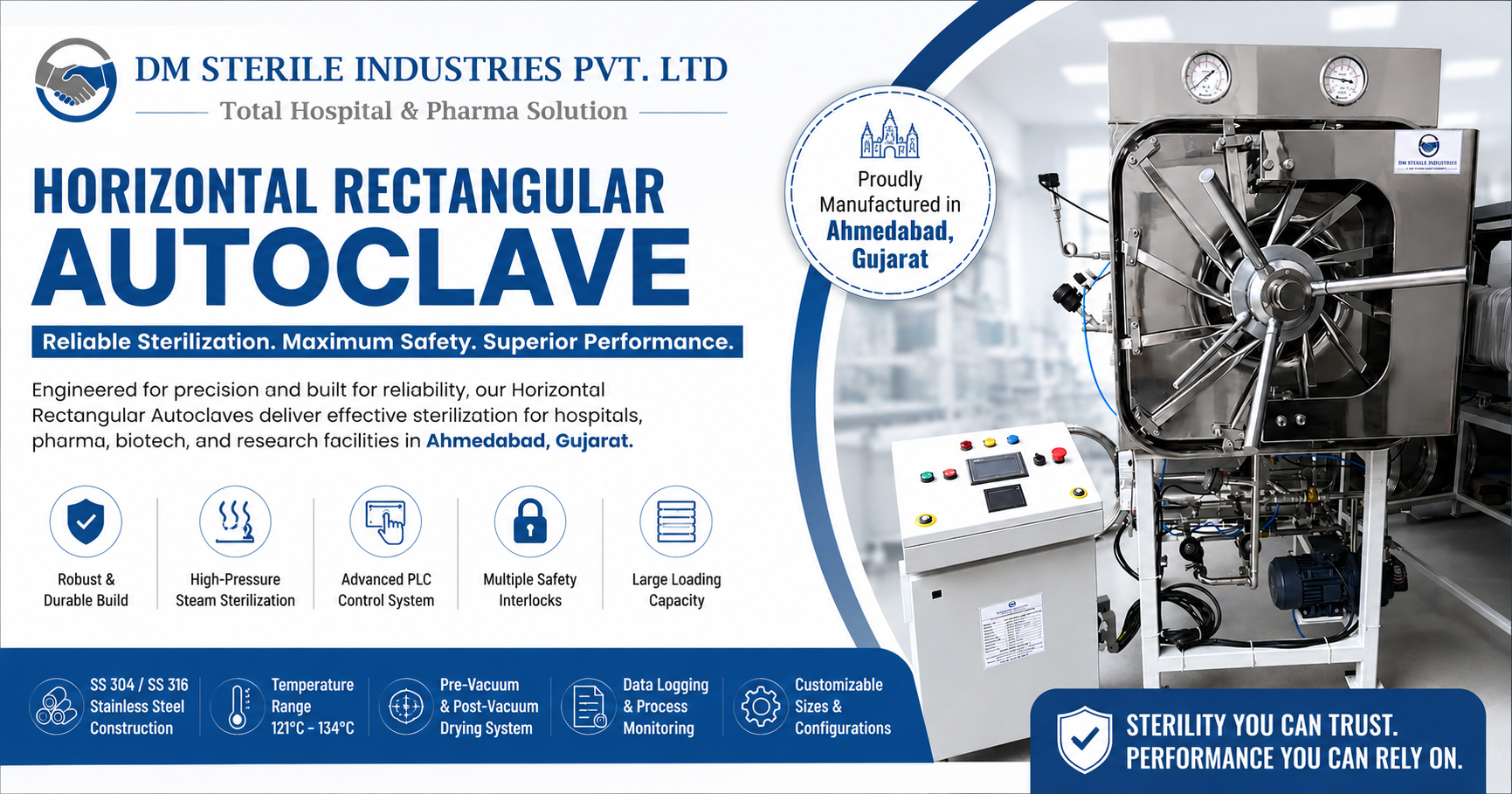
Horizontal Rectangular Autoclave manufacturer for benefits
Discover reliable Horizontal Rectangular Autoclaves for critical sterilization needs in Ahmedabad, Gujarat. Dm Sterile Industries offers robust, compliant solut
Why This Matters in Ahmedabad, Gujarat
Ahmedabad stands as a significant industrial and economic center in Gujarat, particularly renowned for its robust pharmaceutical, healthcare, and medical device manufacturing sectors. These industries operate under stringent regulatory frameworks that demand precise and verifiable sterilization processes. The continuous growth of hospitals, research laboratories, and manufacturing units in and around Ahmedabad creates a sustained demand for high-capacity, efficient sterilization solutions. Reliable local manufacturing of equipment like horizontal rectangular autoclaves ensures timely supply, accessible support, and adherence to specific regional operational requirements.
What is a Horizontal Rectangular Autoclave — Overview
A horizontal rectangular autoclave is a specialized pressure vessel designed for steam sterilization of various materials. Unlike cylindrical autoclaves, its rectangular chamber optimizes loading capacity, making it particularly suitable for sterilizing large volumes of instruments, trays, and bulk items. The sterilization process involves exposing items to saturated steam at elevated temperatures and pressures, effectively destroying microorganisms. These units are engineered for precision, safety, and consistent performance, crucial for environments where sterility cannot be compromised.
Key Features and Technical Specifications
- Rectangular Chamber Design: Maximizes usable internal volume for efficient loading of various shapes and sizes.
- High-Pressure Saturated Steam: Utilizes steam at temperatures typically between 121°C and 134°C for effective microbial inactivation.
- Robust Stainless Steel Construction: Chamber and jacket are typically fabricated from SS 304 or SS 316 grade stainless steel for durability and corrosion resistance.
- Advanced Control Systems: Integrated Programmable Logic Controllers (PLCs) with touch screen interfaces for automated cycle control, data logging, and process monitoring.
- Vacuum Drying System: Incorporates pre-vacuum for efficient air removal and post-vacuum for thorough drying of sterilized loads.
- Multiple Safety Interlocks: Features like pressure interlocks, door safety mechanisms, and over-pressure relief valves ensure operator safety.
- Customizable Chamber Dimensions: Available in various capacities to meet specific throughput and load size requirements.
- Integrated Steam Generator: Often includes an internal or external steam generator for consistent steam supply.
Industrial Applications and Use Cases
Horizontal rectangular autoclaves are indispensable across a spectrum of industries that demand rigorous sterilization protocols. Their design and capabilities make them versatile for diverse applications.
- Pharmaceutical Manufacturing: Sterilization of culture media, glassware, process equipment, and components used in drug production.
- Healthcare and Hospitals: Central Sterile Services Departments (CSSD) for sterilizing surgical instruments, linen packs, gowns, and medical devices.
- Medical Device Manufacturing: Terminal sterilization of finished medical devices, ensuring product safety and regulatory compliance.
- Biotechnology and Research Laboratories: Sterilization of laboratory media, reagents, glassware, and waste materials.
- Animal Research Facilities: Sterilization of cages, bedding, and feed for maintaining aseptic conditions.
- Food and Beverage Industry: Specialized applications for sterilizing certain packaging materials or processing equipment where steam sterilization is appropriate.
How to Choose the Right Horizontal Rectangular Autoclave
Selecting the appropriate horizontal rectangular autoclave requires careful consideration of several operational and technical factors. A well-informed decision ensures the equipment meets specific sterilization needs and integrates seamlessly into existing workflows.
- Chamber Volume and Capacity: Assess the typical load size and throughput requirements to determine the optimal chamber dimensions.
- Sterilization Cycle Parameters: Verify the autoclave's ability to achieve and maintain required temperatures, pressures, and exposure times for specific materials.
- Compliance and Certifications: Ensure the manufacturer adheres to relevant national and international standards such as ISO 13485, ASME, and GMP guidelines.
- Automation and Control Features: Evaluate the level of automation, ease of programming, data logging capabilities, and user interface for operational efficiency.
- Material of Construction: Confirm the use of high-grade stainless steel (e.g., SS 304 or SS 316) for the chamber and piping to ensure longevity and resistance to corrosion.
- Supplier Experience and Support: Consider the manufacturer's track record, technical expertise, installation services, and availability of after-sales support and spare parts.
- Customization Options: Determine if the manufacturer can provide tailored solutions for unique space constraints, utility connections, or specific process requirements.
Quality Standards and Compliance
Adherence to stringent quality standards and regulatory compliance is fundamental for any sterilization equipment, especially horizontal rectangular autoclaves. Buyers must verify that the manufacturing process and the final product meet recognized benchmarks. Key standards often include ISO 13485 for medical devices, which covers quality management systems, and ASME Boiler and Pressure Vessel Code for pressure vessel safety. Compliance with Good Manufacturing Practices (GMP) is crucial for pharmaceutical and medical device sectors. Additionally, certifications like CE marking or specific national standards (e.g., ISI in India) indicate that the equipment has undergone rigorous testing and meets safety and performance criteria. Verifying these certifications with the manufacturer ensures the autoclave is fit for purpose and will pass regulatory audits.
Why Dm Sterile Industries' Experience and Capability Matters
Choosing a manufacturer with proven experience and robust capabilities is vital for acquiring reliable sterilization equipment. Dm Sterile Industries, based in Ahmedabad, Gujarat, brings focused expertise in sterilization technology. Our manufacturing process emphasizes precision engineering and the use of quality materials, ensuring each horizontal rectangular autoclave is built for consistent performance and durability. The technical team possesses a deep understanding of sterilization principles and industry requirements, enabling us to offer solutions that meet specific operational demands. We focus on robust quality standards throughout design and production, from material selection to final assembly and testing. Furthermore, our capability extends to providing custom solutions, advanced automation, and end-to-end customer support, ensuring reliable delivery and sustained operational efficiency for our clients in pharmaceutical, healthcare, medical device, and biotechnology sectors.
Installation, Maintenance and Care Tips
Proper installation, routine maintenance, and diligent care are essential for maximizing the lifespan and ensuring the consistent performance of a horizontal rectangular autoclave. These practices help maintain sterility assurance and operational safety.
- Professional Installation: Always engage qualified technicians for installation. This includes proper site preparation, utility connections (steam, water, power, drain), and initial calibration.
- Regular Cleaning: Clean the chamber, door gaskets, and internal surfaces regularly to prevent residue buildup and ensure proper sealing. Use recommended cleaning agents.
- Water Quality: Use demineralized or distilled water for steam generation to prevent scale formation in the steam generator and piping, which can affect efficiency and lifespan.
- Routine Calibration: Periodically calibrate temperature and pressure sensors to ensure accurate readings and consistent sterilization cycles.
- Preventive Maintenance Schedule: Follow the manufacturer's recommended preventive maintenance schedule, which typically includes checking valves, filters, pumps, and safety devices.
- Operator Training: Ensure all operators are thoroughly trained on the autoclave's operation, safety protocols, and basic troubleshooting procedures.
- Documentation: Maintain detailed logs of all sterilization cycles, maintenance activities, and any repairs for compliance and performance tracking.
Frequently Asked Questions
The main advantage of a rectangular autoclave lies in its optimized chamber design, which allows for more efficient loading of various items, especially those with square or rectangular dimensions like instrument trays and linen packs. This maximizes the usable space, leading to higher throughput per cycle compared to a cylindrical chamber of similar overall volume.
Horizontal rectangular autoclaves are widely utilized in industries requiring high-volume, precise sterilization. This includes pharmaceutical manufacturing for media and equipment, hospitals and Central Sterile Services Departments (CSSD) for surgical instruments, medical device manufacturing for product sterilization, and biotechnology laboratories for glassware and culture media.
Key safety features to prioritize include robust pressure interlocks that prevent the door from opening during a cycle, over-pressure relief valves to manage excess pressure, emergency stop buttons, and automatic shutdown mechanisms in case of malfunctions. Door safety mechanisms and clear visual indicators for cycle status are also crucial for operator protection.
The frequency of maintenance depends on usage intensity and manufacturer guidelines, but generally, a horizontal rectangular autoclave requires daily checks, weekly cleaning, and scheduled preventive maintenance every three to six months. Annual comprehensive servicing by qualified technicians is also recommended to ensure optimal performance and compliance.
Yes, many manufacturers offer customization options for horizontal rectangular autoclaves, allowing clients to specify chamber dimensions, loading configurations, and utility requirements. This flexibility ensures the autoclave perfectly fits the available space and efficiently handles the specific types and volumes of items needing sterilization.
A typical sterilization cycle for a horizontal rectangular autoclave involves several phases: a pre-vacuum phase to remove air, a heating phase to reach the desired temperature (e.g., 121°C or 134°C), a sterilization hold time, and a post-vacuum drying phase. The total cycle time can vary based on load type, temperature, and specific program settings.
Conclusion
The demand for reliable and efficient sterilization solutions remains critical across Ahmedabad's thriving industrial landscape. Horizontal rectangular autoclaves offer a robust and high-capacity method for achieving sterility, essential for sectors like pharmaceuticals, healthcare, and medical device manufacturing. When considering such vital equipment, focusing on a manufacturer's technical capability, adherence to quality standards, and commitment to comprehensive support is paramount. Selecting a partner like Dm Sterile Industries, with a clear understanding of these industry needs and a dedication to precision manufacturing, ensures long-term operational integrity and compliance.
Get In Touch
Dm Sterile Industries