
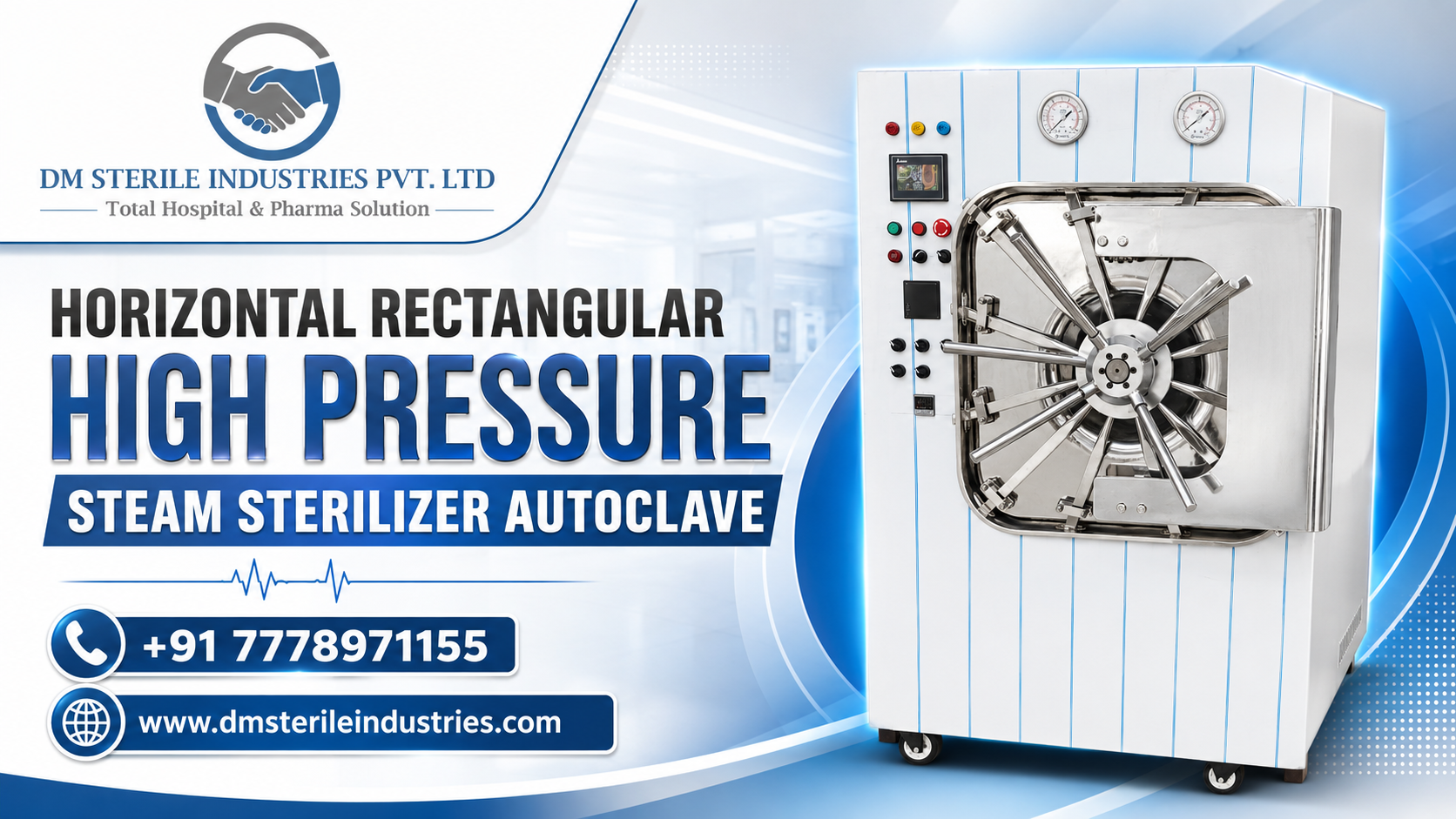
HORIZONTAL RECTANGULAR HIGH PRESSURE STEAM STERILIZER AUTOCLAVE
Explore high-pressure horizontal rectangular steam sterilizer autoclaves in Ahmedabad. DM Sterile Industries offers reliable sterilization solutions for healthc
Why This Matters in Ahmedabad
Ahmedabad, a burgeoning hub for pharmaceuticals, healthcare, and biotechnology, demands stringent sterilization protocols. The city's growing number of hospitals, advanced research facilities, and expanding pharmaceutical manufacturing plants all rely on dependable equipment to maintain the highest standards of safety and efficacy. Ensuring that instruments and materials are thoroughly sterilized is not just a regulatory requirement; it's fundamental to public health and the reputation of these vital industries within Gujarat.
What is a Horizontal Rectangular High Pressure Steam Sterilizer Autoclave — Overview
A horizontal rectangular high pressure steam sterilizer autoclave is a sophisticated piece of equipment designed to eliminate microorganisms from medical instruments, laboratory glassware, and other heat-stable materials using saturated steam under pressure. Unlike vertical autoclaves, its horizontal orientation and rectangular chamber allow for larger loads and a more efficient workflow, particularly for bulky items or when processing a high volume of materials. The process involves creating a vacuum to remove air, followed by the introduction of pressurized steam at specific temperatures and durations to achieve complete sterilization.
Key Features and Technical Specifications
- Rectangular Chamber Design: Facilitates efficient loading and unloading of large or irregularly shaped items.
- High-Pressure Steam Sterilization: Utilizes saturated steam at elevated pressures (typically 15-30 PSI above atmospheric) and temperatures (121°C or 134°C) for effective microbial inactivation.
- Advanced Vacuum System: Incorporates pre-vacuum cycles to remove air effectively, ensuring steam penetration into all load areas.
- Automated Control System: Features programmable cycles with precise control over temperature, pressure, time, and drying phases for consistent results.
- Safety Interlocks: Multiple safety features, including door interlocks and pressure relief valves, prevent operation until the door is securely locked and over-pressurization.
- Durable Construction: Typically built with high-grade stainless steel (e.g., SS 304 or SS 316) for the chamber and jacket, ensuring longevity and resistance to corrosion.
- Integrated Steam Generator: Many models include an internal or external steam generator for rapid steam production.
- Data Logging Capabilities: Option for recording cycle parameters for quality assurance and traceability.
Industrial Applications and Use Cases
- Central Sterile Supply Departments (CSSD): Sterilizing surgical instruments, anesthesia equipment, and other reusable medical devices in hospitals.
- Pharmaceutical Manufacturing: Sterilizing stoppers, vials, filters, and processing equipment to maintain aseptic conditions.
- Medical Device Manufacturers: Ensuring the sterility of finished medical devices before packaging and distribution.
- Research and Development Laboratories: Sterilizing glassware, media, and equipment used in biological and chemical research.
- Biotechnology Firms: Decontaminating equipment and materials used in sensitive biotechnological processes.
- Veterinary Clinics: Sterilizing surgical instruments and supplies for animal care.
- Dental Practices: Ensuring the sterility of dental instruments and tools.
- Cosmetic Manufacturing: Sterilizing equipment and packaging components for hygiene-critical production.
How to Choose the Right Horizontal Rectangular Autoclave
Selecting the appropriate sterilization equipment is a critical decision that impacts operational efficiency and safety. Consider these factors when making your choice:
- Chamber Capacity and Size: Determine the volume and type of items you need to sterilize. Rectangular chambers come in various dimensions to accommodate different load sizes.
- Required Sterilization Cycles: Identify the specific temperature and pressure requirements for your materials (e.g., 121°C for general use, 134°C for prion inactivation).
- Automation and Control Features: Decide on the level of automation needed, from basic manual controls to fully programmable cycles with advanced data logging.
- Material Compatibility: Ensure the autoclave's construction materials are suitable for the substances being sterilized and the operational environment.
- Safety Certifications and Standards: Verify that the equipment meets relevant national and international safety and performance standards (e.g., ASME, CE, ISO).
- Supplier Reputation and Support: Choose a manufacturer with a proven track record, robust quality control, and reliable after-sales service, including installation and maintenance.
- Energy Efficiency: Consider models designed for optimal steam and power consumption to reduce operational costs.
- Customization Options: If you have unique requirements, inquire about the possibility of custom modifications to the chamber size, door configuration, or control system.
Quality Standards and Compliance
For any high-pressure steam sterilizer, adherence to stringent quality standards and regulatory compliance is non-negotiable. Buyers should look for equipment manufactured in accordance with established norms such as the American Society of Mechanical Engineers (ASME) Boiler and Pressure Vessel Code, which governs the design and construction of pressure vessels. Compliance with ISO 13485 for medical devices is also a strong indicator of a manufacturer's commitment to quality management systems. In India, relevant BIS (Bureau of Indian Standards) certifications or adherence to IS standards for autoclaves should be verified. A reputable manufacturer will readily provide documentation demonstrating their compliance and the quality of their manufacturing processes.
Why DM Sterile Industries' Experience and Capability Matters
At DM Sterile Industries, our foundation in 2024, guided by experienced leaders like Mr. Divyang Koshti and Mr. Maulik Jani, brings a fresh yet expert perspective to sterilization technology. We understand the critical nature of sterile processing for industries in Ahmedabad and beyond. Our manufacturing processes are meticulously designed to ensure precision and reliability, utilizing high-grade materials like SS 304 and SS 316 for durable, corrosion-resistant chambers. Our technical team possesses deep expertise in designing and fabricating horizontal rectangular autoclaves that meet demanding operational requirements.
We prioritize robust quality control at every stage, from material sourcing to final testing, ensuring each unit performs to specification. Our capability extends to offering customized solutions, adapting designs to fit specific client needs and space constraints. We are committed to delivering not just equipment, but complete sterilization solutions backed by comprehensive after-sales support, including installation guidance and maintenance services, ensuring your operations run smoothly and safely.
Installation, Maintenance, and Care Tips
Proper installation and regular maintenance are crucial for the longevity and optimal performance of your horizontal rectangular autoclave.
- Installation: Ensure the autoclave is installed on a stable, level surface in a well-ventilated area. Connect it to appropriate power and water supplies as per the manufacturer's specifications. Professional installation is highly recommended to guarantee correct setup and safety.
- Routine Checks: Before each use, visually inspect the door gasket for any damage or debris. Check that the safety valves are free from obstruction.
- Chamber Cleaning: Regularly clean the interior chamber with a mild detergent and water to remove any residue. Avoid abrasive cleaners or metallic brushes that could damage the stainless steel surface.
- Gasket Maintenance: Clean the door gasket after each use and inspect it regularly for signs of wear or hardening. A damaged gasket can lead to steam leaks and inefficient cycles. Replace it as needed.
- Water Quality: Use distilled or demineralized water in the steam generator to prevent mineral buildup, which can affect steam quality and damage internal components.
- Filter Maintenance: Clean or replace air and steam filters as recommended by the manufacturer to ensure optimal performance and prevent contamination.
- Scheduled Servicing: Adhere to the manufacturer's recommended service schedule for professional inspections, calibration, and preventive maintenance. This ensures the autoclave remains compliant and operates safely.
Frequently Asked Questions
The primary function is to sterilize medical instruments, laboratory equipment, and other heat-stable materials using high-pressure saturated steam. Its horizontal, rectangular design is optimized for larger loads and easier loading/unloading compared to vertical models.
Standard sterilization cycles typically operate at 121°C (250°F) or 134°C (273°F). The corresponding pressures are usually between 15 to 30 PSI above atmospheric pressure, depending on the specific cycle and temperature selected.
The rectangular chamber allows for more efficient use of space, accommodating larger instrument trays, packs, or bulky items. This design facilitates easier loading and unloading, improving workflow efficiency in busy CSSD departments or manufacturing facilities.
Essential safety features include door interlocks that prevent opening under pressure, pressure relief valves to prevent over-pressurization, and emergency stop buttons. Robust construction and adherence to pressure vessel codes are also critical safety aspects.
The frequency of gasket replacement depends on usage and care. It's advisable to inspect the gasket for signs of wear, hardening, or cracking before each use and replace it immediately if any damage is found. Regular replacement, typically every 6-12 months, is recommended for optimal sealing.
No, horizontal rectangular autoclaves utilize high temperatures and pressure, making them unsuitable for heat-sensitive materials. For such items, alternative sterilization methods like ethylene oxide (EtO) or low-temperature hydrogen peroxide plasma sterilization are required.
Conclusion
For healthcare facilities, pharmaceutical companies, and research institutions in Ahmedabad, investing in a reliable horizontal rectangular high pressure steam sterilizer autoclave is a fundamental step towards ensuring operational integrity and patient safety. The efficiency, capacity, and robust sterilization capabilities of these units are indispensable for maintaining the highest standards. When selecting a supplier, prioritize experience, adherence to quality standards, and comprehensive support. DM Sterile Industries is committed to providing precisely engineered sterilization solutions that meet these critical demands, backed by our expertise and dedication to customer satisfaction.
Get In Touch
Dm Sterile Industries