
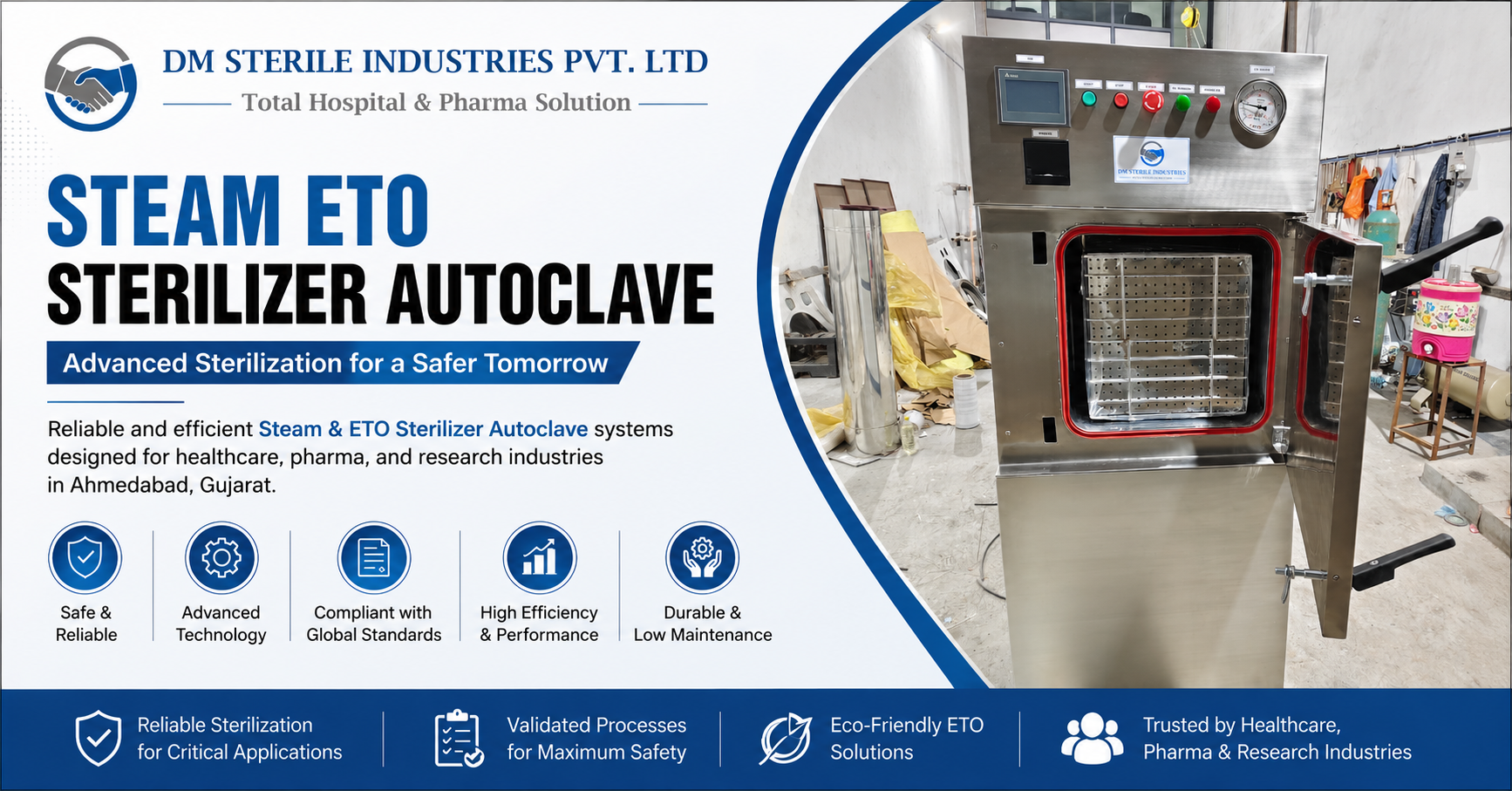
steam ETO Sterilizer Autoclave
Explore advanced steam ETO sterilizer autoclave systems for healthcare, pharma, and research in Ahmedabad, Gujarat. Ensure critical sterilization with reliable
Why This Matters in Ahmedabad, Gujarat
Ahmedabad stands as a significant center for pharmaceutical production, healthcare services, and medical device innovation within India. The city's robust industrial ecosystem demands sterilization solutions that can meet stringent national and international standards. As new manufacturing facilities emerge and existing ones expand, the need for efficient, validated steam and ETO sterilizer autoclave systems becomes increasingly critical. Ensuring product safety and public health relies heavily on the consistent performance of this specialized equipment.
What is a Steam ETO Sterilizer Autoclave — Overview
The term "steam ETO sterilizer autoclave" refers to two distinct, yet equally vital, sterilization methodologies: steam sterilization (autoclave) and ethylene oxide (ETO) sterilization. Steam autoclaves utilize high-pressure saturated steam to kill microorganisms, making them highly effective for heat-tolerant items. ETO sterilizers, on the other hand, employ ethylene oxide gas for heat-sensitive and moisture-sensitive materials that cannot withstand the high temperatures of steam. Both systems are crucial for achieving terminal sterilization, ensuring that medical devices, pharmaceutical products, and laboratory instruments are free from viable microbial life. The choice between them depends on the material properties and regulatory requirements of the items being processed.
Key Features and Technical Specifications
Modern sterilization systems incorporate a range of features designed for efficiency, safety, and compliance. These technical specifications are crucial for operational reliability.
- Robust Chamber Construction: Typically made from high-grade stainless steel (e.g., SS 304 or SS 316L) to withstand high pressures and temperatures, ensuring longevity and resistance to corrosion.
- Advanced Control Systems: Programmable Logic Controllers (PLCs) with user-friendly Human-Machine Interfaces (HMIs) for precise cycle control, data logging, and alarm management.
- Vacuum System: For ETO sterilizers, a deep vacuum system is essential for effective gas penetration and removal. For steam autoclaves, a pre-vacuum stage enhances steam penetration and air removal.
- Safety Interlocks: Multiple safety features, including pressure interlocks, door safety mechanisms, and emergency stop buttons, to protect operators and prevent accidents.
- Integrated Validation Ports: Facilitating easy access for temperature, pressure, and humidity mapping during validation and re-validation processes.
- Gas Monitoring and Abatement (ETO): Essential for ETO sterilizers to ensure safe handling of ethylene oxide gas, including post-sterilization aeration and gas removal systems.
- Automated Cycle Execution: Pre-programmed and customizable sterilization cycles that ensure consistent and repeatable results with minimal manual intervention.
- Documentation and Reporting: Capability to generate detailed cycle reports, audit trails, and comply with regulatory requirements like 21 CFR Part 11.
Industrial Applications and Use Cases
Steam and ETO sterilization systems are indispensable across a broad spectrum of industries, each with unique requirements.
- Pharmaceutical Manufacturing: Sterilization of bulk drug substances, aseptic filling lines, glassware, and process equipment.
- Healthcare and Hospitals: Sterilization of surgical instruments, linens, gowns, and various medical supplies in Central Sterile Supply Departments (CSSD).
- Medical Device Manufacturing: Sterilization of implantable devices, catheters, syringes, and other heat-sensitive or complex medical instruments.
- Biotechnology & Research Laboratories: Sterilization of culture media, laboratory glassware, bioreactors, and waste materials to prevent contamination.
- Food and Beverage Industry: While less common for ETO, steam autoclaves are used for sterilizing processing equipment and packaging materials.
- Veterinary Clinics: Sterilization of surgical tools and equipment used in animal care.
- Dental Practices: Ensuring all reusable dental instruments are sterile for patient safety.
How to Choose the Right Sterilization Solution
Selecting the appropriate sterilization equipment requires careful consideration of several factors to ensure it meets specific operational and regulatory needs.
- Material Compatibility: Determine if the items to be sterilized can withstand high temperatures and moisture (steam) or require a low-temperature gas process (ETO).
- Load Capacity and Throughput: Assess the volume and size of items to be sterilized to choose a chamber size and cycle time that matches production demands.
- Regulatory Compliance: Verify that the equipment adheres to relevant national and international standards, such as ISO, GMP, and specific Indian standards like BIS or ISI.
- Automation and Control: Evaluate the level of automation, ease of programming, data logging capabilities, and integration with existing facility management systems.
- Safety Features: Prioritize systems with comprehensive safety interlocks, alarms, and, for ETO, robust gas handling and abatement systems.
- Supplier Experience and Support: Choose a supplier with a proven track record in manufacturing and supporting sterilization equipment, offering installation, validation, and after-sales service.
- Utility Requirements: Consider the availability and cost of utilities like steam, water, compressed air, and electricity, and how they align with the equipment's demands.
- Customization Options: Determine if the supplier can tailor the system's design, features, or software to meet unique process requirements.
Quality Standards and Compliance
Adherence to stringent quality standards and regulatory compliance is fundamental for any sterilization process. For steam autoclaves, standards like ISO 13485 (for medical devices), ISO 17665 (for sterilization of health care products), and various Good Manufacturing Practice (GMP) guidelines are critical. ETO sterilizers must also comply with these, alongside specific regulations concerning ethylene oxide handling, emission, and residual levels, such as those from the Environmental Protection Agency (EPA) or local pollution control boards. Buyers should verify that the equipment supplier provides comprehensive documentation, including Factory Acceptance Tests (FAT), Site Acceptance Tests (SAT), and support for Installation Qualification (IQ), Operational Qualification (OQ), and Performance Qualification (PQ) to ensure full validation.
Why Dm Sterile Industries' Experience and Capability Matters
Dm Sterile Industries Private Limited, established in Ahmedabad, Gujarat, brings a focused approach to sterilization technology. The company, founded by Mr. Divyang Koshti and Mr. Maulik Jani, emphasizes robust quality standards and advanced automation in its product offerings, including various autoclaves and ETO sterilizers. Their technical capability extends to designing and manufacturing systems that meet the specific needs of pharmaceutical, healthcare, medical device, and biotechnology sectors. Dm Sterile Industries prioritizes end-to-end customer support, from initial consultation and custom solution development to reliable delivery and after-sales service, ensuring operational continuity for their clients. Their commitment to quality control throughout the manufacturing process ensures that each unit performs consistently and reliably.
Installation, Maintenance and Care Tips
Proper installation, routine maintenance, and diligent care are essential for the long-term performance and safety of sterilization equipment.
- Professional Installation: Always ensure installation is performed by qualified technicians who understand the specific requirements of the equipment and facility. This includes proper utility connections and calibration.
- Routine Cleaning: Regularly clean the chamber interior, gaskets, and external surfaces according to manufacturer guidelines to prevent residue buildup and maintain hygiene.
- Gasket Inspection: Frequently inspect door gaskets for any signs of wear, cracks, or damage. Worn gaskets can compromise the seal, leading to steam leaks or gas escape.
- Calibration Checks: Periodically calibrate temperature, pressure, and gas concentration sensors to ensure accurate readings and consistent cycle parameters.
- Preventive Maintenance Schedule: Follow a comprehensive preventive maintenance schedule recommended by the manufacturer. This typically includes checking valves, filters, pumps, and electrical components.
- Safety System Verification: Regularly test safety interlocks, emergency stop buttons, and pressure relief valves to confirm they are functioning correctly.
- Documentation: Maintain detailed records of all installation, maintenance, repair, and validation activities for compliance and troubleshooting.
Frequently Asked Questions
Steam sterilization, or autoclaving, uses high-pressure saturated steam at elevated temperatures to kill microorganisms, suitable for heat and moisture-tolerant items. ETO sterilization uses ethylene oxide gas at lower temperatures, making it ideal for heat-sensitive, moisture-sensitive, or complex devices that cannot withstand steam. The choice depends on the material properties and design of the items to be sterilized.
In Gujarat, particularly in Ahmedabad, these sterilizers are predominantly used in the pharmaceutical industry for drug manufacturing and equipment sterilization, healthcare facilities and hospitals for surgical instruments and medical supplies, and medical device manufacturing for a wide range of products. Biotechnology and research laboratories also rely on these systems for media and equipment sterilization.
Validation is critically important as it provides documented evidence that the sterilization process consistently produces sterile products. It involves Installation Qualification (IQ), Operational Qualification (OQ), and Performance Qualification (PQ). Validation ensures regulatory compliance, product safety, and process reliability, confirming that the equipment operates as intended under specified conditions.
The lifespan of a sterilizer is influenced by several factors, including the quality of its construction materials, the frequency and thoroughness of maintenance, the operational environment, and the intensity of usage. Regular cleaning, timely replacement of worn parts, adherence to operating procedures, and proper utility supply all contribute significantly to extending the equipment's service life.
Yes, many manufacturers offer customization options for both steam autoclaves and ETO sterilizers. This can include variations in chamber size, material of construction, control system features, loading configurations, and integration with other facility systems. Customization ensures the equipment precisely meets the unique process requirements and space constraints of a specific application.
Crucial after-sales support for sterilizer maintenance includes readily available technical assistance, access to genuine spare parts, prompt on-site service for repairs and troubleshooting, and comprehensive training for operating personnel. A reliable supplier also offers preventive maintenance contracts and re-validation services to ensure continued optimal performance and compliance.
Conclusion
The demand for effective and reliable sterilization solutions is fundamental for industries operating in Ahmedabad, Gujarat. Both steam autoclaves and ETO sterilizers play distinct, yet equally critical, roles in ensuring product safety and public health across pharmaceutical, healthcare, and medical device sectors. Choosing the right system involves a thorough understanding of material compatibility, capacity needs, and stringent regulatory requirements. Partnering with a knowledgeable and capable supplier like Dm Sterile Industries, which emphasizes robust quality, advanced technology, and comprehensive support, is essential for maintaining operational integrity and achieving consistent sterilization outcomes.
Get In Touch
Dm Sterile Industries