
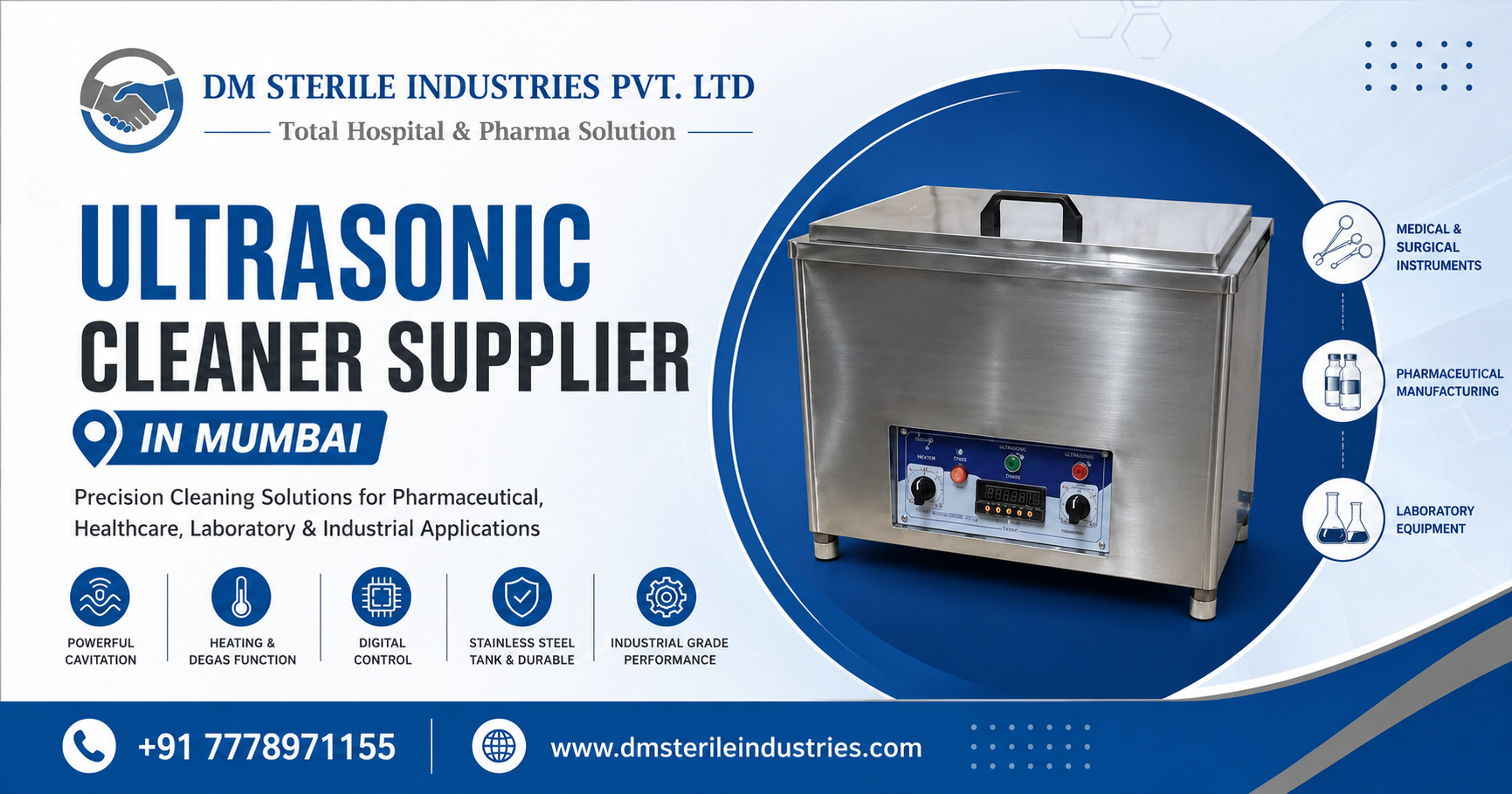
Ultrasonic Cleaner supplier in Mumbai
Discover reliable ultrasonic cleaner suppliers in Mumbai for pharmaceutical, healthcare, and industrial applications. Understand features and selection criteria
Why This Matters in Mumbai
Mumbai stands as a significant hub for India's pharmaceutical, healthcare, medical device manufacturing, and biotechnology sectors. These industries operate under strict regulatory frameworks, where cleanliness and sterility are non-negotiable. The city's bustling industrial landscape, coupled with its role as a major medical and research center, creates a constant demand for high-performance cleaning solutions. Reliable access to advanced equipment like ultrasonic cleaners, supported by expert suppliers, is crucial for maintaining operational excellence and compliance within Mumbai's dynamic environment.
What Is an Ultrasonic Cleaner — Overview
An ultrasonic cleaner is a device that uses high-frequency sound waves to agitate a liquid, creating microscopic bubbles that implode near the surface of an object. This process, known as cavitation, generates powerful scrubbing action that dislodges contaminants from even intricate geometries, crevices, and blind holes. Typically, these cleaners consist of a tank, transducers that generate the ultrasonic waves, and a generator to power the transducers. They are highly effective for removing dirt, dust, oils, greases, biological contaminants, and polishing compounds without abrasive scrubbing.
Key Features and Technical Specifications
When evaluating ultrasonic cleaners, several technical specifications and features are critical for optimal performance and suitability for specific tasks. Understanding these aspects helps ensure the chosen equipment meets operational requirements.
- Ultrasonic Frequency: Ranges from 20 kHz for heavy-duty cleaning to 130 kHz or higher for delicate items and fine particles.
- Power Output: Measured in watts, indicating the intensity of cavitation; higher power generally means faster and more aggressive cleaning.
- Tank Material: Typically stainless steel (304 or 316L) for durability and chemical resistance.
- Heating Capability: Integrated heaters warm the cleaning solution, which often enhances cleaning efficiency.
- Degas Function: Removes dissolved gases from the cleaning solution, improving cavitation effectiveness.
- Sweep Mode: Varies the ultrasonic frequency slightly to ensure uniform cleaning throughout the tank and prevent standing waves.
- Digital Controls: Offers precise control over temperature, time, and ultrasonic power settings.
- Safety Features: Includes low-liquid level sensors, over-temperature protection, and robust electrical insulation.
Industrial Applications and Use Cases
Ultrasonic cleaners are versatile tools, finding essential roles across a wide spectrum of industrial and scientific applications where precision cleaning is paramount. Their ability to reach inaccessible areas makes them indispensable.
- Medical and Surgical Instruments: Thorough cleaning of reusable instruments before sterilization, removing blood, tissue, and other contaminants.
- Pharmaceutical Manufacturing: Cleaning of production tools, molds, glassware, and components to prevent cross-contamination.
- Laboratory Glassware and Equipment: Effective removal of residues from beakers, test tubes, pipettes, and other lab apparatus.
- Optical Components: Gentle yet effective cleaning of lenses, prisms, and mirrors without scratching delicate surfaces.
- Electronic Components: Cleaning of circuit boards, semiconductor parts, and precision electronic assemblies to remove flux and debris.
- Automotive and Aerospace Parts: Degreasing and cleaning of engine components, fuel injectors, and small mechanical parts.
- Jewelry and Watchmaking: Restoring luster and removing grime from intricate jewelry pieces and delicate watch movements.
How to Choose the Right Ultrasonic Cleaner
Selecting an appropriate ultrasonic cleaner involves careful consideration of several factors to ensure it aligns with specific operational needs and delivers consistent results. A systematic approach helps in making an informed decision.
- Cleaning Capacity: Determine the required tank volume based on the size and quantity of items to be cleaned simultaneously.
- Frequency and Power: Match the ultrasonic frequency and power output to the type of contaminants and the delicacy of the items.
- Material Compatibility: Ensure the cleaner's tank and the cleaning solution are compatible with the materials of the items being cleaned.
- Control Features: Assess the need for advanced controls like heating, degas, sweep, and programmable cycles for specific processes.
- Certifications and Standards: Verify that the cleaner meets relevant industry standards and safety certifications for your application.
- Supplier Experience and Support: Choose a supplier with a proven track record, offering reliable installation, training, and after-sales service.
- Customization Options: Consider if the supplier can provide tailored solutions for unique cleaning challenges or specific industrial setups.
Quality Standards and Compliance
Adherence to quality standards and regulatory compliance is non-negotiable, particularly in sensitive sectors like healthcare, pharmaceuticals, and medical device manufacturing. For ultrasonic cleaners, this means ensuring the equipment itself meets certain benchmarks and contributes to compliant cleaning processes. Buyers should verify that the ultrasonic cleaner is manufactured under recognized quality management systems, such as ISO 9001. For medical and pharmaceutical applications, compliance with standards like ISO 13485 (Medical Devices Quality Management System) or relevant GMP (Good Manufacturing Practice) guidelines is often expected. These standards ensure the equipment is reliable, performs consistently, and supports the validation of cleaning processes, which is critical for regulatory audits and product safety.
Why Company Experience and Capability Matters
When sourcing specialized equipment like ultrasonic cleaners, the capability and experience of the supplier are as important as the product itself. DM Sterile Industries, though established in 2024, brings a focused approach to sterilization technology, guided by founders Mr. Divyang Koshti and Mr. Maulik Jani, who possess relevant expertise in CSSD machines and furniture. This foundational knowledge translates into a commitment to robust quality standards and a deep understanding of industrial cleaning requirements. The company emphasizes custom solutions, advanced automation, and end-to-end customer support, ensuring that clients in Mumbai receive equipment tailored to their specific operational needs. Their manufacturing process focuses on precision and durability, supported by a technical team capable of addressing complex challenges. This dedication to quality control and reliable delivery ensures that businesses can depend on their equipment for consistent performance and long-term value, extending their service reach to clients nationally, including Mumbai.
Installation, Maintenance and Care Tips
Proper installation and routine maintenance are crucial for maximizing the lifespan and efficiency of an ultrasonic cleaner. Following these guidelines helps ensure consistent performance and safety.
Installation
Place the unit on a stable, level surface in a well-ventilated area.
Ensure proper electrical grounding and use a dedicated power outlet if recommended.
Maintain adequate clearance around the unit for air circulation and easy access.
Cleaning Solution:
Always use cleaning solutions specifically designed for ultrasonic cleaners and compatible with the items being cleaned.
Change the solution regularly, as dirty solution reduces cleaning effectiveness and can re-deposit contaminants.
Never operate the cleaner with an empty tank, as this can damage the transducers.
Routine Care:
Wipe down the exterior of the unit regularly to keep it clean.
Inspect the tank for any signs of pitting or corrosion, especially if using aggressive chemicals.
Periodically check electrical cords and connections for wear or damage.
Transducer Care:
Avoid dropping items into the tank, as this can damage the transducers at the bottom.
- Use a basket or rack to suspend items in the solution, preventing them from touching the tank bottom.
Frequently Asked Questions
An ultrasonic cleaner operates by generating high-frequency sound waves that travel through a liquid cleaning solution. These waves create microscopic vacuum bubbles, a process known as cavitation. When these bubbles rapidly collapse near the surface of an object, they produce powerful scrubbing jets that dislodge dirt, grime, and other contaminants from even the most intricate parts and crevices.
Ultrasonic cleaning offers several advantages, including superior cleaning effectiveness, especially for complex geometries and delicate items that might be damaged by manual scrubbing. It provides consistent results, reduces the need for harsh chemicals, and minimizes labor time. This method also ensures thorough removal of microscopic particles, which is critical for industries requiring high levels of cleanliness.
Ultrasonic cleaners are highly effective against a wide range of contaminants. These include oils, greases, waxes, carbon deposits, dust, dirt, biological residues like blood and tissue, polishing compounds, flux residues, and even microscopic particles. The specific type of contaminant removal can be further optimized by selecting an appropriate cleaning solution.
Selecting the correct cleaning solution depends on the type of contaminants to be removed and the material of the items being cleaned. Solutions are typically categorized as alkaline, acidic, neutral, or enzymatic. It is crucial to choose a solution that is compatible with both the items and the cleaner's tank material, and to follow the manufacturer's dilution and temperature recommendations for optimal results.
Regular maintenance for an ultrasonic cleaner involves several simple steps. This includes frequently changing the cleaning solution, wiping down the unit's exterior, and inspecting the tank for any wear or damage. It is also important to ensure items are suspended in a basket to protect the transducers and to never operate the unit with an empty tank.
Yes, many ultrasonic cleaner suppliers offer customization options to meet specific industrial requirements. This can include variations in tank size, power output, frequency, advanced control features, automation integration, and specialized baskets or fixtures. Customization ensures the cleaner is perfectly suited for unique cleaning challenges, production volumes, and specific industry standards.
Conclusion
For industries in Mumbai where precision cleaning is paramount, selecting the right ultrasonic cleaner and a reliable supplier is a strategic decision. The effectiveness of these units in removing microscopic contaminants from intricate components makes them indispensable for maintaining product integrity, operational efficiency, and regulatory compliance. When evaluating options, consider the technical specifications, industrial applications, and the supplier's capability to provide robust, compliant, and well-supported solutions. Partnering with a knowledgeable provider ensures access to equipment that consistently meets the demanding standards of pharmaceutical, healthcare, and manufacturing sectors.
Get In Touch
Dm Sterile Industries