
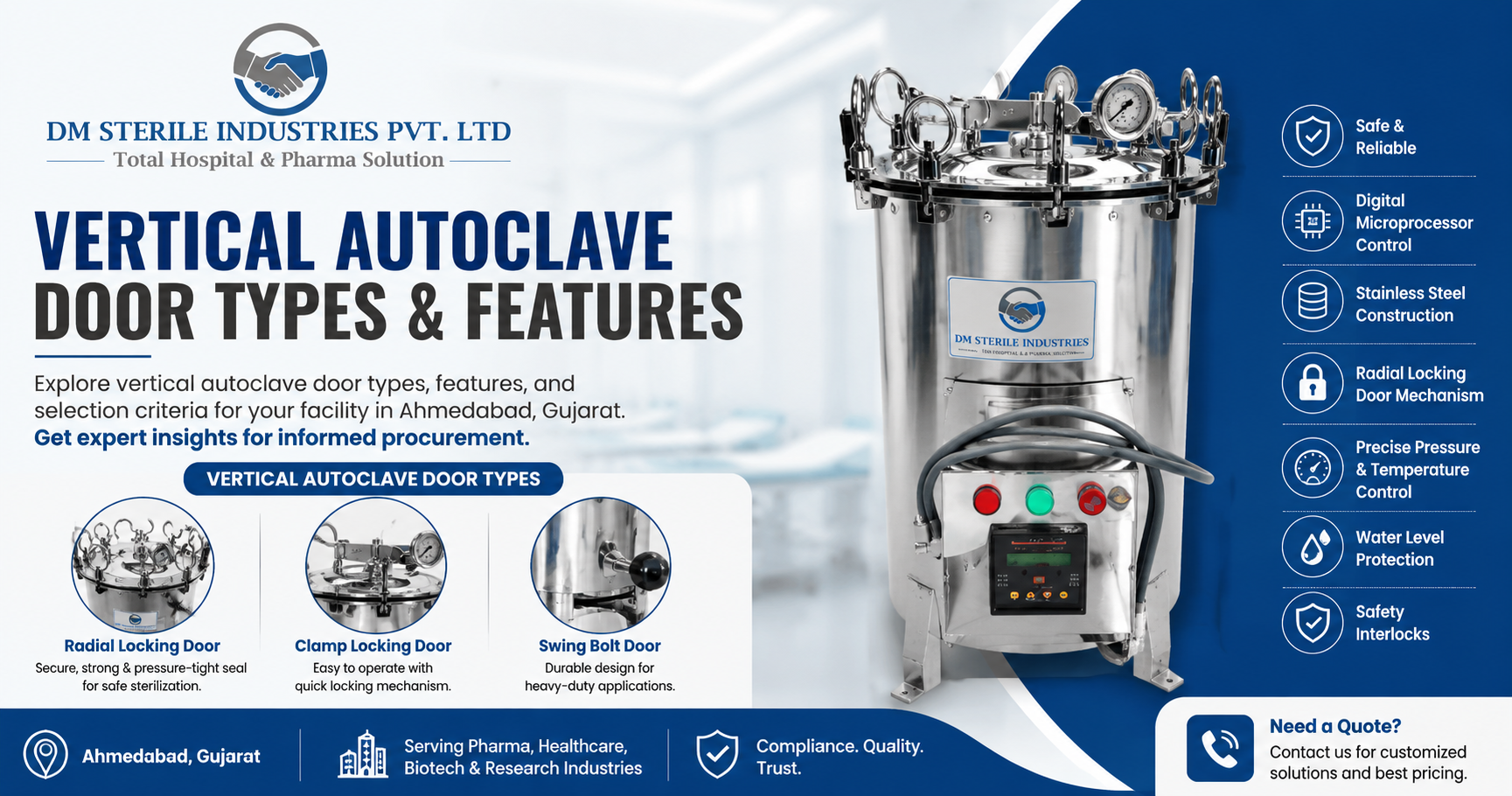
Vertical Autoclave quotation door type
Explore vertical autoclave door types, features, and selection criteria for your facility in Ahmedabad, Gujarat. Get expert insights for informed procurement.
Why This Matters in Ahmedabad, Gujarat
Ahmedabad, a prominent industrial and commercial hub in Gujarat, hosts a thriving ecosystem of pharmaceutical manufacturers, advanced healthcare facilities, medical device producers, and research laboratories. These sectors operate under stringent regulatory guidelines that demand precise and consistent sterilization processes. The continuous growth and expansion of these industries necessitate reliable and efficient sterilization equipment. Choosing the appropriate vertical autoclave, including its specific door configuration, directly contributes to maintaining operational integrity, ensuring compliance, and safeguarding public health within this dynamic regional economy.
What is a Vertical Autoclave — Overview
A vertical autoclave is a pressure chamber designed to sterilize equipment and supplies by subjecting them to high-pressure saturated steam at elevated temperatures. Unlike horizontal units, vertical autoclaves are top-loading, making them suitable for laboratories or facilities with limited floor space but ample vertical clearance. They typically consist of a robust stainless steel chamber, a heating element, a pressure gauge, and a safety valve. The sterilization cycle involves heating water to produce steam, which then displaces air, saturates the chamber, and holds at a specific temperature and pressure for a set duration, effectively eliminating microorganisms.
Key Features and Technical Specifications
- Robust Stainless Steel Construction: Inner and outer chambers typically fabricated from high-grade stainless steel (e.g., SS 304 or SS 316) for corrosion resistance and durability.
- Radial Locking Door Mechanism: Ensures a secure, pressure-tight seal during operation, often with an ergonomic handle for easy opening and closing.
- Digital Microprocessor Control: Programmable cycles for sterilization temperature, pressure, and holding time, with clear digital displays.
- Automatic Pressure Control: Maintains precise pressure levels within the chamber, preventing over-pressurization.
- Safety Interlocks: Prevents the door from opening when the chamber is pressurized or at high temperatures, enhancing operator safety.
- Water Level Indicator and Cut-off: Protects heating elements from dry-running damage by monitoring water levels and automatically shutting off if too low.
- Vacuum Drying System (Optional): Facilitates efficient drying of sterilized items, preventing recontamination and extending shelf life.
- Exhaust Steam Release Valve: Manually or automatically releases steam after the sterilization cycle, ensuring safe depressurization.
Industrial Applications and Use Cases
- Pharmaceutical Production: Sterilizing culture media, glassware, process equipment, and waste materials in drug manufacturing.
- Healthcare and Hospitals: Sterilizing surgical instruments, dressings, linens, and laboratory tools in CSSD departments and operating theaters.
- Medical Device Manufacturing: Ensuring sterility of components and finished products that require steam sterilization before packaging.
- Biotechnology and Research Laboratories: Sterilizing laboratory glassware, media, reagents, and biological waste to prevent contamination.
- Food and Beverage Industry: Sterilizing containers, processing equipment, and quality control samples to ensure product safety.
- Veterinary Clinics and Animal Research: Sterilizing surgical tools, cages, and laboratory supplies for animal care and research.
How to Choose the Right Vertical Autoclave
Selecting a vertical autoclave requires careful consideration of several factors to match your operational needs and regulatory requirements.
- Capacity and Chamber Size: Evaluate the volume and dimensions of items needing sterilization to ensure the autoclave can accommodate your typical load.
- Door Type and Sealing Mechanism: Consider radial locking doors for secure sealing and ease of operation. Assess if a single door or a pass-through (double door) system is needed for contamination control in specific environments.
- Operational Control System: Look for user-friendly digital controls with programmable cycles, data logging capabilities, and clear error indicators.
- Material Construction: Verify that the inner and outer chambers are constructed from high-grade stainless steel (e.g., SS 304 or SS 316) suitable for steam and pressure.
- Safety Features: Prioritize models with comprehensive safety interlocks, over-pressure protection, and automatic shut-off mechanisms.
- Certifications and Compliance: Ensure the autoclave meets relevant national and international standards (e.g., ISO, CE, ISI) for pressure vessels and sterilization efficacy.
- Supplier Experience and Support: Choose a supplier with a proven track record, offering reliable installation, training, and prompt after-sales service.
- Customization Options: Determine if the supplier can tailor features like chamber dimensions, control systems, or specialized accessories to your unique processes.
Quality Standards and Compliance
Adherence to stringent quality standards is non-negotiable for sterilization equipment. Buyers should verify that vertical autoclaves comply with relevant national and international benchmarks. Key standards often include ISO 13485 for medical devices, ISO 9001 for quality management systems, and specific pressure vessel codes like ASME or PED. In India, ISI certification for certain components or the overall unit can also be a critical indicator of quality and safety. It is essential to confirm that the manufacturer provides documentation for material traceability, pressure testing, and validation protocols to ensure the unit performs reliably and safely under specified conditions.
Why Company Experience and Capability Matters
The longevity and reliability of a vertical autoclave depend significantly on the manufacturer's experience and technical capability. A reputable supplier, such as DM Sterile Industries, understands the nuances of sterilization technology and the critical demands of industries like pharmaceuticals and healthcare. Their manufacturing process should incorporate robust quality control at every stage, from material selection to final assembly and testing. Expertise in engineering allows for the development of advanced automation and control systems, ensuring precise and repeatable sterilization cycles. Furthermore, a company's ability to offer custom solutions, reliable delivery schedules, and comprehensive after-sales support, including installation and maintenance, is crucial for minimizing downtime and maximizing operational efficiency for clients in Ahmedabad and beyond.
Installation, Maintenance and Care Tips
Proper installation and routine maintenance are vital for the long-term performance and safety of a vertical autoclave.
Installation
Ensure the autoclave is installed on a level, stable surface capable of supporting its weight when fully loaded.
Connect to appropriate power supply, water source (if applicable), and drainage as per manufacturer specifications.
Verify proper ventilation around the unit to dissipate heat and steam effectively.
Commissioning should involve a qualified technician to calibrate controls and perform initial test cycles.
Daily Care:
Clean the chamber interior and door gasket regularly to prevent residue buildup and ensure a tight seal.
Check water levels before each cycle and use distilled or demineralized water to prevent scale formation.
Inspect safety valves and pressure gauges for any signs of damage or malfunction.
Routine Maintenance:
Periodically check and clean the heating elements and water sensors.
Inspect and replace door gaskets as needed to maintain a proper seal.
Have the pressure vessel and safety mechanisms inspected and certified by a qualified professional annually.
Keep a log of all maintenance activities, including dates and observations.
Frequently Asked Questions
Vertical autoclaves are generally more compact, requiring less floor space, which makes them ideal for laboratories or facilities with spatial constraints. Their top-loading design can also be more convenient for sterilizing tall items or large batches of glassware. They are often simpler in design, which can translate to easier maintenance and operation for certain applications.
The door type, especially the locking mechanism, is critical for safety. Radial locking doors, for instance, create a secure, uniform seal that prevents steam leakage and ensures the door remains firmly closed during high-pressure operation. Integrated safety interlocks further prevent accidental opening when the chamber is pressurized or at high temperatures, protecting operators from steam burns.
Vertical autoclaves are versatile and can sterilize a wide range of items. This includes laboratory glassware, culture media, surgical instruments, medical waste, pharmaceutical components, and various heat-resistant materials. The specific items depend on the autoclave's capacity, temperature range, and whether it has a drying cycle.
Regular servicing is crucial for optimal performance and safety. It is generally recommended to have a professional service inspection at least once a year. Daily and weekly checks by operators, such as cleaning the chamber and inspecting gaskets, are also essential. Adhering to the manufacturer's specific maintenance schedule will ensure longevity and compliance.
Yes, many manufacturers offer customization options for vertical autoclaves. This can include variations in chamber size, specific material grades (e.g., SS 316L for corrosive environments), advanced control systems, integrated vacuum drying, or specialized baskets and trays. Customization ensures the autoclave perfectly aligns with unique operational workflows and sterilization requirements.
A well-maintained vertical autoclave, constructed from quality materials and operated according to guidelines, can have a lifespan of 10 to 15 years or even longer. Regular cleaning, timely replacement of wear-and-tear parts like gaskets, and annual professional servicing are key factors in extending the equipment's operational life and ensuring its continued reliability.
Conclusion
Selecting the right vertical autoclave, particularly considering its door type and overall specifications, is a strategic decision for any facility in Ahmedabad, Gujarat, that relies on robust sterilization. Understanding the technical features, industrial applications, and critical quality standards helps ensure that the chosen equipment meets both operational demands and regulatory compliance. Partnering with a knowledgeable and experienced supplier who prioritizes quality, offers customization, and provides comprehensive support is essential for long-term reliability and efficient sterilization processes.
Get In Touch
Dm Sterile Industries